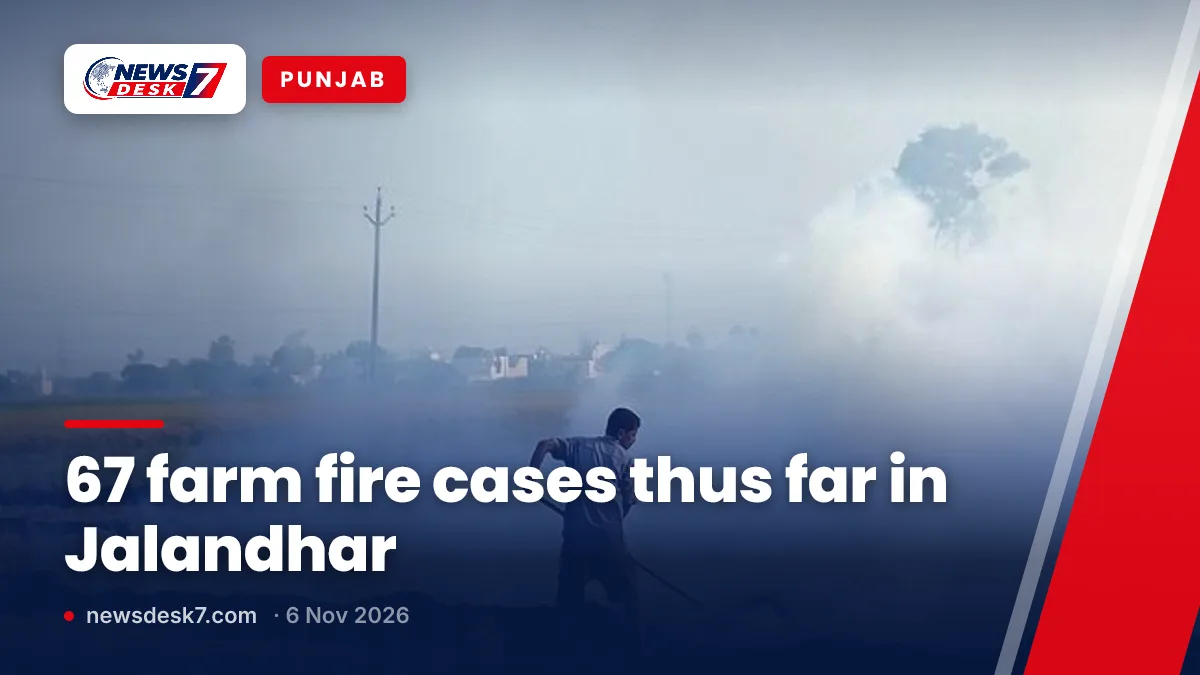
As many as 67 cases of stubble burning have been reported in Jalandhar until now.
To curb stubble burning, the Agriculture Department had planned to involve physicians in its awareness campaign to educate farmers about the harmful health effects of burning paddy residue.
The department has collaborated with NGO Lung Care Foundation to make farmers aware that stubble burning not only contributes to air pollution but can also have consequences for their health.

“Health Department officials have also been asked to counsel farmers about the health impact of stubble burning at the village dispensaries,” department officials remarked.
Chief Agriculture Officer Randhir Singh Thakur said this was the first time the department had collaborated with an NGO for such an initiative.
“We also tell farmers every year why they should not burn paddy residue. But the idea was to bring along a doctor and an expert who can explain to them that stubble burning has a negative impact on their own health as well, maybe that will help more,” he remarked.
According to the data available with the department, the district recorded 2,548 paddy burning cases in 2021, which fell to 1,388 in 2022 and 1,196 in 2023 over the past few years. The number dropped to 157 cases in 2024 and further to 86 cases last year.
In Nawanshahr as well, the Deputy Commissioner has cautioned of tough action against farmers found burning stubble. He also made it clear that the cluster officers and nodal officers concerned would be held accountable if any incident of stubble burning was reported in their zones.
The DC issued these directions during a review meeting with officials of various departments to assess the measures being taken to prevent stubble burning incidents across the district. Reviewing the cases reported thus far, he directed the officials to remain vigilant and intensify monitoring at the field level.