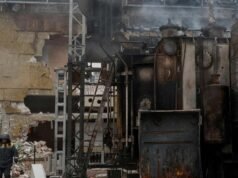


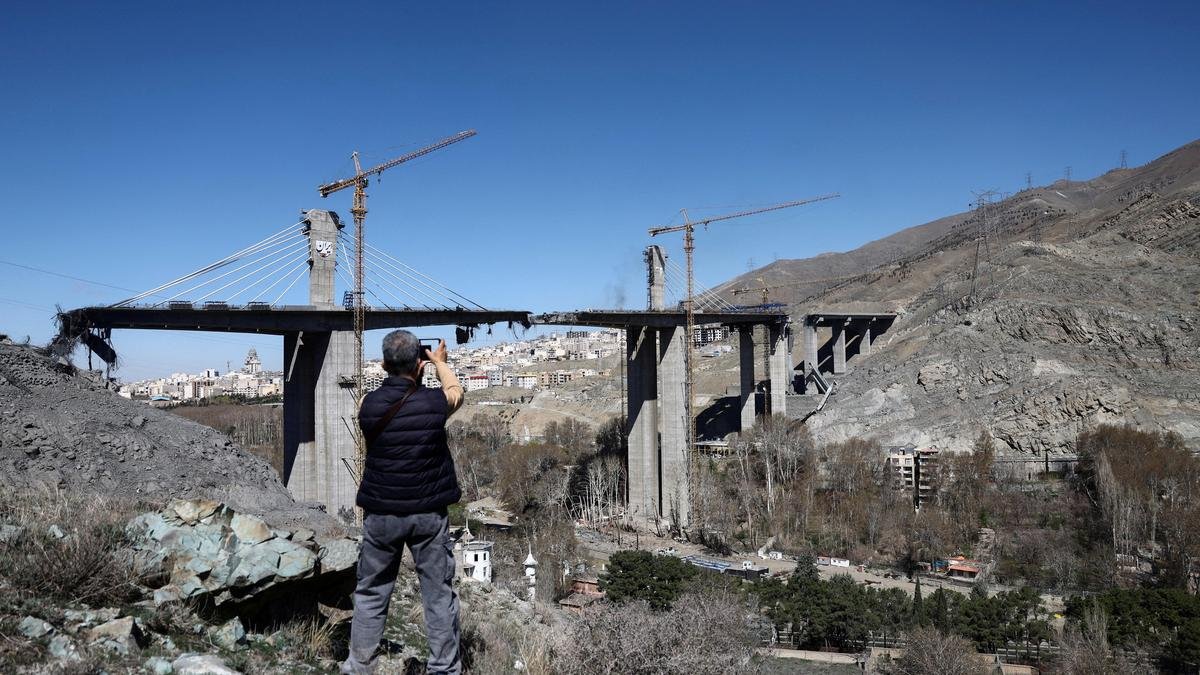
On the night of April 2, 2026, the B1 Bridge in Karaj — the tallest bridge in the Gulf region — was hit during American and Israeli military strikes, according to Iranian authorities. The attack destroyed a key section of the bridge and turned what was once considered a symbol of Iranian engineering into a field of rubble.
In Iran, however, the bridge has quickly become something larger than a construction project. It is now being presented as a symbol of national resistance and self-reliance.
The B1 Bridge, also known as Bilqan 1, connected the Bilqan region of Karaj with Tehran and formed part of one of Iran’s most important transport corridors. Karaj, located west of Tehran, functions as Iran’s largest industrial suburb, filled with factories, logistics hubs, warehouses, and manufacturing centres. Nearly 200,000 vehicles travel daily between Karaj and Tehran, and the bridge had been designed to divert almost one-third of the traffic from heavily congested older routes.
Its strategic importance extended far beyond urban traffic management.
The corridor links Tehran to Qazvin, Tabriz, the Caspian region, and onward trade routes connecting Iran with Russia and Central Asia. Large volumes of industrial goods and commercial cargo pass through this network, making it one of the country’s most critical economic arteries.
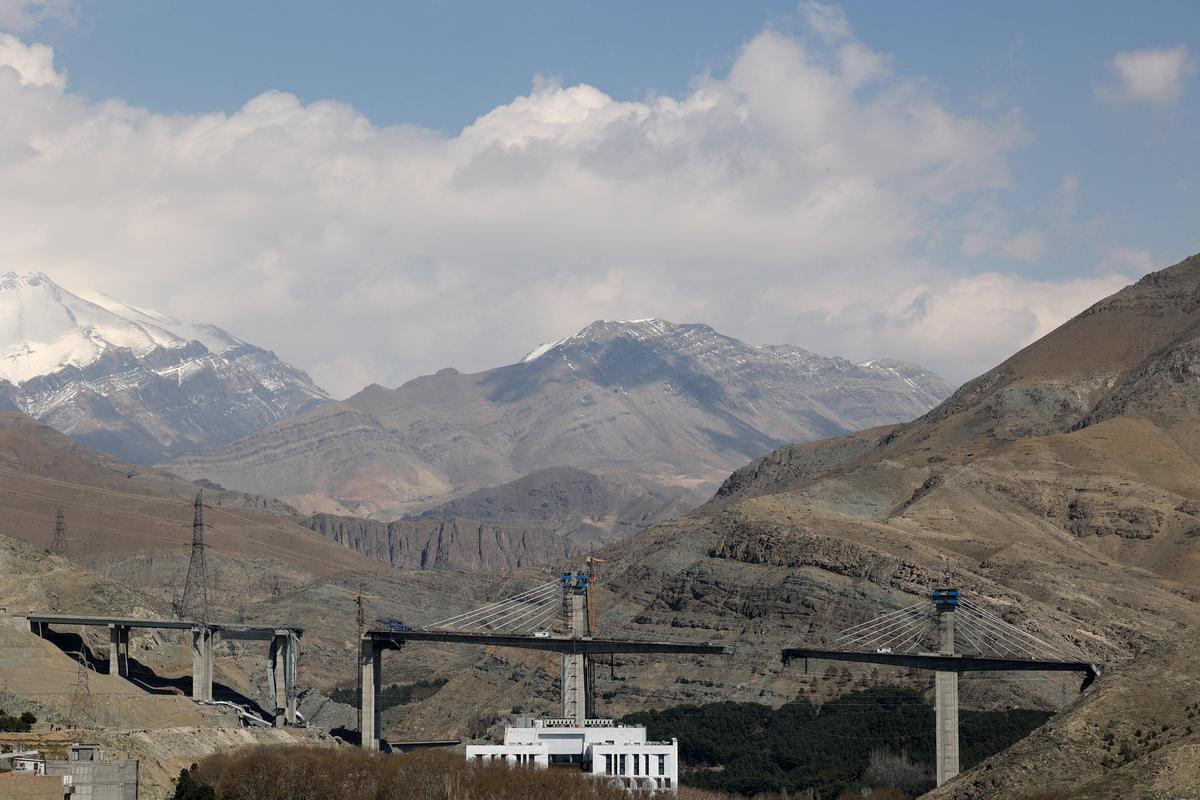
The B1 bridge damaged by a strike, as the U.S.-Israeli conflict with Iran continues, in Karaj, Iran on April 3, 2026.
| Photo Credit:
Reuters
Project Engineer of this bridge has also emphasised another aspect of the bridge — that it was built almost entirely with domestic technology and materials. Officials and engineers involved in the project say Iranian steel, Iranian cement, and locally trained engineers were used in the construction despite years of international sanctions and technological restrictions.
The bridge had not yet been formally inaugurated, though traffic had already started moving across it.
According to local accounts, civilians had gathered near the Karaj riverbed on the evening of April 2 when the strikes began. The first missile hit the central span of the bridge, causing a section to collapse and vehicles to fall into the dry riverbed below.

Emergency responders rushed to the scene soon afterward.
Witnesses and Iranian officials state that additional strikes followed after rescue teams arrived. The sequence of attacks has been described by Iranian commentators as a “triple-tap strike,” a military tactic in which an initial strike is followed by subsequent attacks targeting rescuers and emergency personnel arriving at the scene.
Iranian authorities have described the attack as a violation of international humanitarian law, arguing that the bridge was civilian infrastructure rather than a military target. Iranian media also pointed to discussions within the U.S. following congressional hearings involving Defence Secretary Pete Hegseth, where concerns were reportedly raised by lawmakers regarding the legality of attacks on rescue operations.
Beyond the destruction itself, Iranian analysts believe the strikes reflected a broader geopolitical strategy aimed at destabilising Iran internally.
The B1 corridor connects Tehran with northern and northwestern regions that have large Azeri populations. Karaj itself has a substantial Azeri community, while cities further northwest such as Tabriz are overwhelmingly Azeri.
Iranian political commentators argue that the destruction of the bridge was intended to isolate Tehran from those regions and create internal pressure or instability along ethnic lines — a strategy they claim resembles approaches previously seen in Syria and Lebanon.
However, Iranian officials insist that such assumptions misread the structure of Iranian society. Ali Khamenei is of Azeri origin, as is President Masoud Pezeshkian. Azeris are deeply integrated into Iran’s political, military, and economic institutions and constitute one of the country’s most influential communities.
Iranian analysts say this social integration prevented the emergence of the kind of ethnic fragmentation that external actors may have expected.
The attacks also intensified debate within Iran over technological independence and industrial self-sufficiency.
In recent years, Tehran has invested heavily in domestic engineering and manufacturing capabilities as sanctions limited access to foreign suppliers and international cooperation. Iranian officials point to projects such as the B1 Bridge as examples of the country’s ability to sustain major infrastructure development independently.

Alongside the bridge strike, Iranian media reports indicate that steel plants, cement facilities, and scientific institutions were also targeted during the broader military campaign. Particular attention has focused on Sharif University of Technology in Tehran, widely regarded as one of West Asia’s leading engineering universities.
Iranian commentators argue that the attacks were aimed not only at physical infrastructure but also at weakening the country’s long-term scientific and technological capacity.
Despite sanctions, Iran continues to produce a large number of engineering graduates annually, and officials frequently portray technical education as central to the country’s economic resilience.
Following the bridge strike, Iran carried out what officials described as a symbolic retaliatory operation near the King Fahd Causeway connecting Saudi Arabia and Bahrain. Iranian state-linked media framed the move as a warning that critical infrastructure throughout the Gulf region remains vulnerable.
Inside Iran, the public response to the attack became a major political and symbolic moment.
After statements attributed to U.S. President Donald Trump warning of further destruction of Iranian infrastructure, crowds gathered near bridges and public structures across several cities. In Karaj, thousands reportedly assembled near the damaged B1 Bridge.
The gatherings were widely portrayed in Iranian media as demonstrations of civilian resolve and national unity.
Reconstruction efforts began almost immediately after the strikes. Engineering crews and heavy machinery reportedly arrived at the site within hours, and officials now say the bridge could be rebuilt within six weeks.
At the site today, cranes move continuously above shattered concrete while workers weld new steel structures into place. Iranian authorities say the rebuilt bridge will rely once again on domestic materials, local industry, and Iranian engineers.
— Saurabh Shukla and Saurabh Shahi are senior editors with The Red Mike
Published – May 08, 2026 06:55 pm IST