

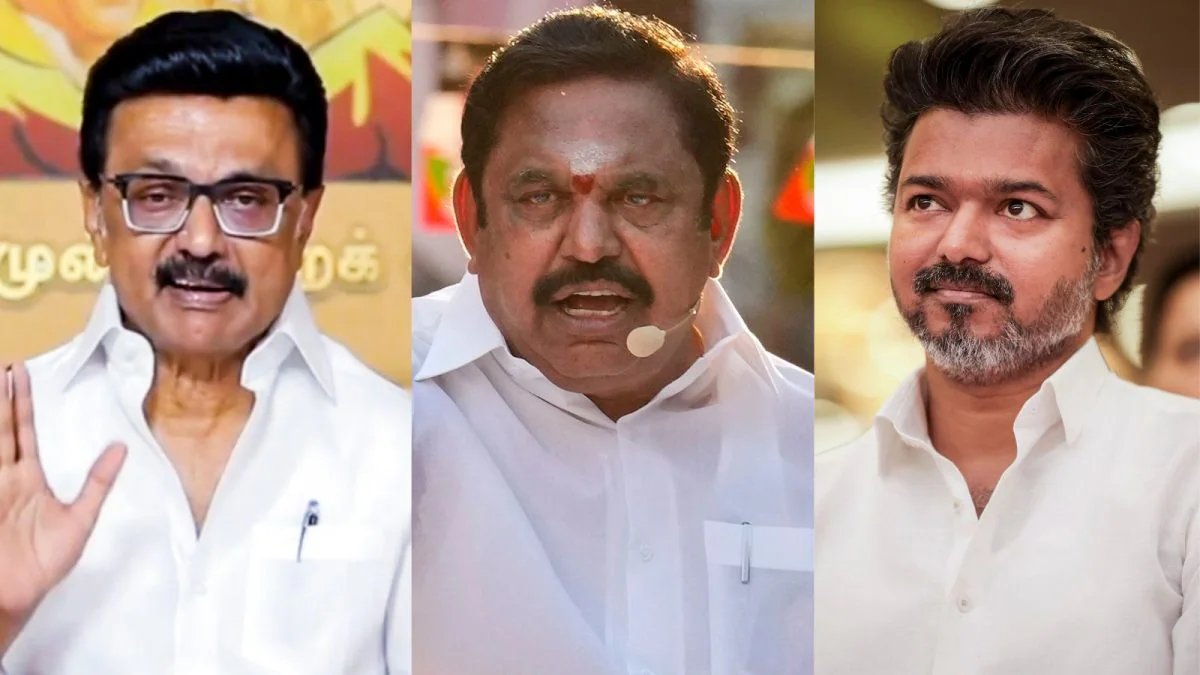
This ‘passive’ support would serve as a vital lifeline for any claimant attempting to pass a floor test at the Raj Bhavan




By emphasising that the state is ‘not ready for another election’, the DMK has effectively left the door open for external arrangements that would prevent a constitutional vacuum in Chennai. (File image: PTI)
In a significant political manoeuvre that could reshape the administrative future of Tamil Nadu, the Dravida Munnetra Kazhagam (DMK) has signalled a strategic pivot following its legislative party meeting on May 7. Faced with a fractured mandate where no single party secured an absolute majority, the DMK passed a series of high-stakes resolutions that empower Party President MK Stalin to take “urgent decisions” to ensure constitutional stability.
While the party fell short of the majority mark, the DMK’s rhetoric suggests a shift from an active claimant to a strategic facilitator. By emphasising that the state is “not ready for another election”, the DMK has effectively left the door open for external arrangements that would prevent a constitutional vacuum in Chennai.
Does ‘Resolution 3’ imply outside support for a new government?
The language of Resolution 3 is particularly telling, as it grants MK Stalin the unilateral authority to navigate the “critical and complicated” political environment. By stating that the party’s primary objective is to “establish a stable government” while ensuring the “unabated” continuation of Dravidian welfare schemes, the DMK has signalled it may not necessarily lead the next government.
தி.மு.க. சட்டமன்ற உறுப்பினர்கள் கூட்டம் (07-05-2026) தீர்மானங்கள்தீர்மானம் : 1
தமிழ்நாட்டு மக்களுக்கும் தோழமை இயக்கங்களுக்கும் நன்றி
நடந்து முடிந்த தமிழ்நாடு சட்டமன்றப் பொதுத் தேர்தலில் திராவிட முன்னேற்றக் கழகம் தலைமையிலான மதச்சார்பற்ற முற்போக்குக் கூட்டணிக் கட்சிகளின்… pic.twitter.com/jN5r8HuX1a
— DMK (@arivalayam) May 7, 2026
In parliamentary practice, such a stance often precedes a formal offer of outside support. This would allow a minority government to function without the DMK joining the cabinet, thereby protecting the DMK’s ideological brand while ensuring that its landmark schemes—such as free school breakfasts and women’s monthly assistance—remain untouched. This “passive” support would serve as a vital lifeline for any claimant attempting to pass a floor test at the Raj Bhavan.
Could the DMK lend support to Vijay’s TVK?
The most likely beneficiary of such a strategic retreat appears to be Vijay and his Tamilaga Vettri Kazhagam (TVK). Despite the TVK emerging as the single largest party, it currently lacks the 118 seats required for a majority, even with the Congress’s newfound backing. By resolving to “not give space to communal forces”, the DMK has narrowed the field of potential partners.
Providing outside support to the TVK would allow the DMK to frame itself as a “responsible opposition” that prioritises state stability over power-hungry politics. For Stalin, this move would prevent the BJP from gaining any back-door influence in a hung assembly while keeping the TVK dependent on DMK’s legislative benevolence. This arrangement would give the new TVK government a chance to perform, while the DMK retains the power to pull the plug should the “Dravidian Model” be compromised.
Is an alliance with the AIADMK a possibility?
Despite the historic rivalry, rumours of a “grand Dravidian front” with the AIADMK have circulated as a means to sideline the TVK. However, the DMK’s latest resolutions make this highly unlikely. The party has focused its ire on the Congress party, accusing it of “backstabbing” and “betrayal” after the Congress defected to the TVK camp.
By labelling the Congress as a party that “did not behave honestly”, the DMK has effectively burned its bridges with its former ally. While the AIADMK remains a competitor, the DMK’s current focus is on protecting its legacy of the last five years. An alliance with the AIADMK would be ideologically jarring for the grassroots; thus, the DMK seems more inclined to sit in the opposition and provide tactical, issue-based support to a non-communal minority government rather than enter into a messy power-sharing deal with its traditional foe.
Read More