
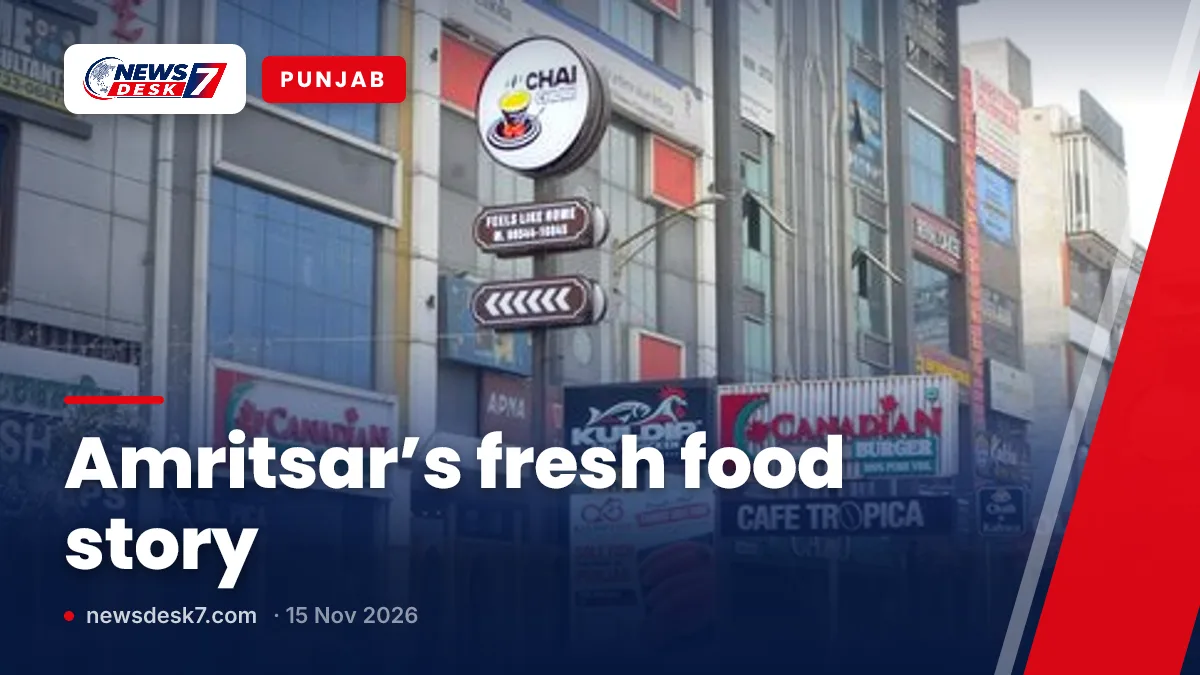
Food is rarely just food in Amritsar. It is an emotion, a conversation starter and, quite frequently, a reason to drive across town. A plate of piping-hot kulchas dripping with butter, chhole generously topped with masala, a glass of thick lassi and the irresistible lure of conventional mithai have long defined the city’s culinary personality.
But something is stirring in Amritsar’s food pot. Alongside the familiar aroma of kulchas and the comforting ritual of stopping for tea at Giani Tea Stall, Ambarsari palates, for long relishing the familiar and typical tastes and flavours of a heritage cuisine, are evolving, adopting and adapting to trending global cuisines.
The city’s evolving tastes are reflected in a fresh breed of cafes, bakeries and restaurants serving up everything from sushi and pan-Asian bowls to gourmet sandwiches, salads, speciality coffees, including the famous French cafe experience with croissants, pain au chocolat (flaky pastry with chocolate centre), almond croissants, Danish pastries and other flaky baked treats.

The city that once debated which kulcha stall served the best breakfast is now also debating where to find a good matcha coffee or smoothie, the freshest Greek salad or a decent Japanese noodle or Buddha bowl.
Is Amritsar, celebrated as Punjab’s food capital, acquiring a fresh culinary identity? Is the younger generation developing a taste for global flavours, or is it simply giving the traditional food culture new company?
Old guard still ruling the table
Before anyone assumes that sushi is replacing the staple chhole or avocado toast is giving kulchas a run for their money, the old favourites still sit well on most palates.
As Deeksha Seth, a jewellery entrepreneur, notes, the food culture is changing mainly among the new generation. “Giani Tea Stall and the favourite kulcha joints of older Amritsaris still enjoy unwavering customer loyalty. Familiar places, flavours and faces remain an important part of the city’s food routine. Most people, or families, still prefer a buttery kulcha or poori-aalo at Kanha for a Sunday brunch over pancakes or baked breads,” she says.
After all, some loyalties are harder to break. For many older Amritsaris, the perfect breakfast still entails kulchas, chhole and lassi, not Greek yogurt or cold brew. There is little reason to change a winning recipe!
plenty of delhi, mumbai, tokyo too?
The younger generation, however, is more adventurous. With greater exposure to travel, social media and food trends, young diners are curious about what is cooking beyond the city’s conventional food circuit.
Artisanal cafes have become meeting points, and global cuisines have found their way onto menus, with international hotel chains entering the food tourism market, and dining out becoming all about an experience rather than a quiet, hearty meal.
But, are we getting the international experience right? Sukhjot Kaur Swani, baker and food entrepreneur, is not completely convinced. “To be honest, I’m not the biggest fan of the food the new places are serving. They are trying to follow the trends set by Delhi and Mumbai. For example, pan-Asian and Japanese food in Amritsar isn’t great, or even authentic. I’ve never had decent sushi here. So my take is that if you’re going to do it, then do it well,” she says.
Today’s diners are also more exposed. “The food scene in the city has definitely more to offer now, both in terms of experience and menu. What needs more push, though, is authentic flavours. Desi versions of Thai and Chinese food work fine, but there is a gap between what restaurants promise and what they actually serve,” notes Parminder Kaur, who shifted to Amritsar from Amsterdam a few years ago.
She points to instances where establishments use fashionable food terminology and mention ingredients like prosciutto without actually offering the real ingredient or the dish. For her, the actual ingredients of a successful food business are quality of food and consistency in taste.
What works well, though, is how young food enthusiasts are giving party spreads a makeover. Dips, salads, cheese platters and contemporary appetisers are finding space alongside the customary samosas, tikkis and other favourite and familiar Punjabi snacks.
It is a shift that shows how food habits are evolving without necessarily abandoning familiar ingredients. The Punjabi love for generous portions and good flavours remains intact; it is simply being presented in newer ways.
And then there is the twist. Some of the city’s new-age food entrepreneurs are creating spaces that have something unmistakably Amritsari working its way on the plate with a ‘foreign ingredient’. So, the Togarashi (red chili pepper)-infused chaat at the refined Governor House or a parantha burger being served at the popular takeaway Roll Call does not mean that Amritsar’s food identity is disappearing, but how the city’s customary food has found contemporary interpretation.
“There is room for all of them, provided each is done well,” states Sukhjot.
Amaani Gujral, a young food entrepreneur and restaurateur who is building Ametsa, a culture-dining space, feels aesthetics matter as much as flavour. “I think this shift is also heavily influenced by social media. Someone mentioned that people don’t necessarily drink matcha because it’s healthier, they drink it because it’s in vogue. Tres leches, for instance. There was a phase when people would visit a particular cafe just to try it. We’re increasingly choosing where to eat and what to eat based on how the experience will translate onto social media,” she states.
The younger lot may be busy discovering their favourite cafes, experimenting with salads and figuring out whether they prefer matcha or masala chai. In the meantime, the older generation will likely go on to head to its trusted kulcha stall.
And honestly, that is the beauty of Amritsar’s food story. You can have your sushi, and still go back to that kulcha, with an additional dose of butter and fermented onion chutney on the side. You can sip your cold brew, but the lassi glass is not going anywhere.