

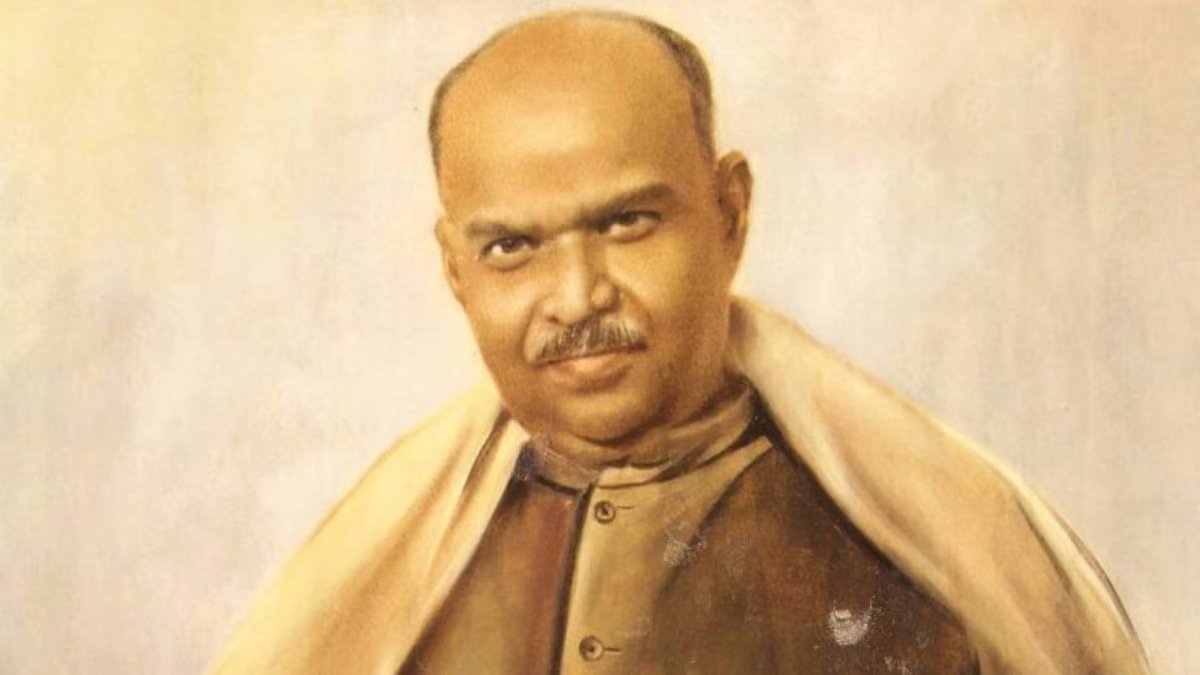
Shyama Prasad Mukherjee entered public life in 1929, when he was elected to the Bengal Legislative Council. Over time, his political journey took several turns




Shyama Prasad Mukherjee strongly advocated for national unity and opposed special provisions such as Article 370 for Jammu and Kashmir.
Prime Minister Narendra Modi on Monday evening invoked Dr Shyama Prasad Mukherjee as the Bharatiya Janata Party (BJP) secured victory in the West Bengal Assembly elections — a notable achievement for a party that has steadily increased its seat share in the state over successive polls.
“Today, as a BJP worker, one thought keeps coming to my mind — how much peace Dr Shyama Prasad Mukherjee’s soul must be feeling today,” he said while addressing party workers at the BJP headquarters in New Delhi.
This is not the first time the Prime Minister has referenced Mukherjee. Last June, Modi had also recalled his contributions to India’s unity and integrity on the occasion of his martyrdom day, observed as Balidan Divas.
In a post on X, the Prime Minister said, “Heartfelt tributes to Dr Shyama Prasad Mukherjee on his Balidan Divas. He displayed exceptional courage and determination in preserving the unity of the nation. His invaluable contribution to nation-building will always be remembered with deep respect.”
Who Was Dr Shyama Prasad Mukherjee?
Mukherjee was a prominent educationist, lawyer and political leader who played a significant role in the country’s early intellectual and political life. Born on July 6, 1901, in Calcutta, he grew up in an academic environment; his father, Sir Ashutosh Mukherjee, was a renowned judge and educationist who greatly influenced his outlook.
Mukherjee went on to straddle several fields with ease, building a reputation as a scholar, administrator and later, a key political figure. He is best known as the founder of the Bharatiya Jana Sangh in 1951, a party that would eventually evolve into today’s Bharatiya Janata Party (BJP).
Early Life And Academic Journey
Mukherjee excelled throughout his academic career. He studied at Presidency College, Calcutta, graduating with distinction, and later earned a master’s degree in Bengali along with a law degree. He subsequently travelled to England, where he qualified as a barrister.
His association with academia began early. In his 20s, he became a member of the Senate of Calcutta University, marking the start of a long and influential engagement with higher education.
Mukherjee As Educationist
Mukherjee’s most notable contribution to education came in 1934, when he was appointed Vice-Chancellor of Calcutta University at the age of just 33 — one of the youngest to hold the position.
During his tenure, he worked to expand the scope and accessibility of higher education. He encouraged the use of Indian languages in academic instruction and sought to make education more inclusive and rooted in Indian culture. His approach reflected a broader belief that education should serve as a foundation for national development, rather than remain a colonial legacy.
His Entry Into Politics
Mukherjee entered public life in 1929, when he was elected to the Bengal Legislative Council representing Calcutta University. Over time, his political journey took several turns. Though he was briefly associated with the Indian National Congress, he later emerged as a leading figure in the Hindu Mahasabha, eventually becoming its president.
He also served as the Finance Minister of Bengal in the early 1940s, gaining administrative experience during a turbulent phase marked by war and political unrest.
His Role In Independent India
After India gained Independence, Mukherjee joined the first Cabinet of Prime Minister Jawaharlal Nehru as the Minister for Industry and Supply. In this role, he contributed to shaping the country’s early industrial framework.
However, ideological differences with the government soon became apparent, particularly on issues related to national integration, Kashmir, and policy towards Pakistan. In 1950, he resigned from the Cabinet, signalling a decisive shift in his political trajectory.
Parliamentarian And Political Vision
In 1951, Mukherjee founded the Bharatiya Jana Sangh, positioning it as an alternative political force grounded in nationalist thought. He was elected to the first Lok Sabha in 1952 and quickly emerged as a prominent voice in Parliament.
He strongly advocated for national unity and opposed special provisions such as Article 370 for Jammu and Kashmir, arguing that the state should be fully integrated with the rest of India. He believed that it threatened India’s unity and integration. His slogan “Ek desh mein do vidhan, do pradhan aur do nishan nahi chalenge” (One country cannot have two constitutions, two prime ministers, and two flags) became a rallying cry for national integration.
His political ideas centred on cultural nationalism, self-reliance and a cohesive national identity –principles that would go on to shape future political discourse.
Death And Legacy
In 1953, Mukherjee was arrested while entering Jammu and Kashmir without a permit, as part of a protest against the state’s special status. He died in custody in Srinagar on June 23 that year, under circumstances that continue to be debated.
Though his political career was relatively brief, Mukherjee’s influence has endured. As an educationist, he left a lasting imprint on academic institutions, and as a political leader, he articulated ideas that continue to resonate in India’s public life.
Read More