

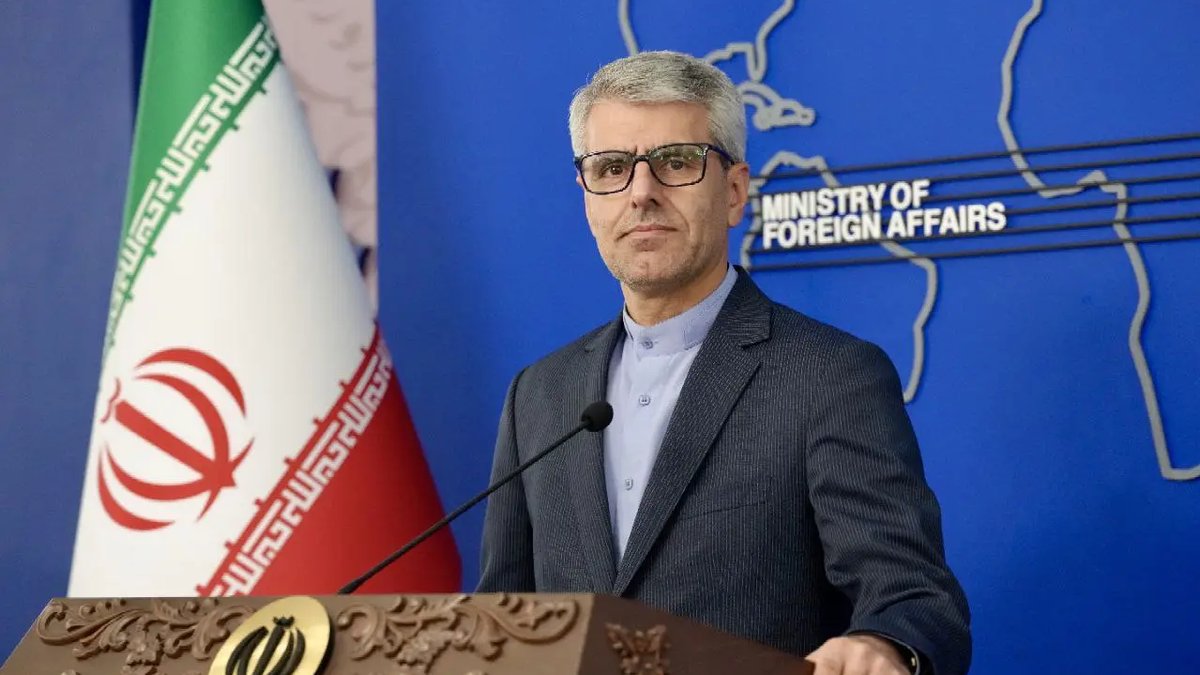
Iran, which defended its sovereignty against two nuclear armed countries, is now a superpower, Foreign Ministry spokesperson Esmail Baghaei has said.
In an interview at the Ministry in Tehran, he said the country is currently reviewing United States’ response to its peace proposal. Mr. Baghaei added that Iran’s ties with India are “flourishing”.
At a press conference in Tehran, when you were asked what means and support you have to counter the United States— a super power — you responded by saying that Iran is also a superpower. Could you elaborate on this thought?

It is true that a nation which has demonstrated its determination and resilience in defending its sovereignty and dignity against two nuclear-armed regimes — in my view, that itself is proof that such a nation should be considered a superpower.

What is the current status of talks between the U.S. and Iran? There has been a lot of draft exchanges, but where do things stand today?
We are currently studying their latest proposal, which was sent in response to our 40-point proposal. It is under review, and once we complete our assessment of the document, we will submit our response to the Pakistani mediators.
Do you think the gap is too wide to be bridged, or is there still a possibility of reaching an understanding?
You have to consider the very difficult history of Iran–U.S. negotiations. It is true that while we were engaged in dialogue and a diplomatic process, they attacked us [In June 2025 and February 2026] — this reflects the deep level of mistrust between Iran and the U.S.
Also, knowing that the nuclear issue has been used as a pretext to exert pressure on Iran means that we need to invest significant time and energy in evaluating all aspects of any potential agreement. As I said, we are currently reviewing their proposals and suggestions, and we will see what happens next.
U.S. President Donald Trump says Iran is internally divided, and it’s unclear who is actually making decisions, with the IRGC saying one thing and the political leadership another. What is your response to these claims?
That is their problem. Perhaps they do not understand how things work in Iran. But we do — we know exactly what is happening here. Fundamentally, we will not be distracted by such misleading narratives coming from U.S. officials. We will remain focused on our national interests.
How do you see India–Iran relations? People in India would want to know whether Iran will impose any charges on Indian ships passing through the Strait of Hormuz?
We do not charge any country. What we are doing in the Strait of Hormuz is, as a coastal state, taking certain measures in accordance with international law to safeguard our national security and national interests against aggressors.
As for India–Iran relations, the ties between our countries are flourishing. We feel very close to the people of India. We are proud of the history of Iran–India relations. Both countries are members of the Non-Aligned Movement, and I believe the leaders of both nations are committed and eager to continue strengthening these good relations.