

Once tasked with expanding the BJP in a state where the party barely had a footprint, Dilip Ghosh is now part of Bengal’s first BJP-led government.




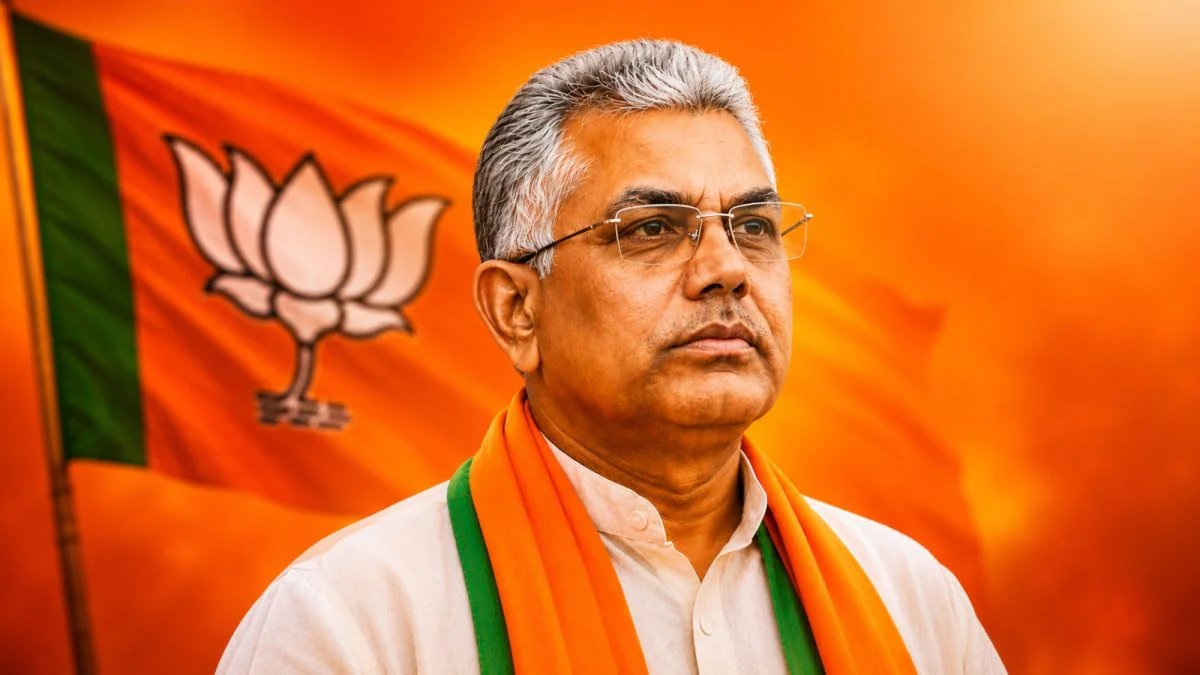
AI-generated image of Dilip Ghosh.
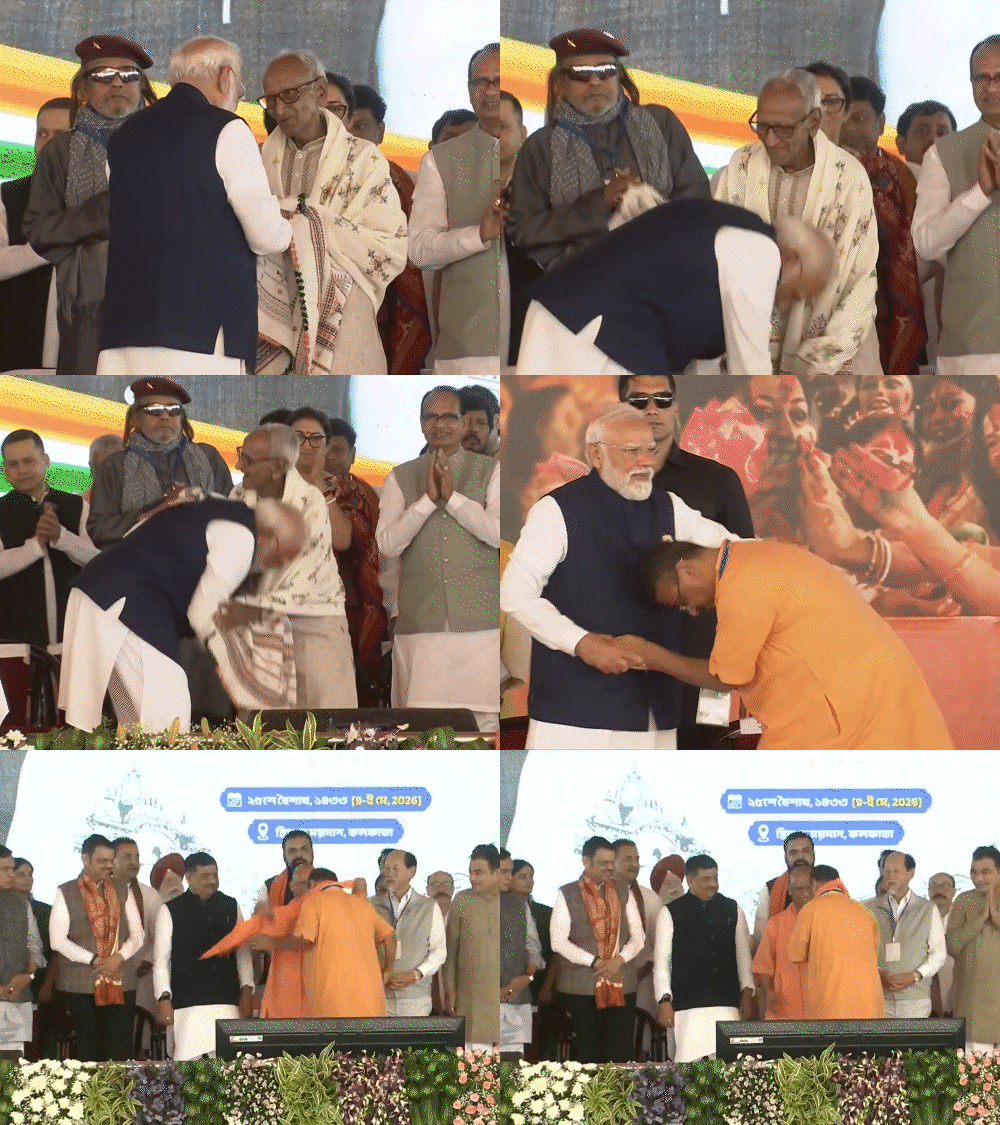
For years, Dilip Ghosh was among the most recognisable faces of the Bharatiya Janata Party’s long and often difficult political expansion in West Bengal. On Saturday, that journey entered a new phase as the veteran BJP leader took oath as a cabinet minister in the government headed by Suvendu Adhikari, the first BJP chief minister of the state.
The moment is politically significant not just because the BJP has finally formed a government in Bengal, but also because Ghosh was among the leaders who helped build the party’s organisational foundations years before it emerged as a serious electoral challenger to the Trinamool Congress (TMC).
Ahead of the swearing-in ceremony, Ghosh had said the BJP government would work towards fulfilling “the wishes of the people and the dream of Syama Prasad Mookerjee”.
“We struggled for a long time. The results have now come, and a regime change has taken place. We will have to work for the fulfilment of the wishes of the people and the dream of Syama Prasad Mookerjee,” Ghosh said.
From RSS Worker To Bengal BJP Chief
Born near Gopiballavpur in West Bengal in 1964, Ghosh began his political journey through the Rashtriya Swayamsevak Sangh (RSS). He completed a diploma in engineering from a polytechnic college before becoming a full-time RSS worker.
Long before he emerged as Bengal BJP’s combative public face, Ghosh spent years working inside the RSS structure, focusing on cadre-building and organisational work. Between 1999 and 2007, he served as the RSS in-charge for the Andaman and Nicobar Islands and also worked closely with former RSS chief K S Sudarshan.
Those years shaped much of his organisational style, which later became central to the BJP’s Bengal strategy. Reflecting on his RSS background in an interview with ET Online, Ghosh said: “RSS taught us how to organise and mix with people. Those experiences shaped me and helped me reach out to every section of society.”
In 2014, as the BJP began aggressively expanding its footprint in eastern India following Narendra Modi’s rise at the national level, Ghosh was brought into the party organisation as general secretary of the Bengal BJP unit. A year later, he was appointed state president at a time when the BJP remained a marginal force in Bengal politics.
How Dilip Ghosh Helped Expand BJP In Bengal
The BJP’s electoral numbers in Bengal reflected how limited the party’s presence once was.
The party failed to win a single Assembly seat in 2001 and 2011. In 2006, it contested in alliance with the TMC but still failed to secure any seat. The BJP finally opened its account in 2016 with just three seats.
That gradual rise later turned into a dramatic political shift.
Under Ghosh’s leadership, the BJP expanded beyond its traditional urban pockets and built networks across tribal regions, north Bengal, Jangalmahal and working-class districts. He focused heavily on booth-level organisation, district outreach and cadre mobilisation at a time when many political observers still viewed the BJP as electorally irrelevant in Bengal.
“BJP’s rise in Bengal was driven by a growing public desire for political change and the party’s ability to build a grassroots movement that earlier did not exist in the state. People in Bengal remember Syama Prasad Mookerjee and his ideology, but for years, there was no large-scale movement capable of challenging the ruling establishment or improving people’s lives,” Ghosh told ET Online.
According to Ghosh, the BJP’s Hindutva outreach campaigns, including Ram Navami processions and public mobilisation programmes, gradually helped the party expand its connect on the ground.
His own electoral breakthrough came in 2016 when he defeated veteran Congress leader and seven-time MLA Gyan Singh Sohanpal from the Kharagpur Sadar Assembly constituency. At the time, the BJP had only three MLAs in the Bengal Assembly.
Three years later, Ghosh won the Medinipur Lok Sabha seat by nearly 89,000 votes as the BJP scripted its biggest-ever parliamentary breakthrough in Bengal, winning 18 of the state’s 42 Lok Sabha seats.
The Rise Of ‘Unishe Half, Ekushe Saaf’
As Bengal BJP expanded politically, Ghosh also became one of the party’s most visible campaigners on the ground.
Through programmes such as “Chai Pe Charcha”, he regularly travelled across districts and interacted with workers and residents directly. His slogan “Unishe Half, Ekushe Saaf” (Half in 2019, clear in 2021) — signalling a strong performance in the 2019 Lok Sabha polls before targeting power in the 2021 Assembly elections — became one of Bengal BJP’s most recognisable political catchphrases.
During one such outreach programme in Kolkata’s Lake Town area in August 2019, Ghosh was allegedly attacked by TMC workers, an incident that further strengthened his image among BJP cadres as an aggressive organisational leader.
Ghosh later said the BJP’s organisational growth accelerated after PM Modi came to power in 2014. “In 2016, when I was state president, BJP’s vote share in Bengal rose to around 10.5%. That encouraged us because we realised people wanted an alternative,” he told ET Online.
He also acknowledged that the weakening of the Congress and the Left Front created political space for the BJP’s expansion in the state.
Setbacks, Internal Churn And Return To Government
Despite the BJP’s organisational rise, Ghosh’s own political journey also saw setbacks.
He was re-appointed Bengal BJP president in January 2020 and campaigned extensively during the 2021 Assembly elections, though he did not contest himself. After the BJP failed to defeat the TMC in that election, he was replaced as state president by Sukanta Majumdar and later appointed BJP national vice-president.
The 2024 Lok Sabha election marked another difficult phase. Shifted from his Medinipur stronghold to the Bardhaman-Durgapur constituency, Ghosh lost to TMC candidate Kirti Azad by more than 1.37 lakh votes, his first electoral defeat.
Yet, even after losing organisational prominence within the party, Ghosh continued grassroots outreach and remained active in Bengal politics. He repeatedly maintained that electoral setbacks were “part of politics” and continued attending cadre meetings and local programmes across the state.
Read More