

Under the new doctrine, any major terror attack is now treated as a strategic trigger that demands a multi‑layered, sustained response, not just a single strike.


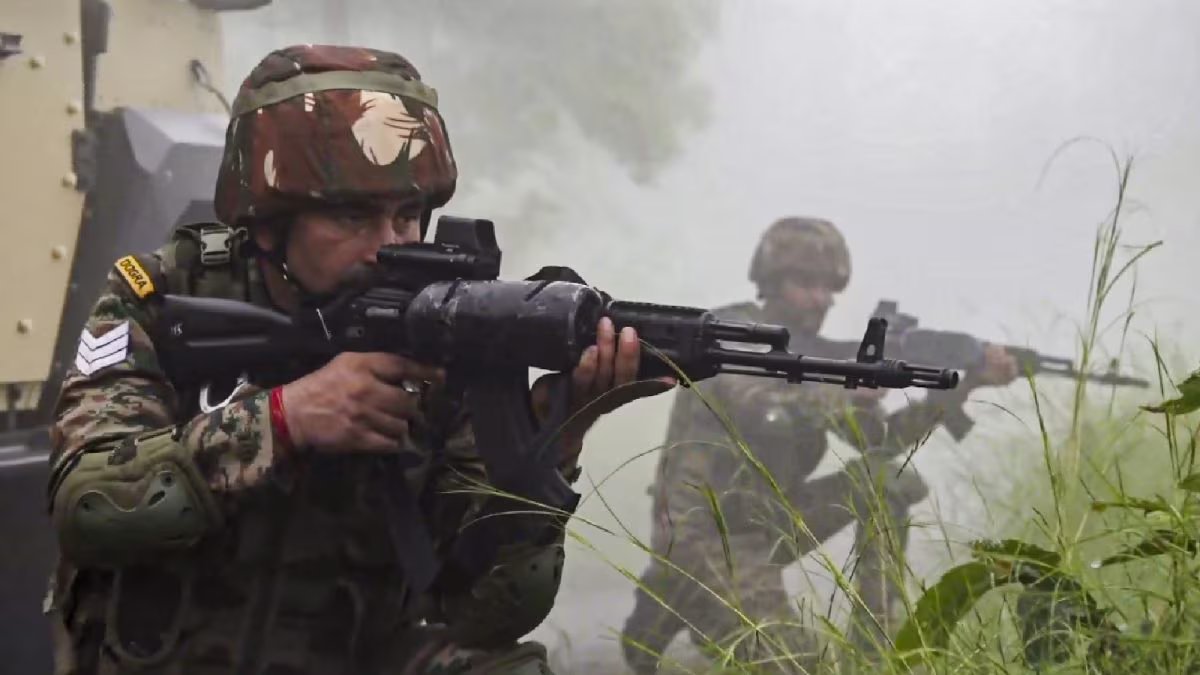
Beyond Sindoor and the IWT suspension, India has layered in a series of sustained counter‑terror operations. (Image: PTI/File)
On April 22, 2026, India marks one year since the Pahalgam terror attack, a strike that shattered the idea of a relative calm in Kashmir’s tourist belt. The attack, which left 26 civilians dead, was not just another addition to the long list of terror incidents in Jammu and Kashmir, it became a turning point. One year later, the attack has become the defining trigger for a hard‑edged, multi‑dimensional counter‑terror doctrine in which India now uses military strikes, internal security crackdowns, diplomatic isolation, and even water‑leveraging tools like the Indus Water Treaty to pressure Pakistan.
The government also concluded that if Pakistan‑based groups and their state‑sponsored networks could keep using Indian soil as a battlefield, India would have to dictate the terms, timing, and depth of its own response. At the centre of this shift was a blend of overt resolve and covert capability, exemplified by operations such as Operation Sindoor.
The Indus Water Treaty: A Strategic Lever
For decades, the Indus Waters Treaty (IWT) of 1960 was treated as a rare pillar of India–Pakistan stability, even surviving three wars. It allocated the eastern rivers (Ravi, Beas, Sutlej) fully to India and the western rivers (Indus, Jhelum, Chenab) mainly to Pakistan, with detailed mechanisms for data‑sharing, project‑notifications, and dispute resolution.
That changed within 24 hours of Pahalgam. In a five‑point action plan announced by the Indian government, the Indus Water Treaty was suspended “until Pakistan ceases its support for cross‑border terrorism.” This move formally put the treaty “in abeyance”, suspending regular meetings of the permanent Indus Commissioners and data‑exchange mechanisms. It signalled that water, once framed as a cooperative norm, is now explicitly treated as a strategic asset that can be leveraged in response to terror and security crises.
‘Terror And Talks Cannot Co-Exist’: A Doctrine Shift
For years, India’s counter-terror approach oscillated between defensive grid management in Kashmir and occasional high-visibility retaliation, such as the Balakot airstrike. Post-Pahalgam, the emphasis appears to have moved decisively toward pre-emption and persistent pressure.
Instead of waiting for attacks and responding episodically, agencies began focusing on pre-emptive neutralisation of modules, continuous surveillance of hybrid militants, and faster decision-making cycles for retaliation.
Prime Minister Narendra Modi, in the weeks after the attack, underlined this shift in tone: “India will not just respond to terror, India will hunt it down. Those who target innocent lives will be pursued beyond the limits they imagine.”
In his speech on Operation Sindoor, he declared that the attackers had tried to “wipe the sindoor from the foreheads of our sisters,” and in response, India “destroyed the very headquarters of terror.”
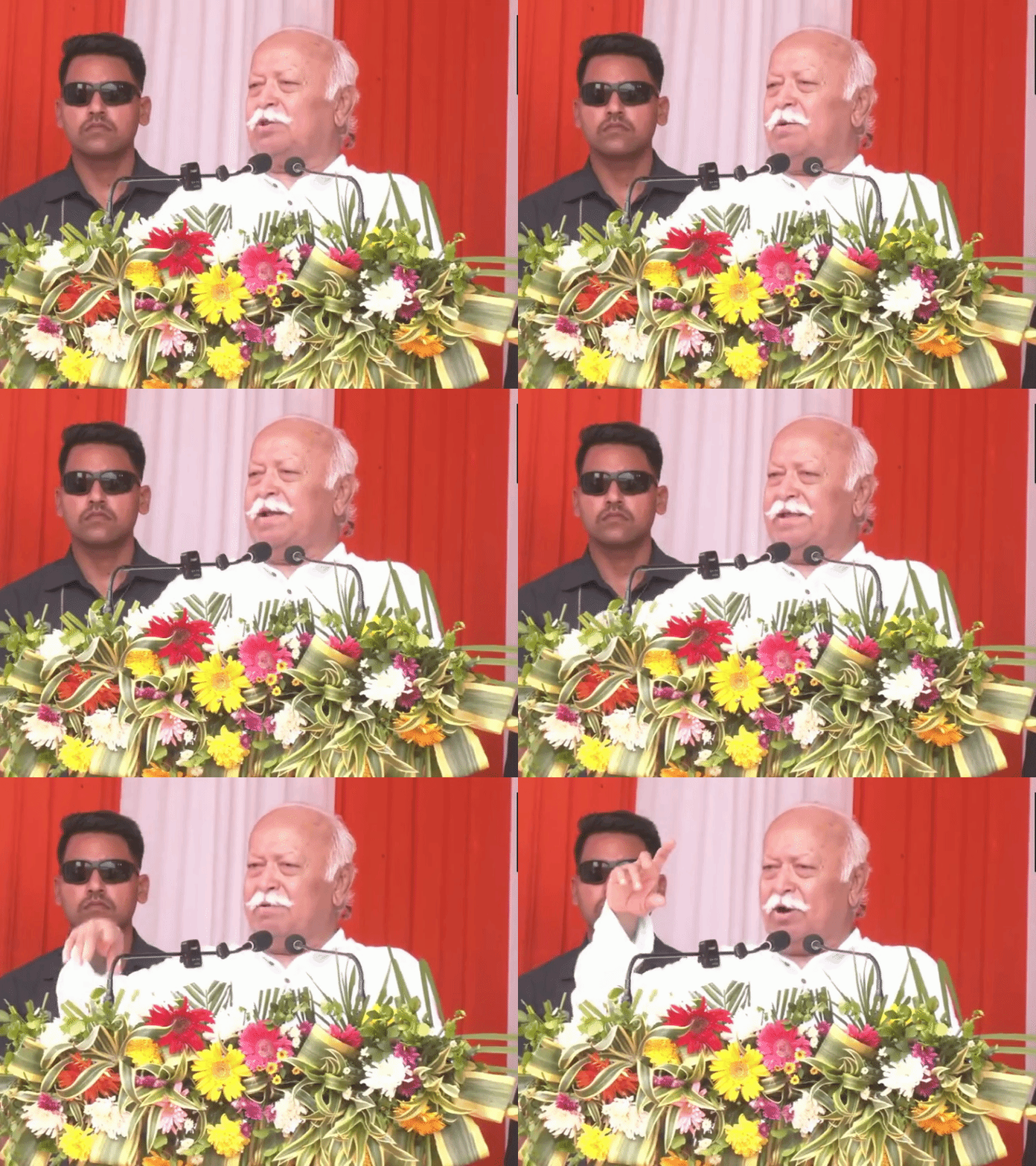
In a later Lok Sabha address, Modi laid out the core of India’s new counter‑terror doctrine. “India will respond decisively to any terror attack on its soil,” he said, adding, “Nuclear blackmail will not deter India.”
“Terrorists, their masters, and the governments that support them will be judged by the same yardstick,” Modi said.
He also struck a memorable line that has since become the slogan of this new playbook: “Terror and talks cannot coexist. Water and blood can never flow together.”
This marked a clear departure from the past, where India’s responses were often framed as one‑off “surgical” or “kinetic” actions, after which New Delhi would return to the old habit of diplomacy‑heavy engagement with Pakistan. Under the new doctrine, any major terror attack is now treated as a strategic trigger that demands a multi‑layered, sustained response, not just a single strike.
Operation Sindoor: Striking The Terror Nerves
The most visible military expression of this new doctrine is Operation Sindoor, launched on the intervening night of May 7-8, 2025. In just 25 minutes, India fired 24 precision missiles and conducted air‑based strikes on nine terror sites across Pakistan‑occupied Kashmir and mainland Pakistan.
Prime Minister Modi described Sindoor as a “new form of justice”, explaining that India struck not at random locations, but at the nerve centre of terror infrastructure. At a later parliamentary session he said, “We precisely attacked the nerve centre of these terrorists and dismantled the core of their operations.”
Key terrorist hubs that were hit in the operation include:
- Lashkar‑e‑Taiba’s headquarters in Muridke (Punjab, Pakistan).
- Jaish‑e‑Mohammed’s main base in Bahawalpur (Punjab, Pakistan).
- Multiple camps in Muzaffarabad, Kotli, Rawalakot, Chakswari, Bhimber, Neelum Valley, Jhelum, Chakwal, and the Sialkot‑Shakar Garh belt.
Home Minister Amit Shah stated that over 100 terrorists were neutralised and all nine terror sites were destroyed, with no Pakistani civilians killed because strikes were confined to 100 km inside Pakistan and strictly targeted terror infrastructure.
Operation Sindoor is not just a one‑off strike; Modi has signalled that the campaign is “paused” rather than finished, and can be reactivated if Pakistan resumes backing terror.
Other Major Anti‑Terror Operations Post‑Pahalgam
Beyond Sindoor and the IWT suspension, India has layered in a series of sustained counter‑terror operations that reflect the new “continuous‑pressure” doctrine.
Operation Mahadev: Operation Mahadev is the codename for the India‑side, ground‑based counter‑terror operation that hunted down and eliminated the three Pakistani terrorists directly responsible for the 22 April 2025 Pahalgam attack. Unlike Operation Sindoor, which was a deep‑strike, missile‑and‑air‑based campaign across Pakistan‑occupied Kashmir and Pakistan, Operation Mahadev was an intelligence‑driven manhunt inside Kashmir that culminated in a high‑risk forest encounter about three months after Pahalgam. The operation unfolded in the rugged terrain of south Kashmir, with the terrorists moving through areas like Tral, Hapatnar, Bugam, and Dachigam before being cornered in the forests around Mahadev Ridge near Dara/Harwan and Lidwas, close to Srinagar
Operation Amrit: Intelligence‑led operations across south Kashmir and the Jammu frontier, targeting recruitment, logistics, and local support networks have continued post Pahalgam. Security agencies report a sharp rise in terror deaths compared with the pre‑Pahalgam year, underscoring the intensified pressure on local cadres.
Operation Trident: This has reinforced maritime grids along the Gujarat–Maharashtra–Goa coast, with upgraded surveillance and joint drills between the Indian Navy, Coast Guard, and state police. This operation is aimed at preventing any 26/11‑style maritime infiltration by using real‑time intelligence and hardened coastal‑security protocols.
Operation Vajra: Investigative agencies have carried out a nationwide crackdown on Pakistan‑linked sleeper cells, cyber‑terror networks, and financial channels in cities like Delhi, Mumbai, and Bengaluru. Authorities have shut down thousands of SIM cards and arrested over 700 individuals linked to terror financing and communication support.
Together with Operation Sindoor and the Indus Water Treaty suspension, these campaigns form a multi‑pronged architecture where military, internal‑security, and diplomatic‑economic tools operate in lockstep.
The New Normal
One year after Pahalgam, India’s counter‑terror playbook is no longer about one‑off precision strikes followed by a rush back to diplomacy. It is now a four‑track doctrine:
- Military precision
- Sustained internal‑security pressure
- Zero‑tolerance political messaging
- Hydro‑diplomatic leverage
As Home Minister Amit Shah put it: “We will not let terror dictate our peace.”
April 21, 2026, 11:36 IST
Read More