

Tamil Nadu Election Analysis 2026: As campaigning concludes, a clear picture has emerged of how the main parties approached the election and who ran the most effective campaign.




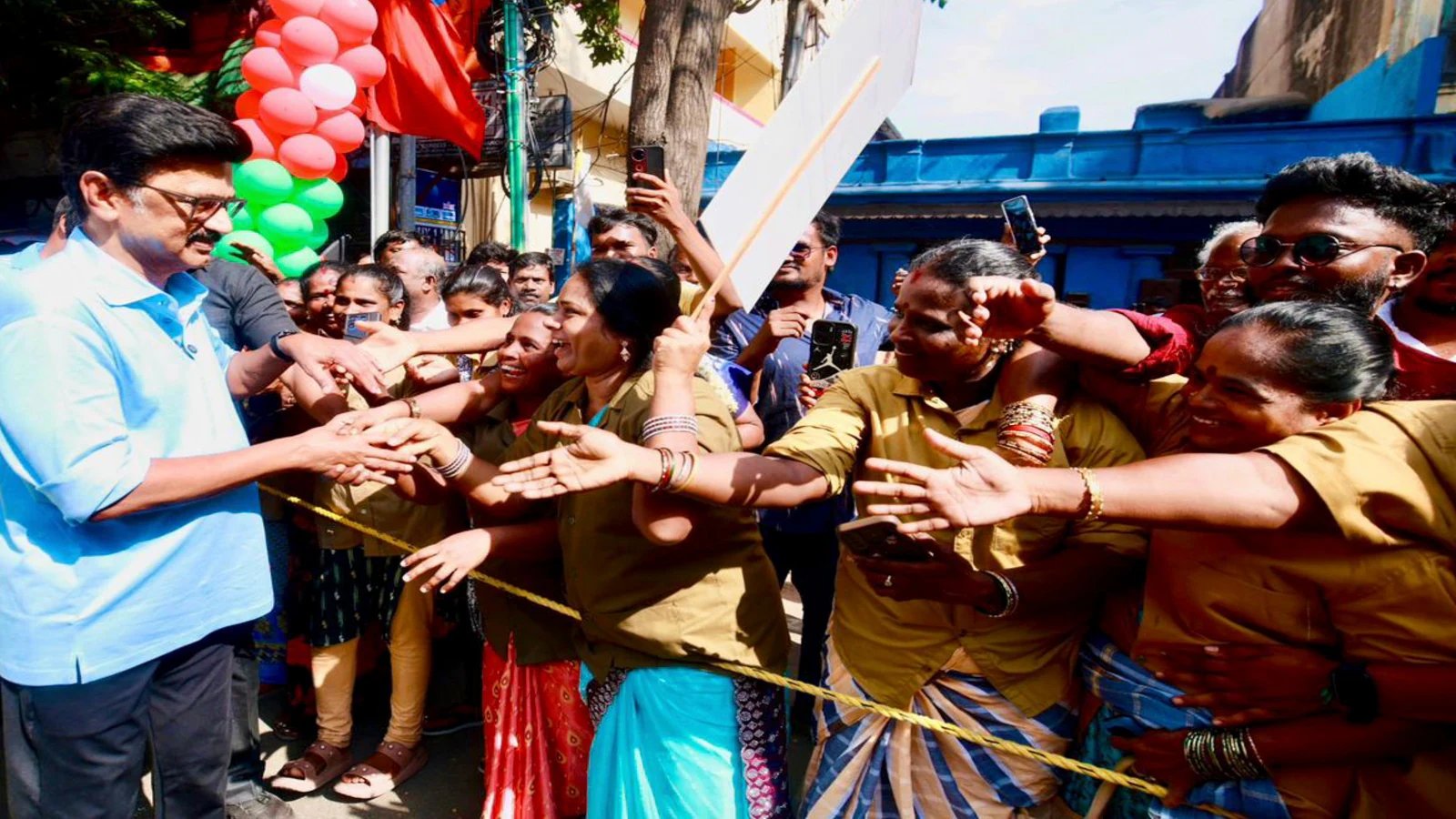
DMK Chief MK Stalin campaigning for the Tamil Nadu Assembly Polls. (Photo: PTI)
Tamil Nadu Election Analysis 2026: Tamil Nadu will vote for its 234-member Assembly on April 23, with counting scheduled for May 4. As campaigning concludes, a clear picture has emerged of how the main parties approached the election and who ran the most effective campaign.
Each party adopted a distinct approach. The DMK focused on a clear and repeatable statewide narrative backed by governance and welfare. The AIADMK followed a traditional opposition strategy built around reclaiming lost ground. TVK relied on charisma, fresh appeal and mobilisation of supporters. BJP emphasised visible leadership and targeted campaigning.
Based on reports, the Dravida Munnetra Kazhagam appears to have delivered the most complete and structured campaign across the state.
Why DMK stands out?
The DMK built its campaign around a simple and consistent message: governance, welfare delivery and regional identity. Its slogans, including “Oraniyil Tamil Nadu” and “Stalin Thodarattum, Tamil Nadu Vellattum,” reinforced a clear “continue Stalin” pitch.
The party also pushed its manifesto early, focusing on jobs, support for women, infrastructure and opposition to Hindi imposition. This helped it maintain a strong state-level narrative.
Its position as the ruling party added to its advantage, allowing it to combine welfare messaging with its record in government. However, it still faces the risk of anti-incumbency.
AIADMK’s opposition push
The All India Anna Dravida Munnetra Kazhagam ran a visible statewide campaign centred on challenging the ruling party. Led by Edappadi K Palaniswami, the party focused on district-level outreach and a welfare-heavy promise set.
Its campaign highlighted cash support for women, free transport, housing and jobs. The strategy aimed to rebuild its base with a sharper anti-DMK message.
While the campaign remained strong on the ground, it often appeared reactive rather than setting the agenda.
TVK’s energy and outreach
The Tamilaga Vettri Kazhagam campaign stood out for its energy and visibility. Built around actor Vijay, the party relied heavily on personality, youth appeal and a movement-like approach.
Its strategy included public rallies, roadshows, door-to-door engagement, and women- and youth-focused outreach. The campaign also stressed anti-corruption, education, jobs and Tamil identity, while positioning itself as a new alternative to established parties.
However, TVK still appeared to be developing its organisational strength, with limited depth compared to older parties.
BJP’s approach and visibility
The Bharatiya Janata Party ran a campaign that was more candidate-focused and high on visibility rather than a unified statewide narrative. It relied on a “good governance” pitch and strong criticism of the DMK, while projecting a united NDA front.
National leaders such as Amit Shah and Rajnath Singh played key roles, along with state figures like L Murugan and Tamilisai Soundararajan.
Amit Shah’s roadshow in Mylapore drew large crowds and created a strong visual moment, especially around the Kapaleeshwarar temple area. The event aimed to showcase BJP’s strength in Chennai and reinforce its political messaging. However, its actual electoral impact remained uncertain, with reports suggesting mixed results beyond the optics.
Star campaigners and faces
The BJP fielded a long list of national and state leaders, including Narendra Modi and Yogi Adityanath.
AIADMK’s campaign largely revolved around Edappadi K Palaniswami as its main face, supported by senior leaders and district cadres.
TVK depended almost entirely on Vijay as its central campaign figure, with organisational support from figures such as Aadhav Arjuna and Jhon Arokiasamy.
If the question is who ran the most effective campaign, the answer points clearly to the DMK. Its messaging was consistent, structured and statewide.
If the focus is on excitement and visibility, TVK generated strong momentum, especially among younger voters. AIADMK maintained a solid presence as the main opposition, while BJP worked to expand its footprint.
In simple terms, BJP tried to build space, AIADMK aimed to regain support, and TVK sought to convert popularity into political strength. DMK, however, delivered the most complete campaign in terms of organisation, message and reach.
Chennai [Madras], India, India
April 21, 2026, 13:37 IST
Read More