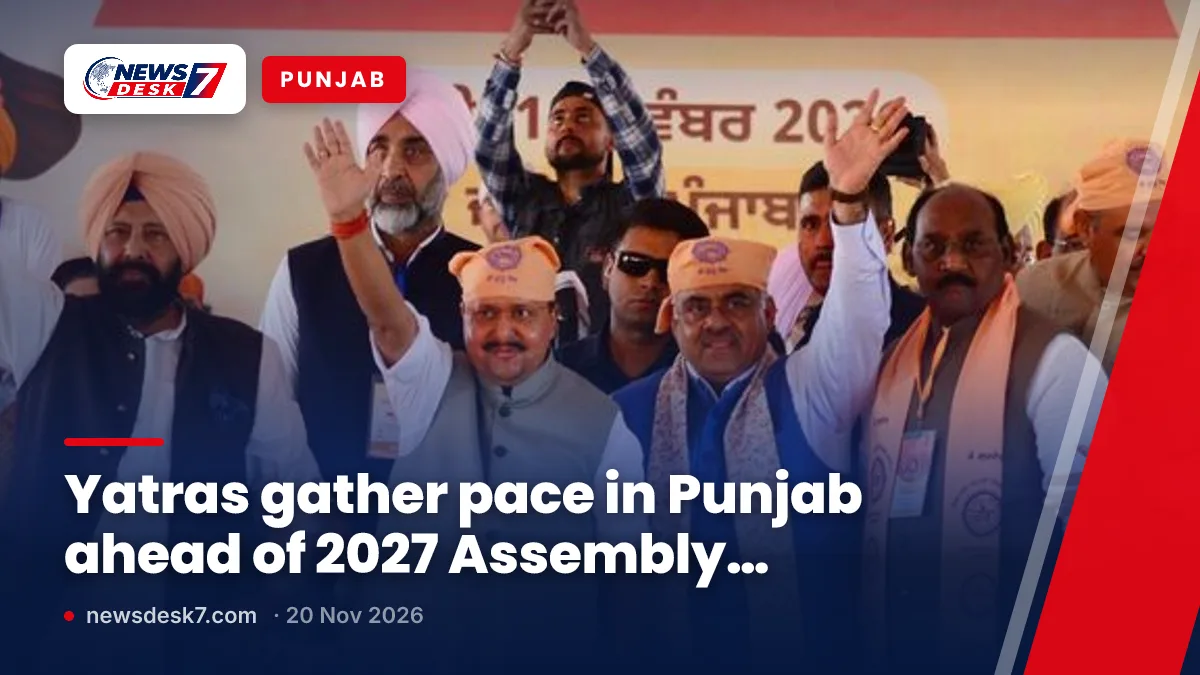
With the 2027 Assembly elections approaching, political parties in Punjab are increasingly taking their battle to the streets, turning yatras into a tool for political mobilisation and voter outreach.
From former Chief Minister Charanjit Singh Channi’s ‘Jawani Sambhal’ cycle yatra to the Shiromani Akali Dal’s (SAD) mooted bus yatra under its ‘Punjab Bachao Yatra’, MP Harsimrat Kaur Badal’s ‘Maawan Dhiyan Insaf Yatra’ and the BJP’s ‘Samrasta Sankalp Yatra’, parties are using these campaigns to highlight issues they believe could shape the electoral contest, while targeting the Aam Aadmi Party (AAP) administration.
The yatras are not merely aimed at attacking political opponents. Former Punjab Pradesh Congress Committee (PPCC) chief Amrinder Singh Raja Warring, for example, appears to be using his ‘Insaaf Yatra’ to assert his position within the party.

To counter the Opposition’s offensive, the ruling AAP has also declared four grand shobha yatras from November 30 to December 3 to honour the life, teachings and legacy of Guru Ravidas, adding to the growing political activity around public outreach programmes in the state. Although these shobha yatras are religious and commemorative events rather than conventional political yatras, they will also offer the government an opportunity to connect with people across Punjab. In November last year, the AAP government had organised four major yatras (Nagar Kirtans) to mark the 350th martyrdom anniversary of Guru Tegh Bahadur earlier.
Channi’s eight-day cycle yatra, covering 625 km and 28 Assembly segments, ended at Khanna on Thursday. The push, which began from Chamkaur Sahib on November 12, aimed to reach out to young voters while highlighting issues like drug abuse, joblessness, corruption and law and order. It was launched as part of the Congress’s broader ‘Punjab Mangda Insaaf’ drive against the CM Bhagwant Mann-led AAP government.
The SAD, meanwhile, had declared a statewide bus yatra under the leadership of party president Sukhbir Singh Badal. The first phase was slated to start from Takht Damdama Sahib on November 10 and cover 14 Assembly constituencies by November 22. Nevertheless, the party has deferred the yatra twice, first on November 10 and then on November 16. The decision has come in the midst of speculation about a possible alliance with the BJP. The SAD has maintained that its constituency-level programmes and door-to-door outreach will carry on.
At the same time, senior SAD leader and Bathinda MP Harsimrat Kaur Badal has been holding the ‘Maawan Dhiyan Insaf Yatra’, mobilising women across the state against the drug menace, police brutality and administration corruption, besides raising issues related to women’s safety.
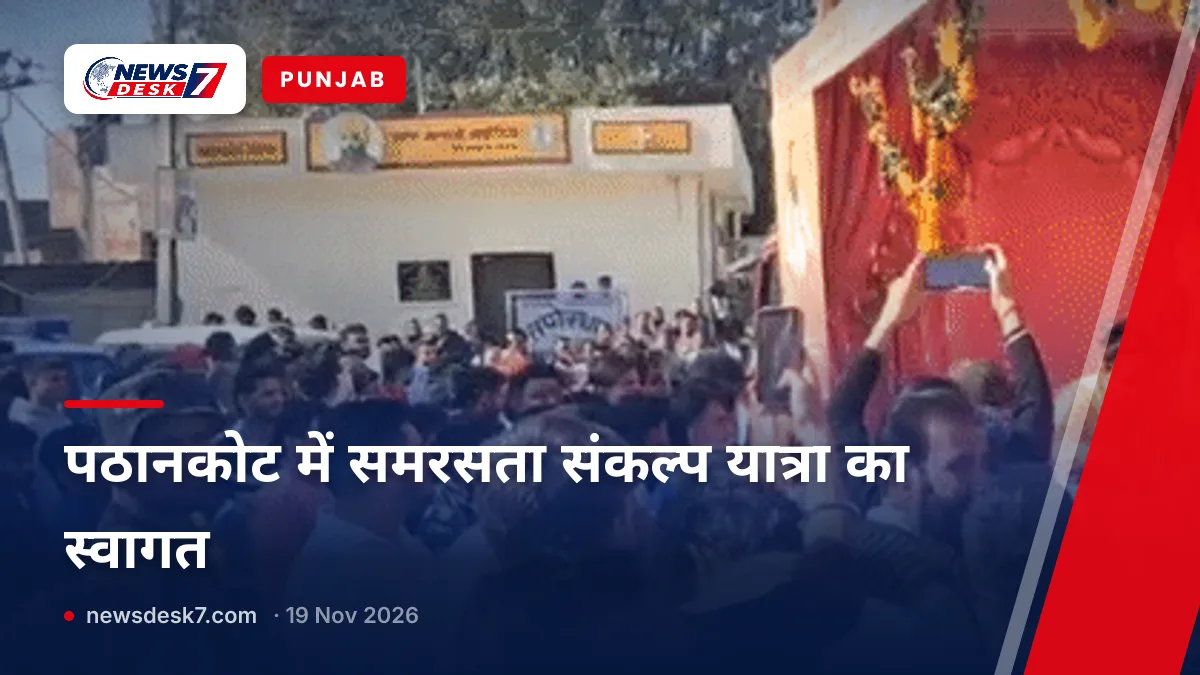
The BJP, too, is expanding its political activities in Punjab. Its national president, Nitin Nabin, flagged off the ‘Samrasta Sankalp Yatra’ near Dera Sachkhand Ballan in Jalandhar on November 18. The yatra is being organised to mark the 650th Parkash Purb of Guru Ravidas. Covering 2,558 km, it will pass through seven states and some Union Territories before concluding in Varanasi on December 3. Its Punjab leg will cover about 700 km across 13 districts over five days. Through the programme, the BJP is seeking to reach out to all sections of society.
Earlier, the party had organised the ‘Nasha Mukt Punjab Yatra’, which covered all 117 Assembly constituencies. The push focused on the drug menace and targeted the state government over its handling of the issue. It culminated in a rally addressed by Union Home Minister Amit Shah in Jalandhar on September 30 this year.
The ruling AAP has, otherwise, largely relied on its organisational network, public meetings and door-to-door campaigns to highlight the government’s achievements. In September, it announced a statewide outreach drive involving 2.68 lakh booth-level workers to reach electors across all 25,332 polling booths. CM Bhagwant Mann and other party leaders have also been holding ‘Lok Milni’ programmes.
The AAP is likely to formally launch its election drive at a rally in Moga on November 26, which will be attended by party national convener Arvind Kejriwal and CM Mann. The party has already declared 71 candidates for the upcoming Assembly polls.
Prof Manjit Singh (retd), Panjab University, Chandigarh, remarked political yatras were a more economical and effective way of campaigning than rallies, as they helped parties reach individuals without having to mobilise sizeable gatherings at one place. He remarked organising rallies was expensive and required considerable attempt to bring individuals from villages, whereas a yatra involving around 100 vehicles could generate greater publicity at a relatively lower cost. “In today’s politics, a moving campaign gets more visibility and creates a greater impact than a one-day rally, which is largely limited to photographs and coverage of the event,” he stated.
He added that religious yatras were traditionally organised by religious bodies including the Shiromani Gurdwara Parbandhak Committee (SGPC) or the Akal Takht. However, political parties were increasingly using such initiatives to generate public attention and set up their presence among voters.