

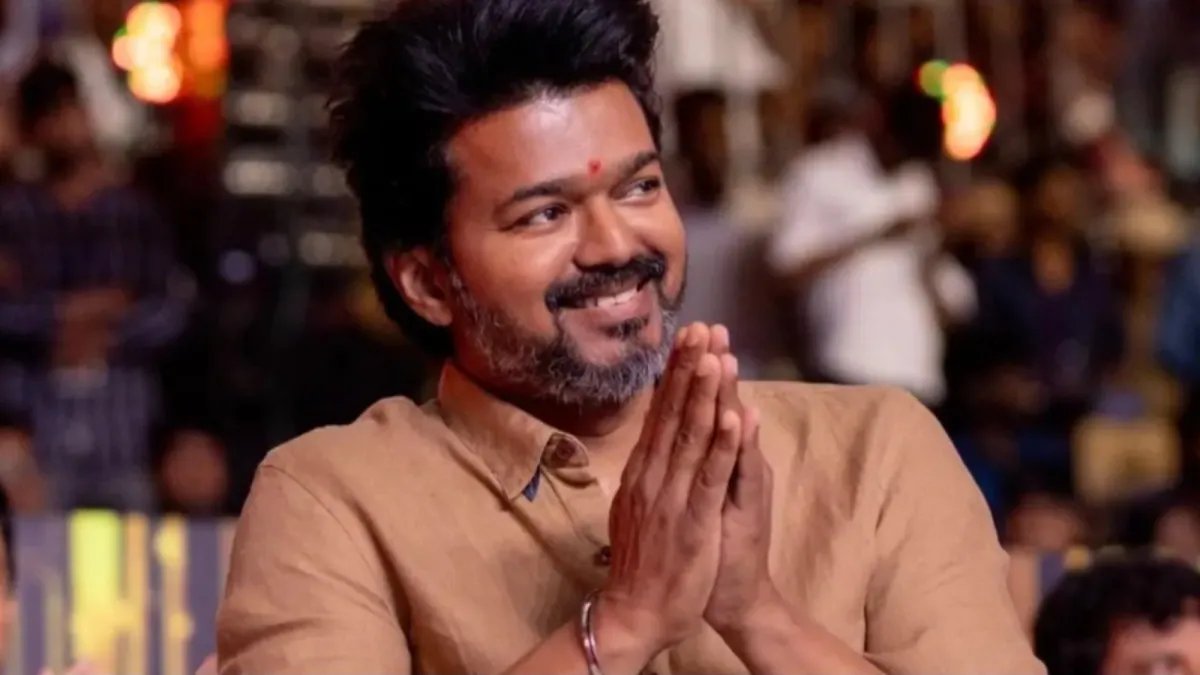
The transition from the silver screen to the secretariat in Tamil Nadu brings with it a complex set of structural and political hurdles for Vijay




To survive beyond the honeymoon period, the TVK must evolve past its ‘anti-establishment’ and ‘anti-DMK’ rhetoric. File pic
The historic ascent of actor-politician Vijay to the Chief Minister’s office would mark a paradigm shift in Tamil Nadu’s political landscape. However, the transition from the silver screen to the secretariat brings with it a complex set of structural and political hurdles. As the Tamilaga Vettri Kazhagam (TVK) prepares to take the reins, the following ten challenges will define the success or failure of Vijay’s debut administration.
1. Proving Political Stability
Although the TVK emerged as the single largest party, it fell short of a solo majority, necessitating a reliance on the Congress, Left parties, and the VCK. This coalition arithmetic creates immediate vulnerabilities, including constant bargaining for key ministries and policy influence from allies. Navigating a fragile coalition while under intense scrutiny from the Governor will make the first 6 to 12 months a critical test of Vijay’s survival instincts.
2. Transition from Cinema to Governance
Following in the footsteps of legends like MG Ramachandran and J. Jayalalithaa, Vijay must now convert mass popularity into administrative credibility. Governance requires a different skill set than campaigning—specifically managing a complex bureaucracy, handling cabinet factions, and mastering budget discipline. Analysts remain divided on whether the public voted for the TVK’s organisational depth or simply for “Vijay the symbol”.
3. Building a Strong Administrative Team
As a nascent organisation, the TVK is populated by first-time MLAs and relatively inexperienced district leaders. Unlike the DMK or AIADMK, the TVK lacks a decades-old administrative machinery. Finding capable ministers who can prevent internal power centres from forming while establishing a professional governance structure will be a daunting task for the new Chief Minister.
4. Handling the DMK as a Formidable Opposition
Despite their electoral setback, MK Stalin and the DMK remain deeply entrenched in the state’s institutional fabric. With a massive cadre network, local body strength, and a sophisticated media ecosystem, the DMK is expected to be an aggressive opposition. Every move of the inexperienced TVK government will be placed under a political microscope.
5. Managing AIADMK Dynamics
The AIADMK, while diminished, still retains a significant rural vote bank and influence in the Thevar belt. Reports of behind-the-scenes negotiations and potential factional movements among AIADMK MLAs suggest that Tamil Nadu’s political environment will remain highly fluid and unpredictable.
6. Economic and Employment Pressure
Public expectations are sky-high, particularly regarding job creation for the youth and industrial growth. However, Vijay inherits a state facing significant fiscal pressure and a heavy welfare subsidy burden. Urban infrastructure stress and industrial competition from neighbouring states mean that the “fast change” expected by young voters will be difficult to deliver.
7. Managing the Expectations of the Fanbase
This remains Vijay’s most unique challenge. His core supporters expect cinematic transformation—clean governance and anti-corruption action delivered with the speed of a movie script. In reality, the wheels of administration move slowly, and any perceived gap between cinematic expectation and bureaucratic reality could lead to rapid public disappointment.
8. The Centre–State Relationship
Vijay’s campaign positioning against the BJP ensures that his relationship with New Delhi will be watched closely. Friction is likely in perennial areas of conflict: NEET, GST dues, language policy, and federal rights. The recent tension with the Lok Bhavan during government formation suggests that interactions with the Governor will remain politically sensitive.
9. Law & Order and Political Violence
A change in power often triggers cadre clashes, protest mobilisations, and political defections. For a government led by inexperienced political managers, the early months are often defined by law-and-order tests. Maintaining peace while handling the pressure tactics of rival parties will be a trial by fire for the new Home Minister.
10. Defining a Distinct Ideology
To survive beyond the honeymoon period, the TVK must evolve past its “anti-establishment” and “anti-DMK” rhetoric. The real question remains: What is the TVK governance model? Without a clear framework for economic policy, social justice, and minority outreach, sustaining long-term political momentum will be a struggle.
Read More