

For now, Tamil Nadu politics is shifting beyond rigid party lines and leaders like OPS are facing a “survival test” amid changing political equations




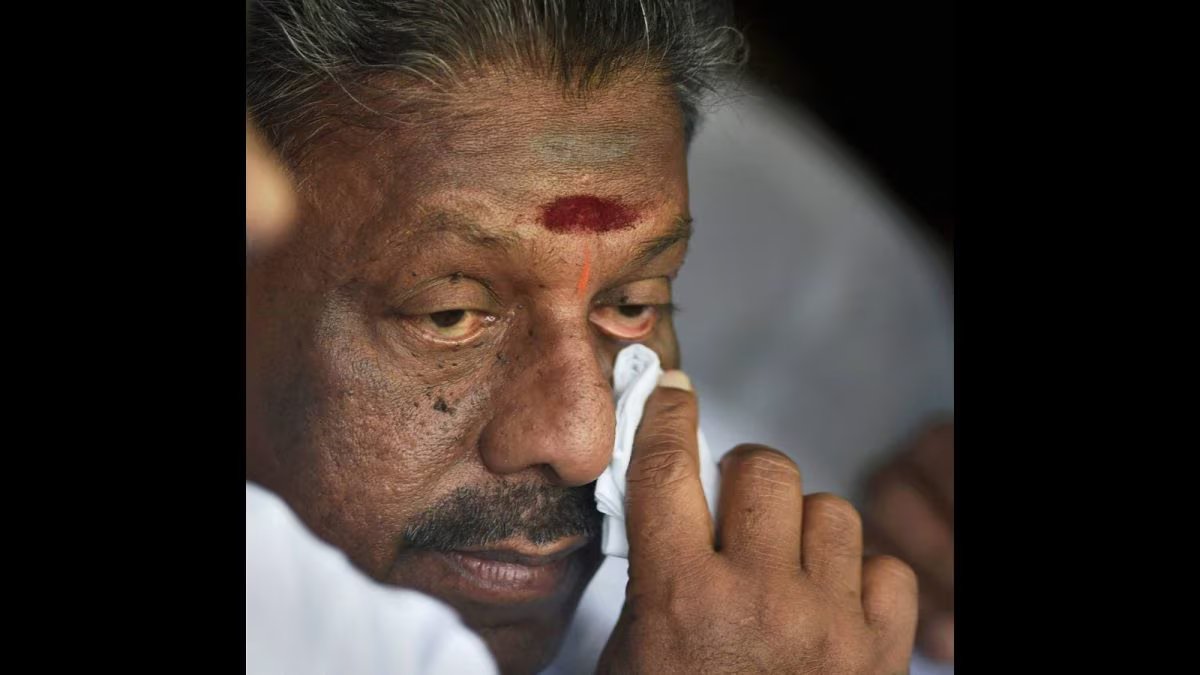
OPS still needs to convince traditional AIADMK voters, retain his personal base and avoid vote leakage to rivals. (PTI)
For over a decade, O Panneerselvam, or OPS as he is popularly called, was synonymous with quiet loyalty and electoral reliability in Tamil Nadu politics. In 2026, he is back in his stronghold of Bodinayakkanur. But this time, everything is different.
Backed by his once-bitter rival Dravida Munnetra Kazhagam (DMK), OPS is contesting against his former party’s symbol and is trying to hold on to a base built over decades under the All India Anna Dravida Munnetra Kazhagam (AIADMK). The result: what should have been a routine defence of a bastion has turned into the toughest battle of his career.
From Symbol To Survival
OPS has won Bodinayakkanur multiple times since 2011, often comfortably. But 2026 is no ordinary election. According to NDTV, he asked voters who backed him for years to vote for his “former arch-rivals”.
That shift alone changes the nature of the contest from a candidate-centric election to a credibility test. What was once a safe seat has become a high-risk referendum on Panneerselvam himself, making it probably the toughest electoral test of his career.
OPS’s biggest challenge is structural: Can he carry his voters without the AIADMK machine?
For nearly 50 years, OPS was embedded in the AIADMK ecosystem. This meant his victories were not just personal but backed by cadre networks, symbol recognition, and party loyalty built under J Jayalalithaa. Devoid of that support, he is now dependent on DMK’s cadre support and a borrowed vote base, a conundrum that The Times of India framed as a search for a “new sunrise”.
The underlying question that the leader now faces is: Does OPS have an independent vote base or was it always AIADMK’s?
The Death Of ‘Personal Vote’
Ground reports suggest a striking trend. While some voters say OPS is “one of their own”, many are still reluctant to abandon AIADMK. According to ThePrint, locals acknowledge his personal connect but party loyalty still shapes final choices.
This reflects a deeper truth about Tamil Nadu politics that the party often outweighs the person, highlighting that even a three-time chief minister can struggle if he loses the party symbol.
Caste Equations Vs Political Legacy
Tamil Nadu’s Bodinayakkanur is not just about OPS; it’s about social arithmetic.
According to The Economic Times, Thevars, including the Maravar community, are a key bloc, with other caste groups and minorities shaping margins on the seat.
Reports indicate that while OPS retains some personal goodwill, caste alignments are fluid and contested. At the state level too, caste continues to be decisive, especially amid AIADMK’s fragmentation.
Bodinayakkanur was once a fortress seat that was won repeatedly by OPS. Deeply embedded in AIADMK’s network, it is part of a region where the party has historically dominated. However, 2026 has changed that. AIADMK is fighting hard to reclaim its turf while DMK is investing heavily to snatch it, with new players eating into vote shares.
Strategy Or Political Suicide?
OPS’s switch to the DMK is perhaps the most controversial move of his career. He was expelled from AIADMK after a power struggle with Edappadi K Palaniswami and joined DMK in 2026, calling it a return to the “mother organisation”. But Tamil Nadu is not a state where party-switching is easily forgiven.
According to NDTV, politics here is built on ideological identity and emotional loyalty, which means the bipolar contest in the years gone by is not just electoral but historical.
So, when OPS crosses over, some voters don’t just see strategy; they see betrayal or inconsistency.
The EPS Factor
OPS’s current predicament cannot be understood without the AIADMK split. After the death of Jayalalithaa, power shifted to Palaniswami (EPS), leaving OPS sidelined. He was eventually expelled from the party, with the internal war reshaping the battlefield: AIADMK cadre largely aligned with EPS and OPS lost access to the party’s core machinery.
In effect, OPS is not just fighting DMK vs AIADMK—he is fighting his own political past.
Voters’ Dilemma
Voters in Bodinayakkanur now face three choices: Stay loyal to AIADMK, follow OPS to DMK or explore alternatives, including newer entrants in the state. This creates a fragmented voter psychology where they are forced to choose between emotional loyalty and personal familiarity and stability vs change. In such scenarios, even small shifts can swing the result.
While the DMK brings string advantages such as welfare delivery, organised cadre, and incumbency benefits, welfare cannot automatically transfer votes to a new candidate. OPS still needs to convince traditional AIADMK voters, retain his personal base and avoid vote leakage to rivals.
That’s a much harder task than simply riding the ruling party wave.
Put simply, the 2026 election is not just about one seat. It is about whether OPS can remain politically relevant and if personal legacy can survive party rupture. For now, Tamil Nadu politics is shifting beyond rigid party lines, and leaders like OPS are facing a “survival test” amid changing political equations.
April 24, 2026, 13:18 IST
Read More