

The exit polls projected that its performance combined in both states, the Left is caught between governance fatigue in the south and a suffocating binary contest in the east




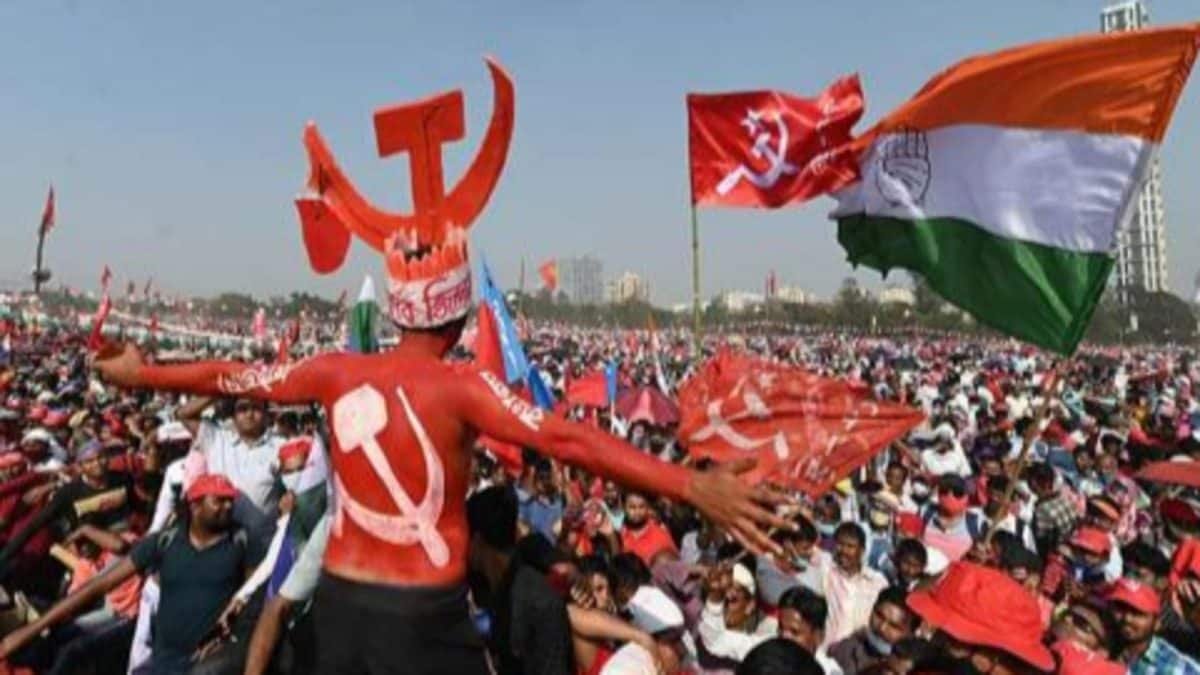
The Left’s formidable, though fatigued, cadre-based organisation may have managed a “last-mile” surge that pollsters failed to capture. (Image for representation: X)
Pollsters predicted a historic decline for the Left Front in Keralam and West Bengal, as voter projections for the 2026 assembly elections were published on Wednesday.
According to exit poll data, following the final phase of voting, the Left Democratic Front (LDF) in Keralam is poised to lose power while the Left parties in West Bengal may continue to struggle for their very survival.
The exit polls projected that its performance combined in both states, the Left is caught between governance fatigue in the south and a suffocating binary contest in the east.
Follow Kerala Exit Poll Results 2026 LIVE Updates Here
WHAT IS THE MOOD IN KERALAM?
In Keralam, the ruling LDF led by Chief Minister Pinarayi Vijayan, appears to have hit what analysts are calling a “pro-incumbency wall” after two consecutive terms.
While the LDF broke a decades-old trend in 2021 by winning a second term, it is less likely that it will be able to win a third consecutive term. The exit polls indicated a return to the state’s traditional “revolving door” politics, where power alternates between the two major fronts every five years.
Major pollsters are unified in predicting a comfortable victory for the Congress-led United Democratic Front (UDF). Axis My India has projected 78 to 90 seats for the UDF in the 140-member assembly, leaving the LDF with just 49 to 62 seats. Similarly, People’s Pulse forecast 75 to 85 seats for the UDF, while JVC suggests a range of 72 to 84.
The projected shift is largely attributed to deep-seated ministerial anti-incumbency. Although Pinarayi Vijayan’s personal popularity remains notable, several surveys showed public dissatisfaction with his cabinet citing the perceived underperformance of sitting ministers and controversial public statements.
Beyond governance, economic anxieties have played a major role. There is a growing narrative among the middle-class electorate that the state is failing to provide high-quality local employment, leading to a significant “brain drain”.
The mass emigration of youth seeking opportunities abroad and a perceived lack of world-class infrastructure have alienated once-loyal voters. A “leakage” of votes from traditional strongholds – particularly within the Ezhava community – toward the BJP has weakened the LDF’s position, indirectly benefiting the UDF in three-cornered contests.
WHAT ABOUT WEST BENGAL?
If the situation in Keralam reflects a struggle with power fatigue, the situation in Bengal is one of existential crisis. The Left Front, which famously ruled the state for 34 years, has been further marginalised in what has become a highly polarised battle between the Trinamool Congress (TMC) and BJP.
People’s Pulse projections for West Bengal offer a stark reality for the Left-Congress alliance, predicting a mere 0 to 1 seat. Other agencies, such as Matrize and P-Marq, have categorised the Left under “Others”, giving them a combined range of only two to 10 seats at best.
Analysts attribute this decline to a phenomenon described as “squeeze play”. The electorate has largely consolidated into two camps: anti-BJP voters are gravitating toward Mamata Banerjee’s TMC to prevent a BJP surge, while anti-TMC voters are moving toward the BJP as the only viable alternative.
This tactical voting leaves virtually no room for a “third front”. The Left’s struggle is exacerbated by a leadership vacuum and a failure to adapt its rhetoric.
Unlike the TMC’s Mamata Banerjee or the BJP’s Suvendu Adhikari, the Left Front has struggled to project a “face” that can galvanise both urban and rural voters. Its traditional class-based rhetoric has also struggled to compete with identity-driven campaigns and issues like the special intensive revision (SIR) of electoral rolls and religious polarisation.
The alliance with the Congress has been plagued by “deadlock” and poor ground coordination, with internal reports suggesting both parties viewed each other as a “burden”.
SO, WHAT HAPPENS ON MAY 4?
While the data paints a grim picture for the Left – signalling a resurgence of traditional power-sharing in the south and near-total marginalisation in the east – it is essential to remember that exit polls are not final.
These projections are based on voter samples and can be notoriously off-target in complex sociopolitical landscapes. The Left’s formidable, though fatigued, cadre-based organisation may have managed a “last-mile” surge that pollsters failed to capture.
(With agency inputs)
April 30, 2026, 07:00 IST
Read More