

From Anganwadi centres to district hospitals, India’s public health system is building a detection-to-treatment pipeline for diabetic children for the first time




India has become one of a select group of countries to formally integrate childhood diabetes screening and management into its public health architecture. (File for representation)
The next time a mobile health team visits a government school in India, they won’t just be checking for nutritional deficiencies or vision problems. They will now also be looking for signs of diabetes — in children as young as six.
India has become one of a select group of countries to formally integrate childhood diabetes screening and management into its public health architecture.
The guidance document released by the central government said that “dedicated public health programmes for type 1 diabetes mellitus (T1DM) specifically have found space in a select few high-income nations, such as the United Kingdom and the Scandinavian countries. Among nations with large populations, India stands poised to be a pioneer – one of the first to formalise guidance on type one diabetes and embed it within its public health mandate.”
The Ministry of Health and Family Welfare has released a 172-page Guidance Document for Screening and Management of Diabetes Mellitus in Children under the Rashtriya Bal Swasthya Karyakram (RBSK). The document states that “the scope of RBSK is now being expanded to meet the growing child health needs in India by including T1DM and T2DM under its mandate.”
Henceforth, “children and adolescents till 18 years of age will be routinely screened for signs and symptoms of diabetes by the MHTs under RBSK.”
Health Secretary Punya Salila Srivastava, in the foreword of the document, wrote that the document is providing “an evidence-informed, program-aligned framework for early identification, referral, continuous management and follow-up,” adding that the introduction of childhood diabetes into the NHM framework “marks a significant step forward in strengthening paediatric care.”
Why the urgency?
A new global analysis has positioned India as having the second-highest number of children living with overweight and obesity, trailing only China. The World Obesity Atlas 2026, released this past March, reveals that approximately 41 million children in India—spanning the ages of 5 to 19—are living with a high body mass index (BMI), with 14 million classified as clinically obese.
Hence, the document makes the stakes clear. “Childhood diabetes, regardless of type, is a lifelong condition that demands continuous medical care, education, and psychosocial support. When identified late, the disease often manifests with serious complications, including life-threatening metabolic emergencies, growth failure, and early onset of complications.”
“Conversely, when detected and managed early, children can achieve appropriate growth, development, and life expectancy.”
Under the expanded framework, mobile health teams — comprising AYUSH doctors, staff nurses, and a pharmacist — will screen children at government and government-aided schools as well as Anganwadi centres.
For Type 1 diabetes, frontline workers have been trained to watch for the “4 Ts” — toilet (frequent urination), thirsty (excessive thirst), tired (unexplained fatigue), and thinner (sudden weight loss).
The document flags a critical clinical reality that makes early detection urgent: “Majority of T1DM cases present with symptoms of acute complications (diabetic ketoacidosis), including vomiting, dehydration, acute abdominal pain, rapid and deep breathing with a fruity-smelling breath, and confusion or decreased consciousness.”
In other words, most children are currently being diagnosed only after a medical emergency.
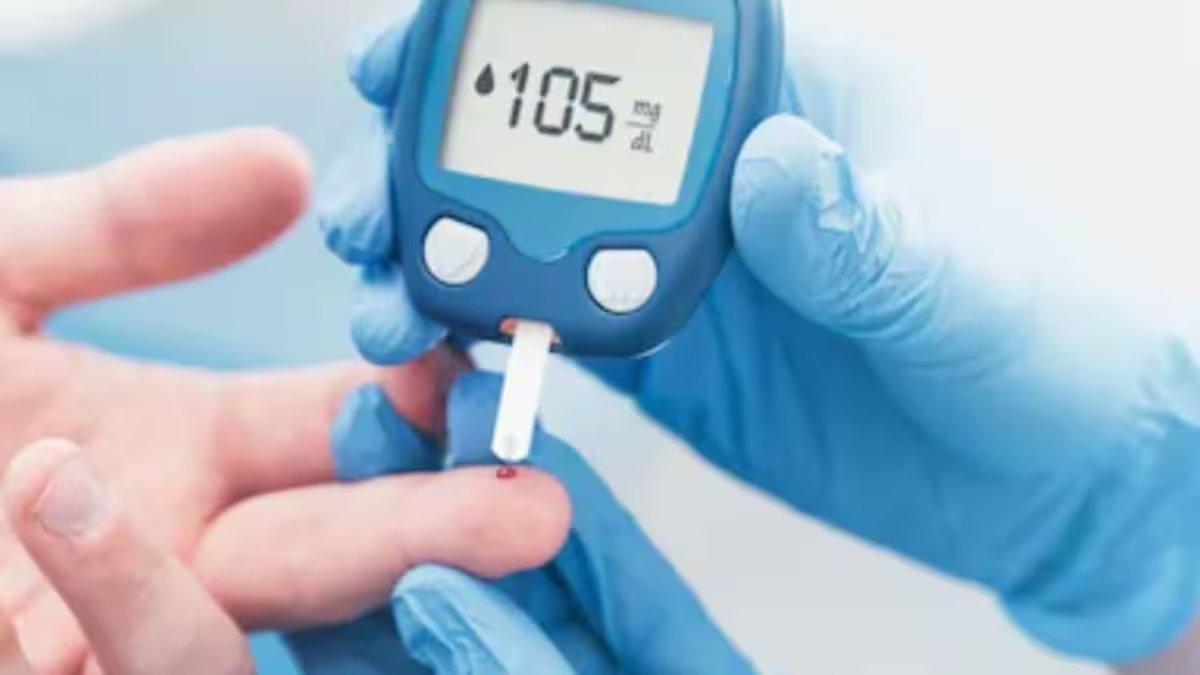
Children who screen positive will be referred to non-communicable disease clinics at district hospitals where free insulin, glucometers, test strips, and follow-up care will be provided.
Crucially, the document states that “diagnosis must be made only at a health facility (NCD clinic), not at school or community levels” — protecting children from misdiagnosis.
The Rising T2DM Threat?
While Type 1 is the dominant form in children, the document flags a growing parallel crisis. “Type 2 Diabetes Mellitus (T2DM), once considered a disease of adulthood, is increasingly being reported in younger age groups, driven by rising rates of childhood obesity, sedentary lifestyles, and unhealthy dietary patterns.” Unlike T1DM, “children with T2DM/pre-diabetes are often likely to be asymptomatic” — making systematic screening the only viable detection tool.
The document contains direct instruction to frontline health workers on communicating with families of T1DM children. “Do not stop insulin under any circumstances. Remember, it is the only proven life-saving treatment for T1DM. Avoid any other forms of treatment.”
Workers are also told to “avoid giving false messages about needing insulin for only a few days. Clearly inform the family that the child’s body has stopped producing insulin, necessitating the lifelong use of exogenous insulin.”
Read More