


The government believes the technology can help India make better use of its massive domestic coal reserves while reducing reliance on costly imports.




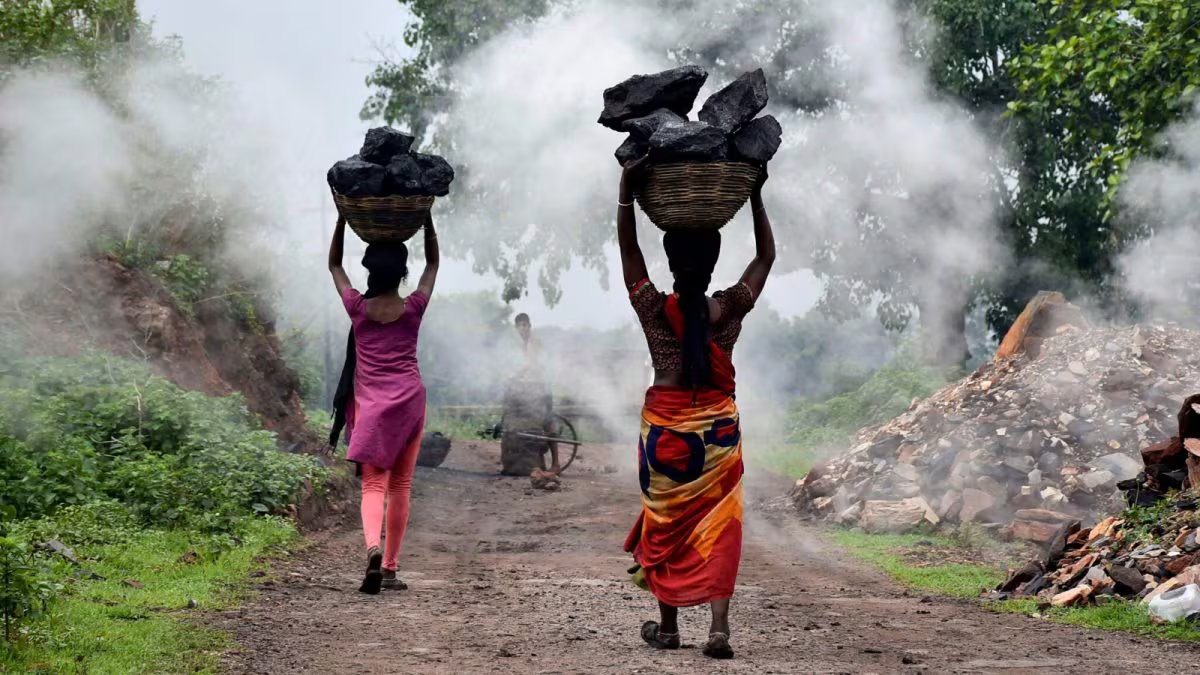
Villagers carry coals near a coal field fire area at Bokapahari in Jharia, in Dhanbad. (PTI file photo)
The Union Cabinet on Wednesday approved a Rs 37,500-crore incentive scheme to promote coal gasification projects, marking a major push towards reducing India’s dependence on imported fuels and chemicals. The move is aimed at strengthening energy security, boosting domestic manufacturing and insulating the economy from global supply disruptions and price shocks.
Announcing the decision, Union Minister Ashwini Vaishnaw said the scheme could attract investments worth nearly Rs 3 lakh crore and help gasify 75 million tonnes of coal. The government is targeting 100 million tonnes of coal gasification capacity by 2030.
“We all know about the current geopolitical situation. So we have to take all the decisions to become Atma Nirbhar,” Vaishnaw said after the Cabinet meeting chaired by Prime Minister Narendra Modi.
What Is Coal Gasification?
Coal gasification is a process that converts coal or lignite into synthetic gas, or syngas, which can then be used to produce fuels and industrial chemicals such as methanol, ammonia, hydrogen and fertilisers. Compared to direct coal burning, the process is considered cleaner and more efficient.
The government believes the technology can help India make better use of its massive domestic coal reserves while reducing reliance on costly imports.
India currently imports more than 50 per cent of its LNG requirements, nearly all of its ammonia, and around 80-90 per cent of its methanol needs.
Why India Is Betting Big On It
India’s import bill for products such as LNG, methanol, ammonia, urea and coking coal stood at nearly Rs 2.77 lakh crore in FY25. Officials say the ongoing geopolitical situation in West Asia have exposed the risks of depending heavily on overseas supplies.
India has around 401 billion tonnes of coal reserves, enough for nearly 200 years, according to the government. Coal already accounts for more than 55 per cent of the country’s energy mix, making it central to India’s long-term energy planning.
By converting coal into cleaner fuels and industrial feedstock domestically, the government hopes to reduce foreign exchange outflow and improve self-reliance in critical sectors.
What The Scheme Offers
Under the new scheme, companies setting up coal gasification projects will receive incentives of up to 20 per cent of plant and machinery costs. The financial support will be linked to project milestones and distributed in phases.
The government expects the initiative to generate significant economic activity while also creating a long-term domestic supply chain for fuel, fertiliser and chemical production.
(With inputs from agencies)
Read More