

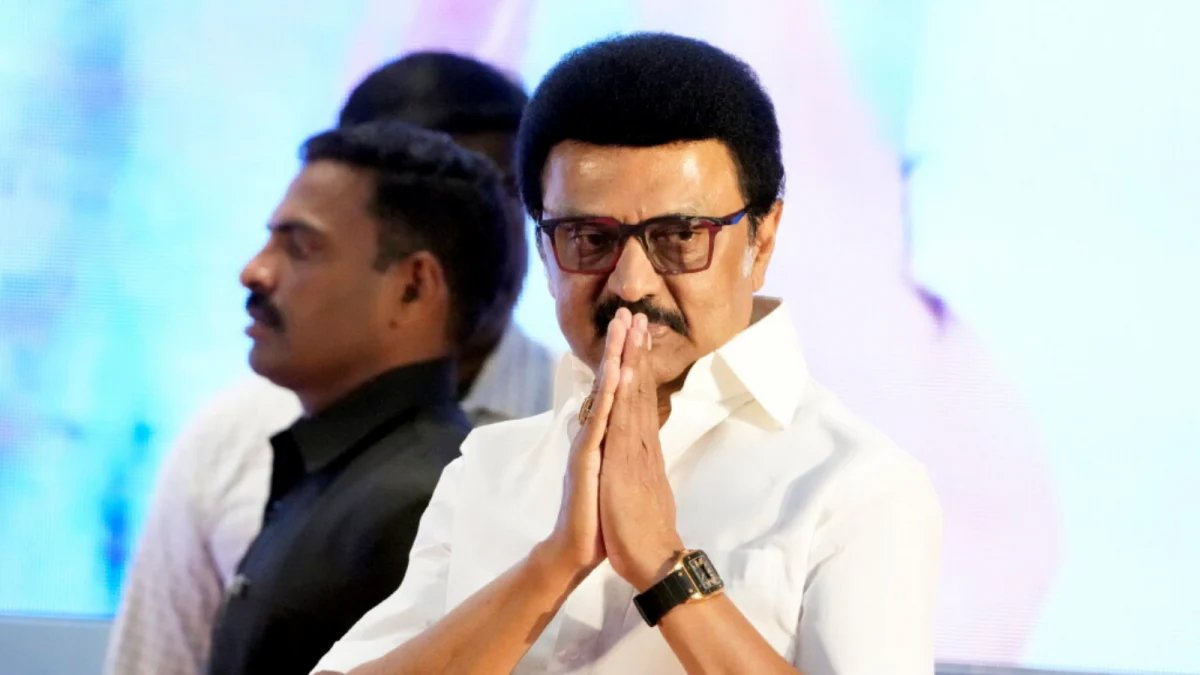
On May 4, Tamil Nadu will discover if the “Sun” has truly risen on a new era—one where Stalin stands not in his father’s shadow, but as the architect of his own political dynasty.




Stalin’s political trajectory began at the age of 14 during the landmark 1967 elections. (File pic/PTI)
Tamil Nadu Election 2026: With only four days remaining until the results of the 2026 Tamil Nadu Assembly elections are announced on May 4, the state stands at a historic crossroads. For Chief Minister M K Stalin, this election transcends not a simple bid for a second term, but it represents the definitive chapter in a decades-long transformation from the heir of the legendary M. Karunanidhi to the “New Kalaignar.”
Having emerged as a preeminent political force following the passing of titans Karunanidhi and Jayalalithaa, Stalin now faces the ultimate litmus test of his career.
A Journey Formed In Fire
Stalin’s political trajectory began at the age of 14 during the landmark 1967 elections. However, his true baptism by fire came during the 1975 Emergency, when he was arrested under the Maintenance of Internal Security Act (MISA).
In 1980, he founded the DMK Youth Wing, serving as its Secretary for an unprecedented 35 years. This period was critical, as Stalin travelled extensively across Tamil Nadu, building the grassroots network that remains his core strength today. Beyond politics, Stalin also explored the arts in the 1980s, appearing in films like Ore Raththam (1987) and Makkal Aanaiyittal (1988), and playing the lead in the popular Doordarshan serial Kurinji Malar.
His administrative rise began in earnest in 1989 when he was elected to the Assembly from Thousand Lights. As Mayor of Chennai in 1996, his “Singara Chennai” initiative modernized the city’s infrastructure. By 2009, after serving as a cabinet minister, he was appointed Tamil Nadu’s first Deputy Chief Minister, formally signaling his succession. After leading the opposition through 2011 and 2016, he was elected unopposed as DMK President following his father’s death in 2018.
“Dravidian Model 2.0″: Numbers Over Narrative
In this campaign, Stalin has pivoted from purely emotive slogans to a “results-first” approach. Moving with 21st-century corporate efficiency, his administration has touted a 10.8% economic growth rate for 2025-26—nearly double the national average.
Under the banner of “Dravidian Model 2.0,” Stalin has framed social justice as an economic engine. Key initiatives like the Kalaignar Magalir Urimai Thogai (monthly aid for women) and the Naan Mudhalvan youth mentorship program have created a welfare net that mirrors his father’s legacy while focusing on hard data and delivery.
“Standing Tall Against Delhi”
Stalin has framed the 2026 election as a “direct contest between Tamil Nadu and Delhi.” By positioning himself as the primary bulwark against “centralised power” and “cultural and Hindi imposition,” he has inherited Karunanidhi’s mantle as the “Protector of Tamil Rights.” This ideological clarity has allowed him to keep the Secular Progressive Alliance (SPA) intact despite the emergence of new challengers.
The “Vijay Factor”: The Ultimate Litmus Test For Stalin
While the 2021 victory was seen by some as a result of a 10-year anti-incumbency against the AIADMK and a sympathy factor following Karunanidhi’s passing, 2026 is about Stalin’s own record. The entry of actor Vijay and his party, Tamilaga Vettri Kazhagam (TVK), has introduced a significant wildcard.
While pollsters like P-Marq and Peoples Pulse predict a DMK return with 122–145 seats in the 234-member assembly, Axis My India projected a tectonic shift, placing TVK as the potential single largest party with 98–120 seats.
If Stalin fends off a popular youth icon like Vijay, it will prove his “New Kalaignar” branding has successfully captured the youth and urban vote, expanding the party’s reach beyond its traditional rural strongholds.
As Tamil Nadu enters the “cooling-off” period, the anticipation is palpable. A consecutive term is a feat rarely achieved in the state’s volatile history. On May 4, Tamil Nadu will discover if the “Sun” has truly risen on a new era—one where M K Stalin stands not in his father’s shadow, but as the sole architect of his own political dynasty.
April 30, 2026, 13:35 IST
Read More