

Migrant workers sent a record $8 billion in remittances last year, boosting foreign reserves and helping recovery from the country’s 2022 economic crash. A total of 3,10,915 Sri Lankans left for foreign employment in 2025, according to Central Bank data, working mainly in domestic service, caregiving, construction, and agriculture. The United Arab Emirates, Kuwait, and Saudi Arabia were the largest sources of remittances, along with the United Kingdom, which included funds routed through other countries.
“Sri Lanka expresses its grave concern regarding the recent hostilities in the West Asian region,” the Ministry of Foreign Affairs, Foreign Employment & Tourism said on May 6, 2026. Pointing to a large Sri Lankan expatriate population whose safety is a “matter of paramount concern,” the Ministry called for “maximum restraint” from all parties, without naming any party to the conflict.
Since late February this year, when the United States-Israel combine launched its war on Iran, triggering a series of retaliatory attacks, Sri Lanka’s migrant workers have been living in precarity. Even so, they contributed $815 million in remittances in March 2026, recording a year-on-year growth of 17.5%. “Cumulatively, remittances during the first quarter of the year recorded a notable growth of 26.5% on a year-on-year basis,” the Central Bank said. Despite tensions and grave risks in the West Asian region, workers’ remittances in this period far exceeded earnings from the exports and tourism sectors, two other key foreign exchange earners.
‘Commendable outcomes’
In April 2026, the International Monetary Fund, which steers the island’s recovery programme, including through painful austerity measures, noted that Sri Lanka’s “ambitious reform agenda” continued to deliver “commendable outcomes”. It pointed to 5% growth in 2025, positive inflation, and an increase in gross official reserves to $7 billion at end-March 2026.
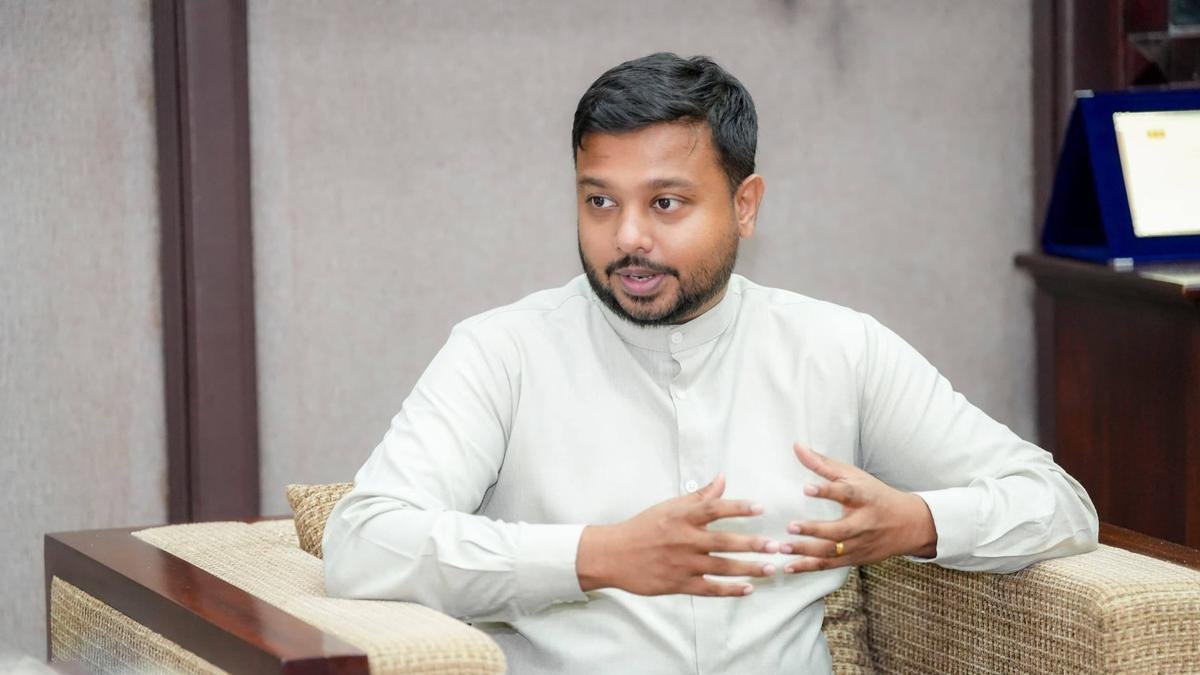
Although hostilities in West Asia are impacting Sri Lanka “directly and indirectly” — such as fuel price hikes, soaring air ticket prices — they have not affected remittances from workers, Deputy Minister of Foreign Affairs and Foreign Employment Arun Hemachandra told The Hindu. “We sincerely hope there is stability in the [West Asian] region and workers can continue going overseas. We also hope there are no huge job losses like we saw during the pandemic,” he said. Sri Lankan missions in the region have been instructed to offer more support and emergency assistance to workers through helplines. “We are also engaging closely with our multilateral partners such as the International Labour Organization and the International Organization for Migration,” he said, adding that the government was trying its “level best” to motivate workers abroad and those seeking employment overseas.
Sharp rise in applications
The Anura Kumara Dissanayake administration aims to send 4,00,000 workers abroad this year, continuing its predecessor government’s policy of encouraging labour migration to bolster foreign reserves amid the tentative recovery. With the conflict in West Asia persisting, however, it remains unclear if it may be “practically possible” to meet that target, the Deputy Minister said. As of May 5, as many as 82,302 people have registered for overseas employment, officials said. Since the 2022 economic crisis, Sri Lanka has seen a sharp increase in passport applications as families try sending a member abroad, hoping their earnings will help with the rising living costs at home.
Asked why tens of thousands of workers are scrambling for jobs overseas, leaving behind their families and enduring exploitative working conditions, while the government claims it has stabilised the economy, Mr. Hemachandra said that government was presently focusing on “macroeconomic stability”. On the heels of a grave economic crash and dollar shortage, the country may have to encourage overseas employment “in the short term”, he said, insisting this was not the government’s long-term strategy. “When the microeconomic condition becomes normal, subject to the macroeconomic condition becoming normal, we believe there would be a change in this trend. People would opt for foreign employment not owing to a crisis, but as a matter of choice,” he added, suggesting that the ongoing recovery programme prioritised macroeconomic fundamentals over people’s daily hardships.
Rights defenders and labour activists also point to the apparent contradiction in the government continuing to send workers to Israel while pledging support for the Palestinian cause. Some 30,000 Sri Lankan workers are in Israel, employed in construction, as caregivers, and in agriculture.
‘No contradiction’
Queried about the government’s position, Mr. Hemachandra said Sri Lanka has historically stood for the Palestinian cause. “Our party [Janatha Vimukthi Peramuna – JVP or People’s Liberation Front] has also always been in solidarity with Palestine,” he said. Pointing to Sri Lanka’s past diplomatic relations with Israel and the opportunities for workers, where the “pay is high and working conditions are good”, he said: “This government at no point thought of stopping those things… because already many people were on the waiting list and hoping to go. After we came to power, we addressed concerns of irregularities and fraudulent practices and streamlined the process. On the other hand, we separated our Free Palestine stand and our diplomatic relationship with Israel as two different things. I think any country should have that choice. And when take the opportunity to send workers to Israel, that does not change our stand on Palestine,” he said, adding: “There is no contradiction in that.”
Meanwhile, authorities are also exploring “non-Middle Eastern” markets such as Romania and South Korea and focusing on skilled migration. “When we develop more skilled migration programmes, I am sure that people who go for those jobs will get back in a very reasonable period. Then they could contribute to the Sri Lankan economy directly while being in the country,” he said.
Published – May 12, 2026 10:25 pm IST