


Losing ground at home not only weakens Banerjee’s bargaining power nationally but also raises questions over her party’s ability to scale beyond Bengal




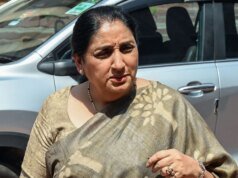
For Mamata Banerjee, this election was meant to be a launchpad to Delhi. Instead, it risks becoming a reminder of a basic rule in Indian politics. (AFP)
Barely a month ago, Trinamool Congress (TMC) chief Mamata Banerjee had pitched the West Bengal election as a stepping stone to national power, declaring it was time to take the fight to Delhi and “dismantle” the BJP at the Centre.
Today, early trends suggest a starkly different trajectory.
With Bengal’s ruling party now trailing and Mamata Banerjee herself lagging in her stronghold of Bhabanipur, the 2026 election results threaten to undercut not just her state dominance but also her carefully cultivated national ambitions.
From National Challenger To Defensive Mode
Early counting trends indicate the Bharatiya Janata Party (BJP) crossing the halfway mark in Bengal, while the TMC struggles to keep pace.
For Banerjee, this is more than an electoral setback; it strikes at the core of her national pitch. Over the past few years, she has positioned herself as one of the most credible faces of opposition to Prime Minister Narendra Modi, expanding her party beyond Bengal and attempting to stitch together a broader anti-BJP coalition.
A loss, or even a significantly weakened mandate, undermines that claim.
What It Means For Mamata’s Pan-India Ambitions
Banerjee’s national ambitions rested on three pillars: Invincibility in Bengal, expansion beyond the state, and leadership space in Opposition politics. A poor showing hits all three. Losing ground at home not only weakens her bargaining power nationally but also raises questions over her party’s ability to scale beyond Bengal. This dents the perception of her as a leader capable of taking on the BJP.
In Indian politics, state-level dominance is the currency of national relevance and that currency now appears under pressure.
What It Means For INDIA Bloc
The results could deepen existing fault lines within the opposition’s INDIA bloc.
Recent campaign rhetoric had already exposed tensions, particularly between Banerjee and Rahul Gandhi, with both sides attacking each other in Bengal, an unusual development for alliance partners.
A weakened TMC could trigger three shifts:
Congress resurgence in Opposition space: If Banerjee’s clout dips, Congress may reclaim primacy
Leadership vacuum: The bloc may struggle to project a unified face against the BJP
Regional recalibration: Other regional players may rethink alignments
In short, Bengal’s verdict could ripple far beyond the state.
Perhaps the most politically symbolic moment is Banerjee trailing in Bhabanipur—a seat closely associated with her leadership. Even if margins change as counting progresses, the optics are stark: A leader who was projecting national expansion is now fighting to hold ground at home.
What The Trends Mean
For the BJP, its surge strengthens its narrative of expanding into eastern India. While the TMC’s slide raises questions about durability after 15 years in power, the Opposition unity faces a fresh stress test.
For Mamata Banerjee, this election was meant to be a launchpad to Delhi. Instead, it risks becoming a reminder of a basic rule in Indian politics: You can’t lead nationally if your home turf slips.
Read More