




















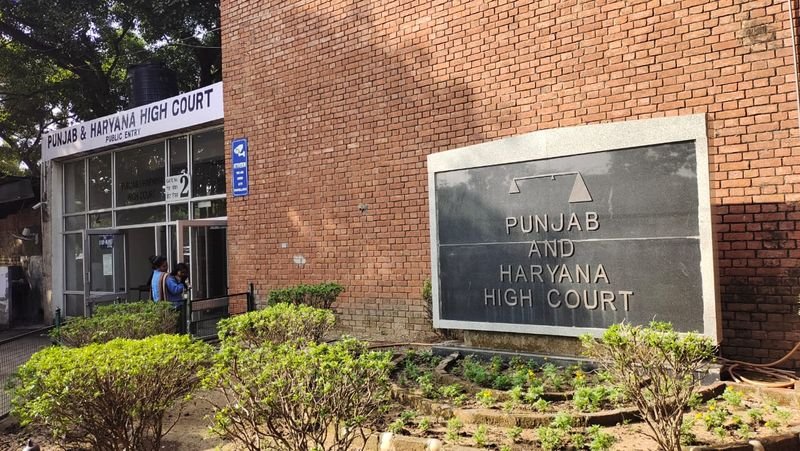
The Punjab and Haryana High Court has made it clear that credibility of a witness has to be tested on evidence, not uniform.
The Bench ruled that police officials appearing as witnesses in criminal trials are not to be viewed with inherent suspicion. Their testimony carries the same weight as that of any prudent witness, and cannot be discarded in the absence of concrete material brought on record by the defence to discredit it.
Reinforcing that criminal trials cannot be derailed on technical objections, the High Court also ruled that absence of independent witnesses does not dent prosecution, and testimonies of police or even “interested” witnesses carry equal evidentiary value if found credible.
At the same time, the court ruled that punishment must advance reformation.
The ruling came as Justice Vinod S Bhardwaj reduced a convict’s six-month sentence to the period already undergone after a 21-year-old trial. The ruling is significant as it makes it clear that credibility of evidence—not the status of the witness—remains the touchstone, while also affirming that sentencing must balance deterrence with rehabilitation.
Court rejects routine challenge to police testimony
Dismissing the appeal against conviction and sentence in a drugs case registered in a Malout police station in Muktsar district, Justice Bhardwaj held that the non-joining of independent witnesses was not fatal to the prosecution.
The court observed: “Joining of an independent witness is not a mandatory statutory requirement, but only a desirable procedural aspect. Failure to associate independent witness would not impeach the credibility of official witnesses.”
Taking the reasoning further, Justice Bhardwaj cautioned against automatic distrust of official witnesses. “The police officials are performing their official duties and have no special interest in the case than that of a prudent witness. There should be no element of disbelief or distrust on their testimony,” the court asserted.
On the broader principle of witness credibility, Justice Bhardwaj asserted: “Law accepts even the list of related and interested witnesses subject to caution and careful scrutiny… The defence is required to bring material on record for discarding or disbelieving their deposition.”
The court made it explicit that mere labels such as ‘official’ or ‘interested’ cannot be grounds to discard evidence, unless substantive infirmities were demonstrated.
Trial findings upheld, no infirmity found
On facts, Justice Bhardwaj found that the trial court had appreciated evidence in the right perspective, including the aspect of independent witnesses, and that prosecution witnesses remained unshaken despite lengthy cross-examination.
It recorded: “Prosecution witnesses could not be shaken on any material aspect… their truthfulness cannot be doubted.”
Finding no illegality, perversity or misappreciation of evidence, Justice Bhardwaj refused to interfere with the conviction recorded by the Special Court at Muktsar in the 2005 case.
Sentence cut on reformative grounds
Upholding conviction, Justice Bhardwaj adopted a reformative approach on sentencing while taking into account the long passage of time, partial custody already undergone, and the appellant’s conduct.
“The object of punishment is not only to punish but also to rehabilitate the offenders in society,” the court asserted
The Bench added the process of law should come to the aid of an appellant, who displayed a strong possibility of improvement so as to ensure his reintegration into society.
Noting that over half the sentence had already been undergone, the case was over two decades old, and the appellant had not indulged in any other offence, Justice Bhardwaj held these to be sufficient mitigating circumstances.