




















Last Updated:
Chhattisgarh and Jharkhand remain the only states with residual Maoist presence as India’s March 31, 2026 deadline to eliminate Left Wing Extremism passes.




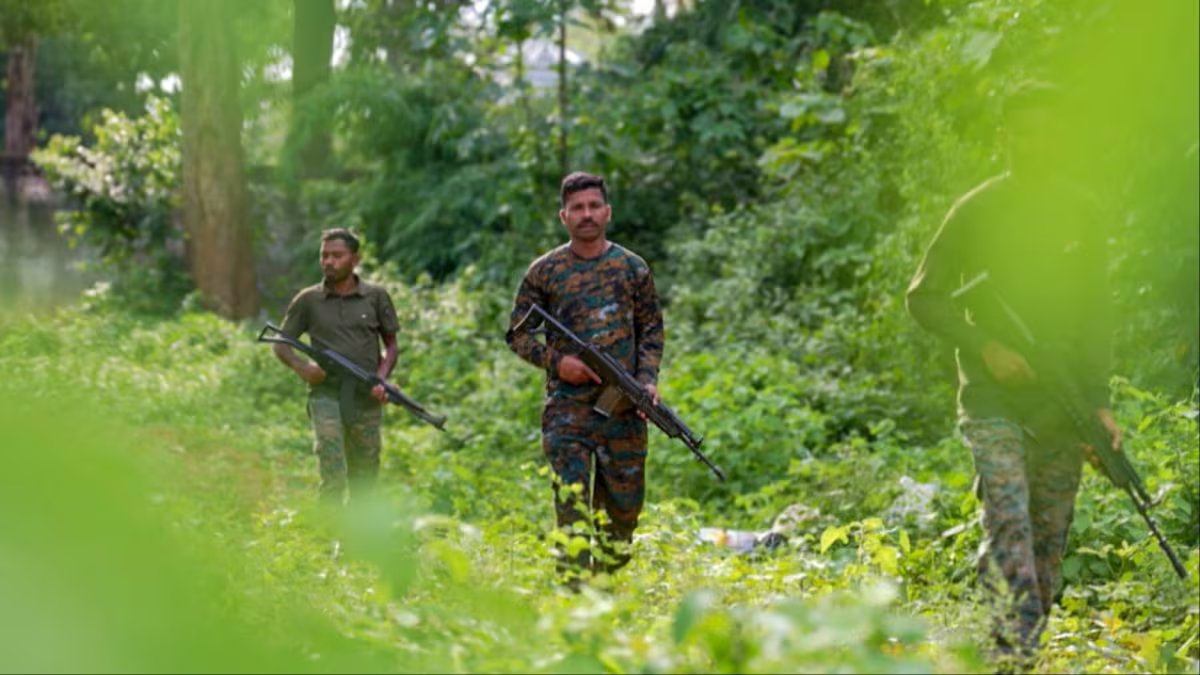
Bastar: Security personnel during an anti-Naxal operation (Photo: PTI)
India’s long-running battle against Left Wing Extremism (LWE) has entered its final phase, as the Centre set a deadline of March 31, 2026, to eliminate Maoist violence across the country.
The timeline was part of a broader security and development strategy aimed at dismantling the insurgency that once spread across the so-called “Red Corridor,” stretching from Nepal to southern India.
Government data shows a dramatic reduction in Maoist influence over the past decade.
The number of affected districts has fallen sharply from 126 in 2013 to about 11 districts by 2025, reflecting sustained counter-insurgency operations, improved infrastructure and rehabilitation policies encouraging cadres to surrender.
Recent assessments indicate that Maoist activity is now largely confined to small pockets in central India, with only a handful of districts still reporting extremist presence, marking a major shift from the peak years of insurgency.
CHHATTISGARH AND JHARKHAND REMAIN KEY AREAS OF CONCERN
Latest reviews cited by multiple media reports suggest that Maoist activity is now concentrated primarily in Chhattisgarh and Jharkhand, making them the two states still significantly affected by the insurgency.
According to government data and recent media reports, five districts in Chhattisgarh, Bijapur, Sukma, Narayanpur, Dantewada and Kanker, continue to report Maoist activity, while West Singhbhum district in Jharkhand remains another affected area.
Among these, Bijapur, Sukma and Narayanpur are categorised as the “most affected districts,” reflecting the continued presence of Maoist leadership structures and armed cadres in forested border regions.
Security agencies have intensified operations in these regions, particularly in the Bastar division of Chhattisgarh, where several Maoists have surrendered in recent weeks, and encounters have been reported.
According to news agency ANI, 11 Maoists surrendered in the Bastar region over the past week, with two cadres handing over an AK-47 rifle as part of the rehabilitation process.
Officials have continued outreach efforts encouraging remaining cadres to join the mainstream.
A Maoist carrying a reward of Rs five lakh was also killed in an encounter in Sukma district during a search operation by the District Reserve Guard (DRG), highlighting that security operations continue in the final pockets of insurgency.
Recent reports indicate that 96 per cent of the Bastar region is now free from Maoist influence, with authorities planning to convert former security camps into public infrastructure such as schools and hospitals.
ODISHA, MAHARASHTRA, TELANGANA AMONG STATES NOW MAOIST-FREE
Several states that were once part of the Red Corridor have now reported near-complete elimination of Maoist presence.
According to PTI, Odisha Police said LWE no longer poses a major threat in the state, with only eight to nine Maoists left in Kandhamal district after the surrender deadline ended on March 31.
At its peak, Maoist activity had affected 21 of Odisha’s 30 districts.
Security forces have eliminated Maoist presence from districts including Malkangiri, Koraput, Bolangir, Boudh, Nuapada, Nabarangpur, Rayagada and Kalahandi, reflecting a significant rollback of insurgent networks.
Similarly, Telangana Police said 721 Maoists have surrendered over the past two years, including several senior leaders, under the state’s rehabilitation policy, according to PTI.
Maharashtra has also reported major progress, with Gadchiroli district, once considered a Maoist stronghold, nearing the complete elimination of insurgent activity ahead of the March 31 deadline.
Madhya Pradesh has also been declared free of Maoist influence, with leaders highlighting the shift towards development following the decline of extremism.
DECLINING RECRUITMENT AND RISING SURRENDERS WEAKEN MOVEMENT
Security officials say the Maoist movement has weakened significantly due to declining recruitment and increased surrenders.
Odisha Police said the banned CPI (Maoist) has failed to recruit new cadres in the past two years due to declining public support, while Telangana authorities say rehabilitation schemes offering financial assistance and livelihood support have encouraged militants to abandon armed struggle.
Experts note that a combination of security pressure, development initiatives, improved road connectivity and welfare schemes has reduced the appeal of Maoist ideology in tribal regions.
Government figures show violence and casualties linked to LWE have fallen sharply over the past decade, indicating the insurgency is now in a residual phase rather than an expanding movement.
FINAL PHASE OF INDIA’S LONGEST INTERNAL SECURITY CHALLENGE
Once described as India’s “biggest internal security challenge,” the Maoist insurgency has seen a steady decline, with the number of affected districts shrinking dramatically over the past decade.
While isolated pockets of insurgency remain in parts of Chhattisgarh and Jharkhand, officials say continued operations and rehabilitation measures are expected to eliminate the remaining networks.
Authorities have indicated that security deployment will continue in vulnerable regions for at least two more years to prevent any resurgence, even as several states transition towards development-focused policies in previously affected districts.
ALSO READ | Last Maoist Standing? Misir Besra Remains Key Target As India Eyes Naxal-Free Deadline
April 01, 2026, 10:04 IST
Read More