


The Baghewala field lies in the Bikaner-Nagaur sub-basin and is one of the few onshore heavy oil fields in India.




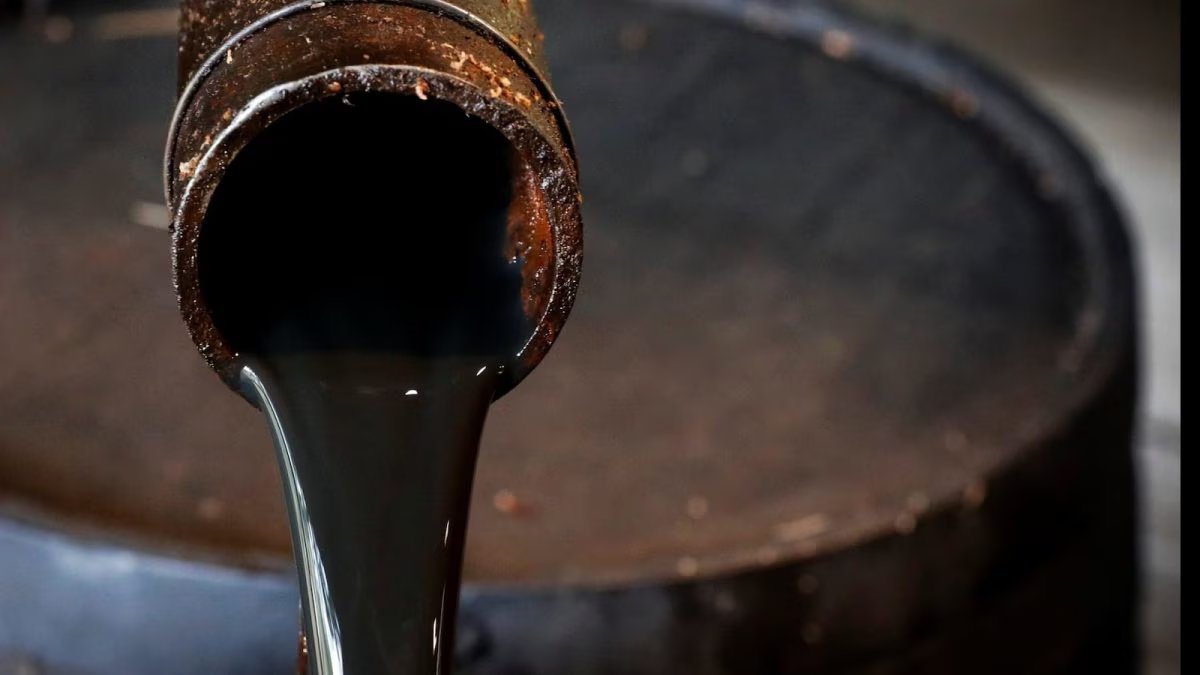
Image used for representation
As the West Asia conflict continues to have an impact on the energy supply across the globe, Oil India Ltd has increased the crude oil production from Rajasthan’s Thar Desert, marking a record output of 1,202 barrels per day from the Jodhpur sandstone formation.
The Baghewala field, located in the Jaisalmer district, has seen steady growth due to improved operational efficiency and the use of modern extraction techniques.
According to the officials cited by PTI, crude extracted from the site is transported by tankers to facilities operated by Oil and Natural Gas Corporation in Mehsana, Gujarat. From there, it is sent through pipelines to the Koyali refinery run by Indian Oil Corporation Ltd.
During the financial year 2025–26, Oil India’s Rajasthan operations produced 43,773 metric tonnes of crude oil, up from 32,787 metric tonnes in the previous year. The increase reflects better performance supported by technological upgrades and improved field management.
The company officials mentioned that the growth has largely been driven by the use of Cyclic Steam Stimulation (CSS), a thermal recovery process that helps extract thick, high-viscosity crude. They noted that working in the harsh geological conditions of the Thar desert remains challenging, but the results highlight the untapped potential of such reserves.
The Baghewala field lies in the Bikaner-Nagaur sub-basin and is one of the few onshore heavy oil fields in India. Oil India has completed CSS operations in 19 wells so far, around 72 per cent more than the previous year. It has also increased drilling activity, adding 13 new wells this year compared to nine earlier.
The company has introduced several advanced technologies, including fishbone drilling and barefoot completion, being used for the first time in India’s heavy oil sector. Other methods such as electric downhole heaters, hydraulic sucker rod pumps, and high-temperature thermal wellheads have also been deployed to improve production.
Officials explained that the thick nature of crude in the region makes traditional extraction methods ineffective. As a result, the company has adopted alternatives like diluent injection and artificial lift systems to maintain output.
Oil India has been producing from the Baghewala field since 2017. The field was first discovered in 1991 and spans over 200.26 square kilometres. At present, it has 52 wells, of which 33 are operational.
The CSS technology, first tested in 2018, has played a crucial role in scaling up production. Officials said the progress at Baghewala is expected to support India’s efforts to reduce dependence on imported crude and strengthen long-term energy security.
April 05, 2026, 13:02 IST
Read More