
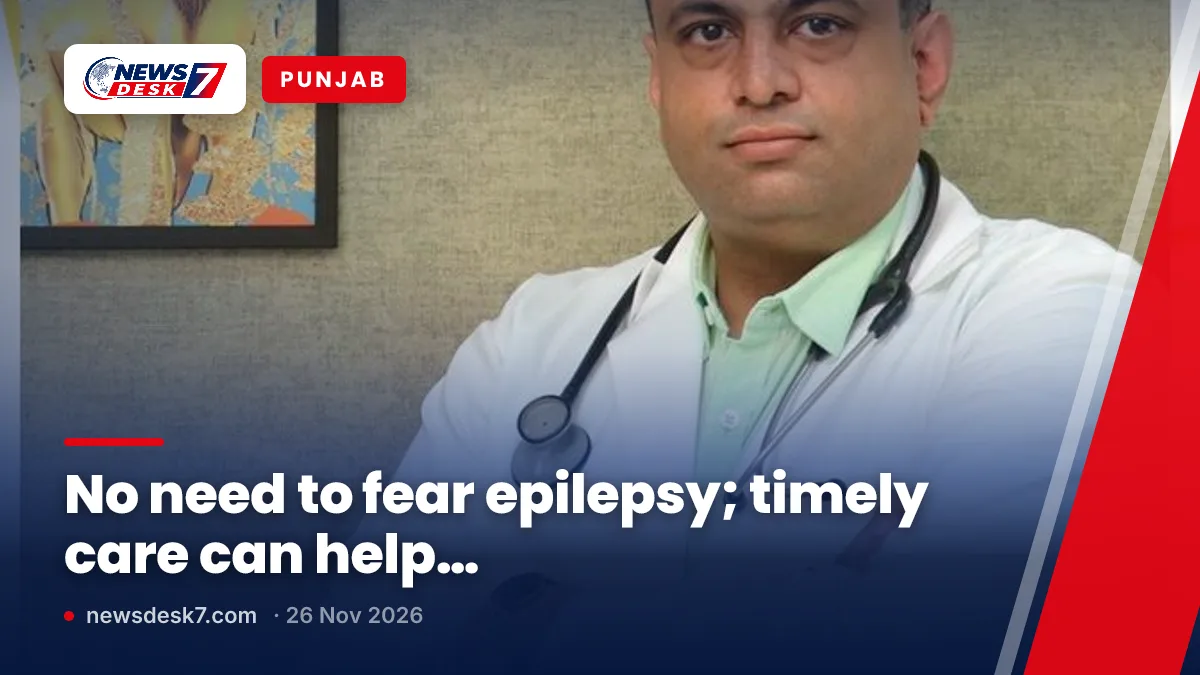
There is no need to fear or hide epilepsy, as people living with the condition can lead usual, healthy lives with timely diagnosis and regular treatment, notes Dr Sandeep Goel, Founder, Director and HOD of Neurology at NHS Neurocare.
Epilepsy is neither a supernatural phenomenon nor a curse. It is a neurological condition led to by abnormal electrical activity in the brain. With early diagnosis, appropriate medication and regular medical supervision, seizures can be effectively controlled in many patients.
What is epilepsy and why do seizures occur:

The human brain controls multiple bodily functions through tiny electrical signals. When these electrical signals all of a sudden become abnormal or excessive, a seizure may occur. Common symptoms include involuntary jerking of the arms and legs, body stiffness and loss of consciousness.
Yet, not all seizures involve visible convulsions. Some individuals may experience brief episodes of staring blankly, becoming unresponsive or losing awareness for a few seconds. Not every seizure indicates epilepsy. Hence, proper medical evaluation is essential to identify the underlying cause and determine the appropriate treatment.
Special precautions during changing weather:
With temperatures dropping in November, people living with epilepsy should take additional precautions to maintain their health. Although cold weather does not directly trigger seizures in every patient, factors like inadequate sleep, fever, infections, emotional stress and irregular medication can increase the likelihood of seizures in susceptible individuals.
Patients are to wear appropriate winter clothing, maintain a regular sleep schedule, stay adequately hydrated and take their prescribed medicines consistently. Most importantly, anti-epileptic medication should never be stopped or altered without consulting a neurologist.
What should you do if someone has a seizure:
Know the basic seizure first aid, as appropriate action during an episode can help stop wounds and complications.
Help the person lie down safely and remove sharp or dangerous objects from the surrounding area.
Place something soft beneath their head to stop injury.
Gently turn the person onto their side when possible, especially after the convulsions stop, to help keep the airway clear.
Never put a spoon, water, fingers or any other object into the person’s mouth.
Do not attempt to restrain their movements or stop the jerking forcefully.
Avoid customary practices including making the person smell shoes or other substances.
When to look for emergency medical help: If a seizure lasts longer than five minutes, repeated seizures occur without recovery, the person experiences breathing difficulties, or it is their first seizure, instant medical attention is vital.
Epilepsy is treatable:
Epilepsy is not contagious and cannot spread through physical contact, sharing food or sitting together. Children with epilepsy should be encouraged to go on their education, while young adults should obtain appropriate support to pursue their personal and professional aspirations.
Contemporary diagnostic investigations, including Electroencephalography (EEG) and Magnetic Resonance Imaging (MRI), help neurologists evaluate the condition and identify possible underlying causes.
With appropriate anti-seizure medication, many patients can attain effective seizure control. In chosen cases where medication does not offer adequate relief, advanced treatment options, including epilepsy surgery, may be considered following specialist evaluation.
Epilepsy should never become a barrier to living a meaningful and independent life. Epilepsy is a medical condition, not a limitation. With awareness, timely treatment and society’s support, people living with epilepsy can lead confident and fulfilling lives.