


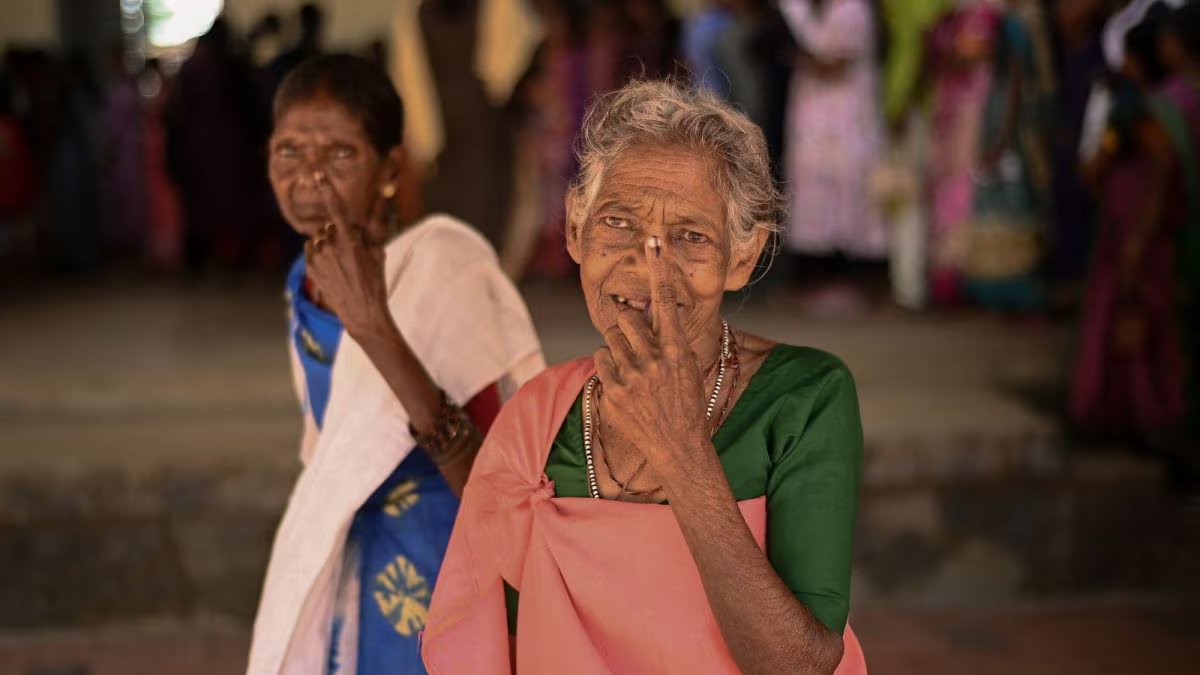
With identity politics becoming more pronounced, even in a state historically driven by class and welfare politics, the minority vote is no longer just one factor among many




Kerala’s electoral politics has traditionally balanced ideology, welfare, and social coalitions. (AFP)
As voting concludes in the high-stakes 2026 assembly elections in Kerala, one question dominates political analysis: could the consolidation, or fragmentation, of minority votes determine who forms the next government?
With the ruling Left Democratic Front (LDF), the Congress-led United Democratic Front (UDF), and the BJP-led NDA locked in a competitive contest, minority communities, primarily Muslims and Christians, have once again emerged as a decisive electoral bloc.
Why Minority Votes Matter More This Time
Kerala’s electoral politics has traditionally balanced ideology, welfare, and social coalitions. But according to The Times of India, this election saw a sharper shift toward identity-driven mobilisation, with parties actively targeting caste and religious groups to expand their base.
Minorities together account for a substantial share of the electorate, often decisive in dozens of constituencies, particularly in central and northern Kerala. According to analysis cited by NDTV, tightly contested seats with significant minority populations could “decide who wins Kerala this time”.
This makes consolidation, not just support, the key variable.
UDF’s Traditional Advantage Under Pressure
Historically, the UDF has enjoyed strong backing from both Muslim and Christian communities. But this time, that base appears less secure.
ALSO READ | Kerala Elections 2026: With 77% Voting, Why Turnout Patterns Matter More Than Campaign Rallies | Explained
Reports from The Times of India suggest that the “minority math” places the UDF in a precarious position, with even small shifts in voting patterns potentially altering outcomes in closely fought seats.
The Christian vote, in particular, is seen as being at a crossroads. While it has traditionally leaned toward the UDF, rival fronts are making inroads by pitching development, welfare, and security concerns.
At the same time, there are signs that sections of Muslim voters, once firmly aligned with the Left in certain regions, have drifted, contributing to shifting ground realities seen in recent local body elections.
LDF’s Balancing Act
For the LDF, the challenge is two-fold: retain its core base while preventing large-scale consolidation of minority votes behind the UDF.
Recent political signals indicate a tactical recalibration. The Times of India points to the Left navigating a complex space, maintaining its ideological stance while also not alienating potential minority support, even amid controversies over indirect backing from groups like the SDPI.
The LDF’s strategy appears to hinge on fragmentation rather than consolidation, ensuring that minority votes do not swing decisively in one direction.
NDA’s Expanding Pitch
The BJP-led NDA remains a distant third force in Kerala but is attempting to disrupt traditional voting blocs.
Its strategy has focused on outreach to Christian communities and consolidating sections of Hindu voters, while also benefiting indirectly if minority votes split between LDF and UDF.
Even modest gains for the NDA in key constituencies could reshape margins in a state known for tight contests.
The Constituency Factor: Where It Will Be Decided
The importance of minority consolidation is most visible at the constituency level.
• Central Kerala’s Christian-dominated belts
• Malabar’s Muslim-majority regions
• Mixed constituencies where minorities form decisive swing blocs
In these seats, even a 2-5 per cent vote shift could flip outcomes, turning the election into a battle of micro-mobilisation rather than broad state-wide waves.
Pattern: Consolidation Vs Fragmentation
The electoral outcome may hinge on a simple but powerful dynamic:
• If minorities consolidate behind UDF, it’s Advantage UDF
• If votes split between UDF and LDF, it’s Advantage LDF
• If fragmentation widens further, NDA gains indirect leverage
This pattern has precedent. Analysts speaking to The Times of India have noted that in recent local elections, consolidation of minority votes helped the UDF make significant gains in regions previously dominated by the Left.
More Than Identity? Or Exactly That?
What makes 2026 different is the scale and timing of this consolidation debate.
With identity politics becoming more pronounced, even in a state historically driven by class and welfare politics, the minority vote is no longer just one factor among many. It may be the central axis around which the election turns.
Thus, Kerala’s election may not be decided by a wave, but by alignment. Not just who minorities vote for, but how united that vote is, could ultimately determine whether the LDF retains power or the UDF stages a comeback.
In a state known for close contests, consolidation could be the difference between victory and defeat.
Thiruvananthapuram [Trivandrum], India, India
April 11, 2026, 11:37 IST
Read More