


The ripple effects of any ‘Grand Bargain’ between Washington and Beijing will be felt immediately in New Delhi




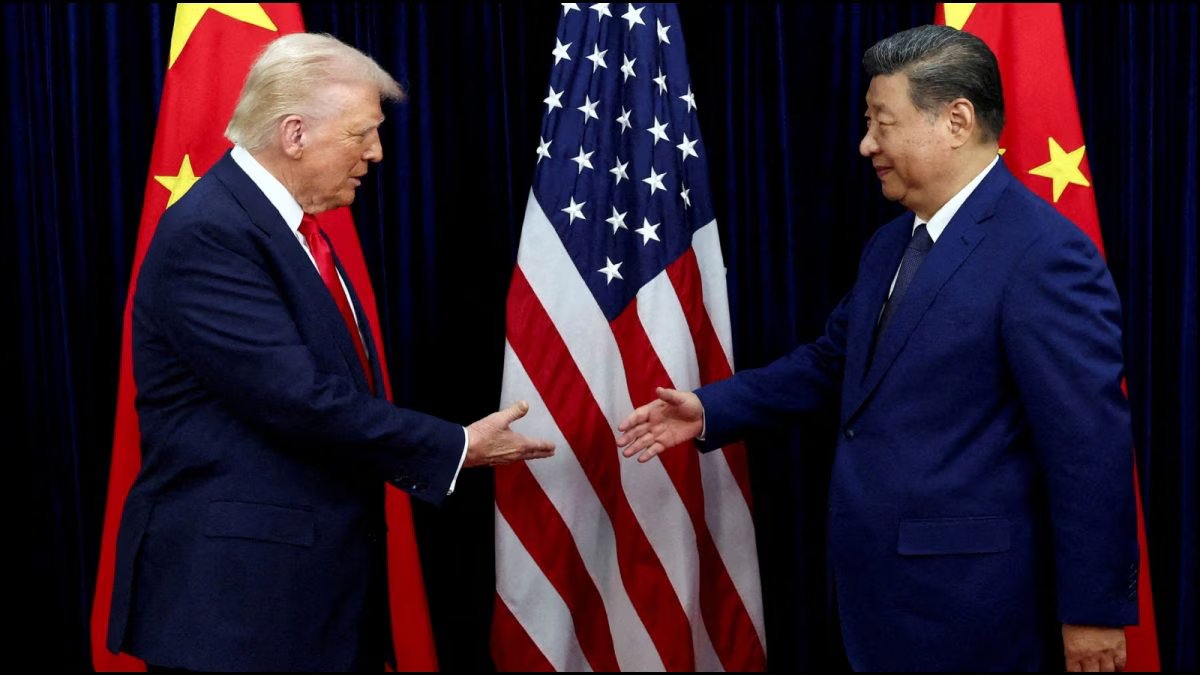
US President Donald Trump will meet Chinese President Xi Jinping in a closely watched visit. File pic/Reuters
As President Donald Trump descends the red carpet in Beijing for his high-stakes May 2026 summit with Xi Jinping, the focus of the global media is understandably on the “G2″ power dynamic. However, for New Delhi, this visit is far more than a spectator sport. With India recently reclaiming its position as China’s largest trading partner in FY26—surpassing the United States—the ripple effects of any “Grand Bargain” between Washington and Beijing will be felt immediately in the corridors of South Block.
From energy security to the future of the “China Plus One” strategy, here are five reasons why the 2026 Trump-Xi summit is a defining moment for India’s strategic and economic interests.
1. The Hormuz Factor and India’s Energy Security
The most urgent item on the Trump-Xi agenda is the resolution of the 2026 Iran war and the subsequent closure of the Strait of Hormuz. India, which has significantly reduced its Russian oil imports in 2026 to align with US-India trade pacts, is now acutely vulnerable to Middle Eastern volatility.
If Trump successfully leverages Xi Jinping’s influence over Tehran to reopen the shipping lanes, India secures a vital energy lifeline. However, a failure to reach a consensus could force New Delhi to pivot back toward expensive spot-market purchases or reconsider its recent commitment to slash Russian energy intake—a move that could strain its fragile, newly minted trade deal with Washington.
2. Protecting the ‘China Plus One’ Momentum
India’s manufacturing sector has thrived on the “China Plus One” sentiment, attracting billions in electronics and semiconductor investments. A sudden “Managed Rivalry” or a comprehensive trade truce between Trump and Xi could potentially cool the urgency for American firms to diversify their supply chains.
New Delhi is watching closely to see if Trump’s “reciprocity” demands lead to a revival of US-China joint ventures. Any sign of a permanent de-escalation in the tariff war could slow the migration of high-tech manufacturing from the Pearl River Delta to Indian hubs like Noida and Bengaluru.
3. The ‘Busan Truce’ and Trade Deficit Risks
In FY26, India’s trade deficit with China swelled to a record $112 billion. If the Beijing summit leads to a new “Board of Trade” or an expansion of the Busan Trade Truce, China may look to redirect its excess industrial capacity—particularly in Electric Vehicles (EVs) and solar components—towards secondary markets like India.
For the Indian government, which is currently promoting “Atmanirbhar Bharat” (Self-Reliant India), a flood of cheap, Chinese-made goods backed by a US-China understanding would pose a direct threat to domestic manufacturers. India must ensure that a US-China rapprochement does not come at the cost of the Indian market becoming a “dumping ground” for Chinese surpluses.
4. Transactional Diplomacy and the Taiwan Precedent
Trump’s recent decision to stall a major arms sale to Taiwan and his transactional approach to the self-governing island have sent shockwaves through the Indo-Pacific. For India, this signals a shift in American reliability.
If Washington is willing to use Taiwan as a bargaining chip for Chinese cooperation in Iran, New Delhi must reassess the weight of its own “Major Defence Partner” status. The summit will provide the clearest indication yet of whether the Trump administration views the Quad (India, US, Japan, Australia) as a core security pillar or merely another card to be played in a larger deal with Beijing.
5. The Race for Critical Minerals and AI
With China controlling the majority of global rare-earth processing, the Trump administration has been scrambling to build alternative mineral partnerships. India, a key player in this “Critical Minerals Club”, stands to gain from US-backed technology transfers.
However, if the summit results in a “co-dependency” agreement on minerals—where China resumes steady exports in exchange for US chip concessions—the incentive for the US to invest in India’s domestic processing capabilities may diminish. India’s ambition to become a global AI and hardware hub depends heavily on the “de-risking” of these Chinese-controlled chokepoints.
Read More