

Police experts and retired officers believe dismantling this entrenched system will be one of the biggest challenges before the new government led by Suvendu Adhikari




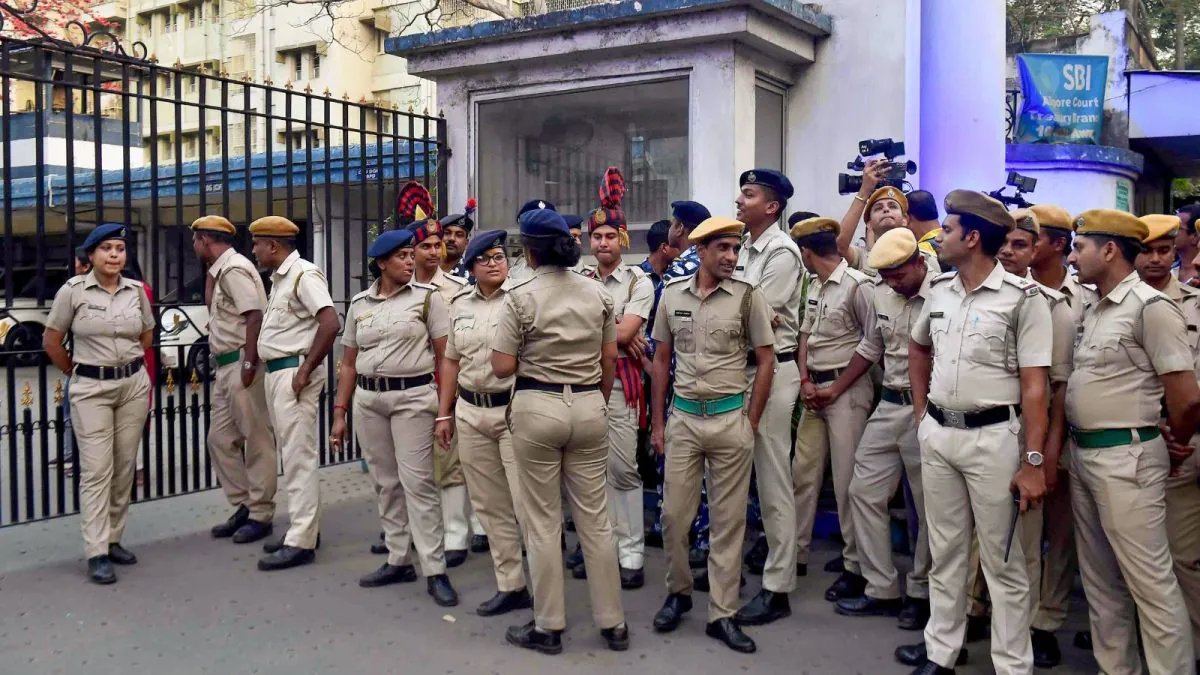
Bengal police. (File for representation)
Bengal Chief Minister Suvendu Adhikari has made improvement of law and order his first administrative priority.
Soon after taking oath, he held a brief meeting with senior officials, and on Monday he is scheduled to meet all senior police officers of the state. The early signals from the new government indicate that restoring policing and administrative discipline will be central to the new regime’s agenda.
Speaking to News18, Minister Agnimitra Paul said: “Law and order issues will be our priority. The Trinamool Congress (TMC) regime was jungle raj and that needs to change. There was politicisation of the police. We have seen how women were targeted and we carried out several movements on these issues. This situation has to change.”
The condition of policing in Bengal over the past decade now requires close examination.
POLITICS INSIDE POLICING
Following the 2021 post-poll violence in West Bengal, the Supreme Court of India, in one of its observations, remarked that the situation reflected “not rule of law but ruler’s law”. The observation reinforced allegations repeatedly made by the opposition — that sections of the administrative and police machinery were being used according to the wishes of the ruling political establishment.
Senior police sources told News18 that political interference became deeply institutionalised within the policing structure.
One officer said: “If any incident took place, the SHO was often hesitant to arrest the accused because local political leaders would immediately call and ask the officer not to proceed with the case. Over time, this became standard practice. IPS officers at the top were either kept in the dark or understood that the nexus was so deep that even if they tried, little could be changed. The authority of IPS officers was systematically weakened.”
This atmosphere, according to officers, emboldened strongmen within the political system.
Birbhum strongman Anubrata Mondal had publicly made inflammatory remarks such as “charge bomb on police”. In another viral audio clip — whose authenticity was never officially verified — Mondal was allegedly heard threatening a police station IC using abusive language. Officers claim that even family members of police personnel were subjected to verbal abuse.
Though police eventually registered a case, officers privately admitted that even filing a case against such a politically influential leader was viewed within the force as an extraordinary step.
Police sources further alleged that officers were often pressured to bypass legal procedures in order to comply with political instructions.
COLLAPSE OF PUBLIC CONFIDENCE
According to officers and legal observers, policing deteriorated significantly in several districts.
Ordinary citizens increasingly believed that filing a complaint without political backing was difficult. Cases involving ruling party leaders or local political workers were considered especially hard to pursue.
The perception that access to justice depended on political connections weakened public confidence in policing and criminal justice mechanisms.
POSTING SYSTEM AND ADMINISTRATIVE EROSION
Under standard procedure, IPS postings are guided through senior assessments and the Police Establishment Board. However, according to multiple police sources, transfers and postings in Bengal increasingly came to depend on the preferences of politically influential individuals.
One senior officer said: “Transfers due to political displeasure happen everywhere to some extent. But in Bengal, there were specific individuals who acted as informal feedback channels to the ruling establishment. Their recommendations became critical for postings.”
As a result, officers allegedly focused more on cultivating political proximity than administrative performance.
Senior IPS officers, including DIGs and IGs, reportedly lost influence over postings and Annual Confidential Reports. Sources claimed that junior officers — some not even belonging to the IPS cadre but politically connected — became powerful within the system and often bypassed the formal chain of command.
According to officers, political loyalty gradually became more important than policing performance.
Police officials say Police welfare association (police association) became the most powerful in every format which used to facilitate work of rulers through police.
RECRUITMENT, TRAINING AND STRUCTURAL WEAKNESS
Police sources also pointed to systemic weakening through recruitment and training policies.
Constable training, which traditionally lasted one year, was reportedly reduced to six months. Officers believe this affected field preparedness and discipline.
Recruitment delays further weakened the force. Bengal already has a lower police-to-population ratio compared to several major states, and delayed hiring aggravated manpower shortages.
The expansion of civic volunteers and village police also became controversial. Officers alleged that these recruitments were vulnerable to political patronage, with local political leaders recommending candidates loyal to them. This, according to police officials, weakened discipline and professional hierarchy within the force.
STAGNATION WITHIN THE IPS CADRE
Several officers claimed that Bengal cadre IPS officers rarely went on central deputation over the past 15 years. Officers who sought deputation were allegedly viewed with political suspicion and sometimes labelled as politically aligned with the BJP.
Sources further claimed that younger IPS officers often did not receive district SP postings because the same officers continued in influential positions for long periods.
Officers argue that this reduced administrative exposure, career mobility and institutional dynamism within the cadre.
WEAK PROSECUTION AND RISE OF SYNDICATE NETWORKS
Police officials also alleged that prosecution systems became heavily influenced by local political networks.
According to officers, politically connected strongmen operated with confidence that bail would be easily secured and that prosecution would remain weak. This reduced deterrence and encouraged the growth of local syndicate networks.
In several districts, police personnel themselves allegedly faced attacks from criminal groups, reflecting a declining fear of law enforcement.
RIOT CONTROL AND POLITICAL CONSTRAINTS
Officers further claimed that during communal tension or incidents in minority-dominated areas, police were often not given operational freedom because of political considerations.
According to police sources, delayed intervention and hesitation in enforcement sometimes contributed to escalation of violence, leaving police personnel exposed on the ground.
CHALLENGE BEFORE THE NEW GOVERNMENT
Police experts and retired officers believe dismantling this entrenched system will be one of the biggest challenges before the new government led by Suvendu Adhikari.
Restoring institutional hierarchy, depoliticising postings, strengthening prosecution, improving recruitment and training, and rebuilding public trust are expected to be key tests for the administration in the coming months.
Read More