


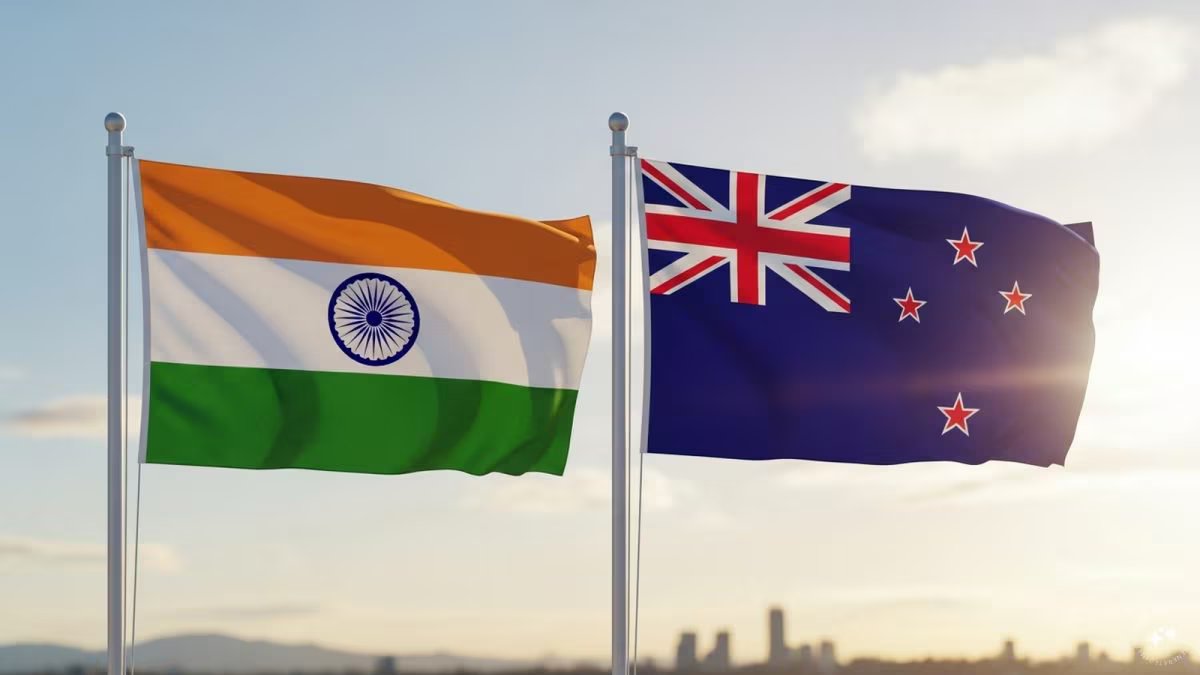
India and New Zealand near free trade deal cutting tariffs on fruit, wine, dairy and key inputs, easing visas and boosting market access to expand currently modest bilateral trade.




India and New Zealand near free trade deal cutting tariffs on fruit, wine, dairy and key inputs, easing visas and boosting market access to expand currently modest bilateral trade.
A proposed free trade agreement between India and New Zealand is set to make a range of imported products from fruits like apples and kiwis to dairy and wine to become more affordable for Indian consumers, while also expected to ease visa access and mobility for professionals and workers between the two countries.
The deal, which still requires approval from New Zealand’s Parliament, is expected to pass with bipartisan support. Once implemented, it will gradually reduce tariffs across multiple sectors, improving market access for both countries.
For Indian consumers, the most immediate impact could be seen in grocery aisles. New Zealand apples and kiwis already popular but often priced at a premium are likely to become cheaper as import duties are lowered over time. Wine prices are also expected to fall, with tariffs set to be reduced over a 10-year period.
On the industrial side, India will gain duty-free access to key inputs such as wooden logs, coking coal and metal scrap, which could help reduce costs for manufacturers and infrastructure projects.
Wellington, meanwhile, will benefit from improved access to the Indian market for its dairy products. Food ingredients meant for re-export will get immediate duty-free entry, while tariffs on bulk infant formula and high-value dairy items will be phased out over seven years. Tariffs on milk albumins will also be cut within a specific quota.
New Zealand Trade Minister Todd McClay said the agreement supports the country’s ambition to double exports over the next decade, adding that it could generate jobs and significantly increase trade volumes.
Indian exporters are also expected to gain, particularly in sectors such as textiles, leather, pharmaceuticals, engineering goods and automobiles, with better access to the New Zealand market.
Despite the potential, trade between the two countries remains relatively modest. Merchandise trade stood at around $1.3 billion in 2024–25, while total goods and services trade was estimated at roughly $2.4 billion in 2024.
Officials say the agreement could significantly expand bilateral trade, while offering tangible benefits to consumers through lower prices, improved mobility, and wider product availability.
April 27, 2026, 15:51 IST
Read More