

Women’s Reservation Bill: Since the 1990s, it has been introduced or discussed in Parliament at least seven times, but each time it failed for various reasons. News18 explains




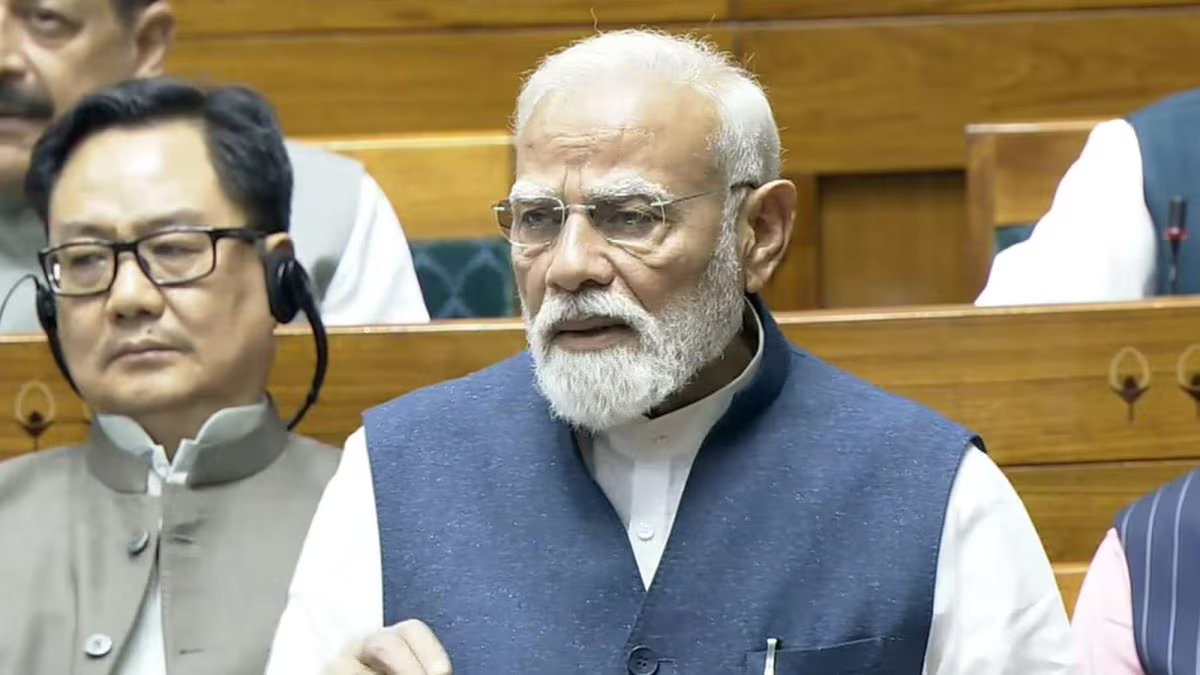
PM Narendra Modi speaks in the Lok Sabha during the special session of Parliament, in New Delhi on April 16, 2026. (Image: Sansad TV/PTI)
The women’s reservation bill has sparked a political debate across the country.
On April 17, the constitutional amendment bill to implement one-third reservation for women in the Lok Sabha and state assemblies could not get the required majority in the Lok Sabha. The proposal included giving 33 per cent reservation to women and increasing the number of seats in the Lok Sabha and state assemblies.
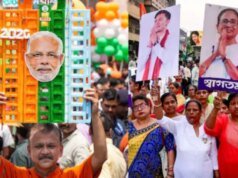
After failing to get a majority, the Bharatiya Janata Party (BJP) protested on the streets. Prime Minister Narendra Modi also expressed his displeasure with the opposition’s stance.
In India’s democratic history, the ‘Women’s Reservation Bill’ has become a chapter that reaches the doors of Parliament again and again but gets stuck in politics before it can be passed. This has happened seven times in 30 years.
The idea of giving women representation in Parliament first gained momentum in the 1990s. The journey from 1996 to 2026 has been full of ups and downs. The idea of women’s reservation first gained ground in the 1990s. Since then, it has been introduced or discussed in Parliament seven major times, but each time it failed for various reasons.
WOMEN’S RESERVATION BILL: THE SEVEN SETBACKS
Let’s look at what happened each time:
1. The first attempt was in 1996 during the Janata Dal government led by HD Deve Gowda. On September 12, 1996, it was introduced as the 81st Constitutional Amendment Bill. Amid heavy uproar, it was sent to a joint parliamentary committee led by Geeta Mukherjee. The bill lapsed because the Lok Sabha was dissolved.
2. The second attempt was in 1998 under Atal Bihari Vajpayee’s NDA government. Then Law Minister M Thambidurai introduced it. Opposition parties, especially RJD and SP, strongly opposed it, demanding a ‘quota within quota’ for OBC reservation. The bill lapsed again when the 12th Lok Sabha was dissolved.
3. The third attempt was in 1999, when the Vajpayee government tried again. The NDA government reintroduced it. This time, there were unpleasant incidents in Parliament like scuffles and tearing of bill copies. Due to lack of consensus, it failed for the third time.
4. The fourth attempt was during the UPA-1 government from 2002 to 2003. Efforts were made to revive it during the Vajpayee government and early UPA years, but political deadlock continued. Official attempts to pass it failed in Parliament.
5. The fifth attempt was during Manmohan Singh’s UPA government. In 2010, a historic moment came. On March 9, 2010, the bill was passed in the Rajya Sabha for the first time. Marshals had to be called, but the upper house approved it. However, the government could not present it in the Lok Sabha because allies threatened to withdraw support. The bill lapsed when the Lok Sabha was dissolved in 2014.
6. The sixth attempt was in 2023 during Narendra Modi’s government. On September 20, 2023, in the first session of the new Parliament building, the Modi government introduced it as the ‘Nari Shakti Vandan Act.’ It was passed by both houses and became law, but with a condition that it would only be implemented after delimitation and a new census.
7. The current attempt was on April 17, 2026. For the seventh time, it failed. While 352 votes were needed for a two-thirds majority, only 298 were received.
HOW MUCH IS WOMEN’S PARTICIPATION RIGHT NOW?
Currently, there are no reserved seats for women in India’s Parliament. About 14 per cent of Lok Sabha members and about 17 per cent of Rajya Sabha members are women, while in state assemblies, the number is around 10 per cent. This development has once again brought the issue of women’s political representation to the centre and is likely to spark more political debate in the future.
WHY IS THE BILL STUCK?
The journey from 1996 to 2026 shows that women’s reservation is not just a legal process but has become India’s biggest ‘political football.’
There are still many hurdles in the way of this bill:
Quota within quota: Parties like RJD, SP, and now Congress are demanding a separate sub-quota for OBC and minority women within the 33 per cent reservation.
Delimitation issue: According to the 2023 law, reservation will only be implemented after a new census and redrawing of seats (delimitation). The opposition is calling this an ‘election gimmick’.
Male-dominated politics: Many political experts believe that some male MPs have internally opposed it out of fear of losing their seats.
WHAT IS THE GOVERNMENT’S ARGUMENT?
A two-thirds majority, meaning at least 352 votes, was needed for the constitutional amendment, which the government could not get. The bill proposed increasing the number of Lok Sabha seats from the current 543 to a maximum of 850. The number of seats in state assemblies and union territories would also be increased so that 33 per cent reservation for women could be implemented. The government argues that this change will reflect population changes through delimitation for the first time since the 1971 census.
WHY IS THE OPPOSITION AGAINST IT?
The opposition has opposed this bill. Congress leader Rahul Gandhi accused the government of playing an unconstitutional trick in the name of women and trying to gain political advantage by linking reservation to the delimitation process. The opposition said they support women’s reservation but do not agree with linking it to delimitation and the census.
With News18 Hindi inputs
April 19, 2026, 19:14 IST
Read More