

Om Birla’s “mic is on” remark sparked a brief exchange in Lok Sabha as the Opposition questioned procedure during debate on the women’s reservation-linked Bills.




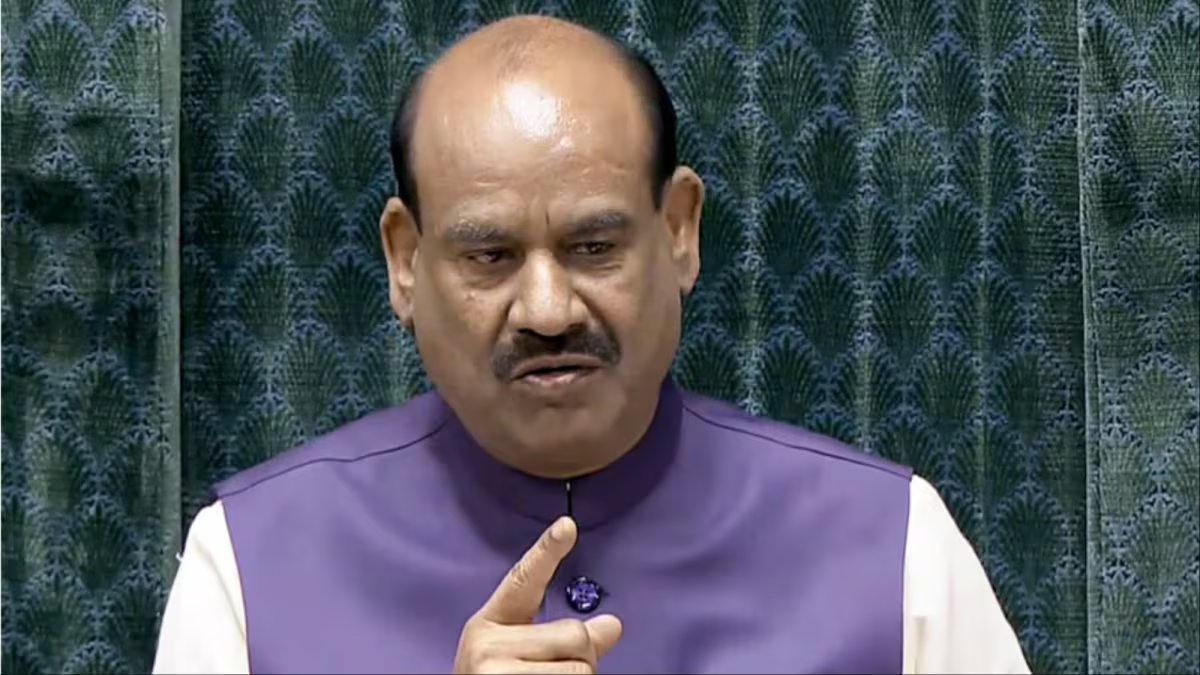
A photo of Lok Sabha Speaker Om Birla (PTI)
A light yet pointed moment unfolded in the Lok Sabha on Thursday when Speaker Om Birla made a quip while Opposition members questioned whether Congress MP KC Venugopal’s microphone was functioning during a discussion linked to the women’s reservation proposal.
The exchange, captured on video and shared on X, took place amid intense debate over the introduction of three key Bills tied to the proposal for 33 per cent reservation for women in the House.
Venugopal raised concerns regarding the government’s approach to bringing multiple Bills together, questioning the intent behind introducing the legislation in its present form and asking why the proposal had not been implemented earlier.
As the Speaker began explaining the procedural framework governing the debate, voices from the Opposition benches suggested that Venugopal’s microphone was muted.
Some members pointed towards the audio system, with Leader of Opposition Rahul Gandhi also indicating that the mic was not working.
Responding to the interruption, Birla remarked in Hindi that the microphone was functioning, adding in a pointed aside that it was only the Opposition’s mic that seemed not to work.
“Chalu hai mic chalu hai, aapka hi band hota hai” (The mic is on, only yours doesn’t work).
The remark prompted reactions across the House, given earlier political claims regarding microphones being switched off during Opposition speeches.
The exchange came during a broader debate on legislative measures intended to operationalise the women’s reservation framework through constitutional and statutory changes.
OPPOSITION QUESTIONS CLUBBING OF LEGISLATION
During the proceedings, KC Venugopal objected to the government’s decision to introduce three separate but related Bills together, arguing that clubbing legislative proposals was not a sound parliamentary practice and could have consequences for the outcome of the constitutional amendment.
“Here, one is the Constitution Amendment Bill, and the other two are now. Clubbing will not be a good practice. There are consequences. When the Constitution Amendment Bill is going to be defeated, what is the point?” Venugopal said in the House.
Union Home Minister Amit Shah defended the move, explaining that constitutional amendments require distinct voting processes compared to ordinary legislative changes, and that accompanying Bills were necessary to ensure the reservation framework can be implemented effectively.
“When there is a constitutional amendment, the votes are different compared to an amendment to a law. After the Bill on the Constitution amendment, to take the women’s reservation to its logical end, we need the other two Bills.”
“Hence, they have been introduced together. The discussion is all on the same topic. This has happened many times in the past as well. The opposition has decided to oppose everything,” Shah said.
DEBATE SCHEDULED FOR UP TO 18 HOURS, VOTING ON FRIDAY
Speaker Om Birla informed the House that deliberations on the three Bills would continue for 15 to 18 hours, with voting scheduled at 4 pm on Friday.
The timeline was finalised as the House agreed on the structure of debate for the special session.
Union Minister Kiren Rijiju noted that 12 hours had initially been proposed for discussion but emphasised that the Speaker should retain the authority to extend debate time if required.
“The discussion will be held for 12 hours. The speaker should have the authority to extend the time for discussion. The voting on the bills will be done tomorrow,” Rijiju said.
The Constitution (131 Amendment) Bill, 2026, the Delimitation Bill, 2026, and the Union Territories Laws (Amendment) Bill, 2026 were introduced after the Opposition pressed for a division instead of a voice vote.
According to the final division figures, 251 members voted in favour while 185 opposed the introduction of the Bills, with 333 votes recorded in total.
The proceedings highlighted continuing friction between the government and the Opposition over both legislative procedure and the broader political context of the women’s reservation proposal, even as the House moved ahead with a structured debate and scheduled vote.
April 16, 2026, 13:48 IST
Read More