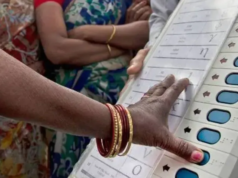


By increasing the total seats, the government intends to implement the 33% women’s quota for the 2029 general elections without reducing the number of seats currently held by men




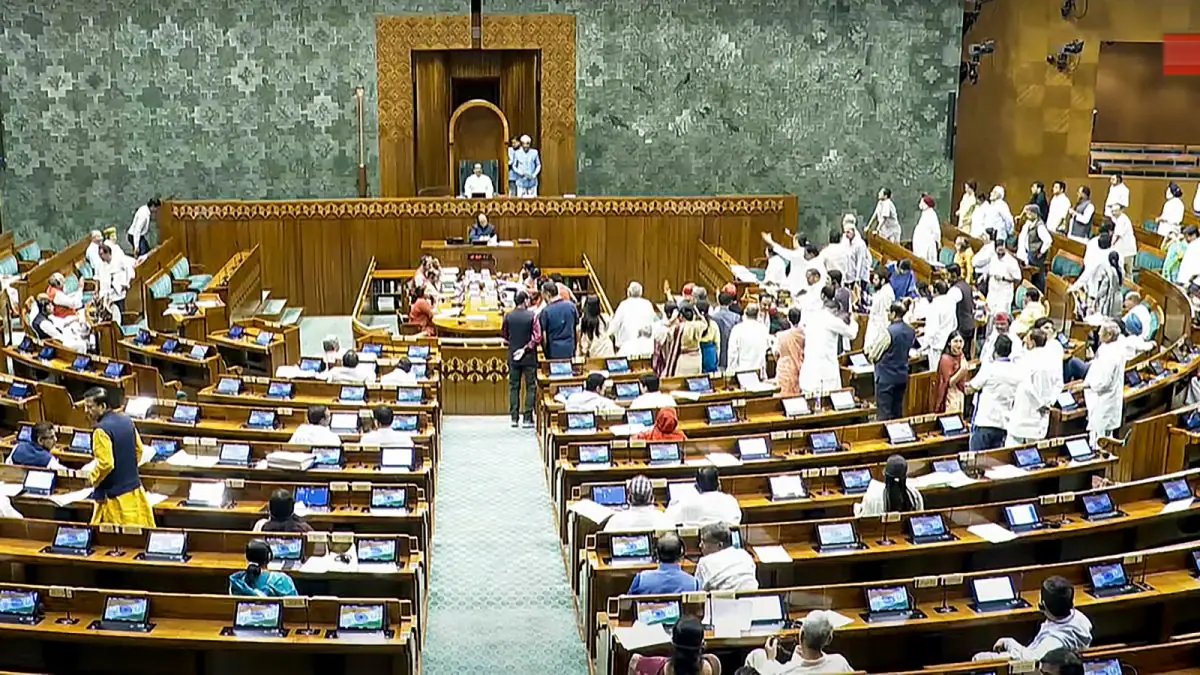
The most sensitive aspect of the 850-seat plan is the impact on states like Tamil Nadu, Kerala, and Andhra Pradesh. (File photo: Lok Sabha/Sansad TV)
As Parliament reconvenes for a historic three-day sitting on April 16, the Union Government has tabled the Constitution (One Hundred and Thirty-First Amendment) Bill. The primary objective is to break the legislative deadlock surrounding the Nari Shakti Vandan Adhiniyam by expanding the Lok Sabha’s strength from 543 to 850 seats.
By increasing the total seats, the government intends to implement the 33% women’s quota for the 2029 general elections without reducing the number of seats currently held by men—a move designed to minimise internal political friction. However, with the new total set at 850, the distribution among states has become the most contentious point of the 2026 delimitation debate.
How will the 850 seats be distributed between states and UTs?
The draft bill proposes a clear division of the expanded House: 815 seats will be allocated to the states, while 35 seats are designated for the Union Territories. This represents a significant jump from the current 530 state seats and 13 UT seats. To fast-track the process, the government is proposing to delink delimitation from the upcoming post-2026 Census, instead using the 2011 Census data as the immediate baseline.
Under the “pro rata expansion” model favoured by the Centre, the existing seat share of each state is expected to be increased by approximately 56%. This proportional increase is a strategic choice aimed at maintaining the current relative political weightage of each state, thereby attempting to neutralise the “North-South divide” that has historically stalled delimitation exercises.
Which states will see the largest increase in seat numbers?
Because the expansion is based on existing proportions to prevent “penalising” states with successful population control, the high-population states of the North will receive the largest absolute number of new seats. Uttar Pradesh, which currently has 80 seats, is projected to see its tally rise to approximately 125 seats. Similarly, Bihar would jump from 40 to roughly 62 seats, and Maharashtra from 48 to 75 seats.
The primary advantage of this 850-seat model is that it allows for the reservation of 283 seats for women while still leaving roughly 567 seats for general and other categories—more than the entire current strength of the House. For the “Hindi Heartland”, this expansion solidifies its role as the democratic engine of the country while ensuring that the 33% quota is implemented across a larger, more diverse legislative map.
What does this mean for Southern and smaller states?
The most sensitive aspect of the 850-seat plan is the impact on states like Tamil Nadu, Kerala, and Andhra Pradesh. Under a strictly population-based delimitation using 2026 projections, these states stood to lose relative power. However, by using the pro-rata 2011 baseline, their seat counts will also grow: Tamil Nadu would likely move from 39 to 61 seats, and Kerala from 20 to 31 seats.
This is what the Lok Sabha roughly may look like post Delimitation on the basis of the 2011 census presuming the strength of the Lok Sabha is increased to 850 seats as envisaged in the Constitution Amendment Bill pic.twitter.com/2oyTaHIDOV— Manish Tewari (@ManishTewari) April 14, 2026
While their absolute numbers increase, the Opposition—particularly the DMK and the INDIA bloc—has raised concerns that the “gap” in absolute numbers between the North and South will widen. For instance, while both UP and Tamil Nadu grow by the same percentage, UP gains 45 new seats compared to Tamil Nadu’s 22. The government maintains that this is the only mathematically viable way to operationalise women’s reservation by 2029 without a total constitutional collapse of state-wise representation.
Can the NDA secure the numbers for this amendment?
Passing the 131st Amendment requires a two-thirds majority in both Houses. As of now, the NDA commands a strong majority but will require “issue-based” support from parties like the BJD, YSRCP, and potentially sections of the Opposition that find it politically impossible to vote against a bill labelled “Nari Shakti” (Women’s Power).
If passed this week, a Delimitation Commission is expected to be constituted by June 2026. Its task will be to redraw the map of India into 850 constituencies, ensuring that 283 of them are designated for women candidates in time for the first 2029 campaign rallies. For the Indian voter, this means the next Parliament will not only be more gender-diverse but significantly more crowded.
April 14, 2026, 22:21 IST
Read More