

As the NC-backed bill seeks to restore lease renewal rights and roll back 2022 rules, opposition parties say it favours a privileged few, especially in tourist hubs like Gulmarg.


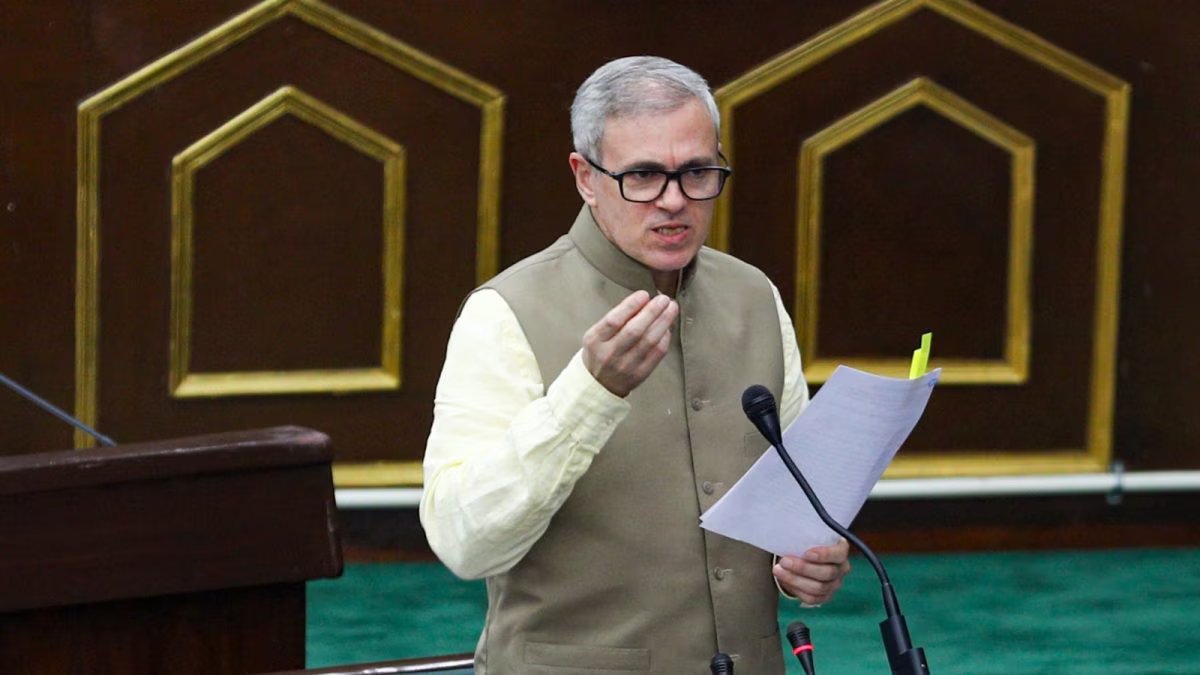
Jammu and Kashmir Chief Minister Omar Abdullah. (PTI file photo)

The J&K Land Grants (Restoration and Protection) Bill, 2025, a private member’s bill, has been moved by National Conference MLA Tanvir Sadiq. The bill seeks to repeal the Jammu and Kashmir Land Grants Rules, 2022, and restore the pre-2022 framework under the Jammu and Kashmir Land Grants Rules, 1960, along with related tourism and notified area rules from 2007.
The core provision would give existing and lawful leaseholders, especially non-residential ones in the tourism sector, a preferential right to renew leases instead of letting them lapse and mandating fresh open auctions. The NC-led government, under CM Omar Abdullah, allowed its introduction in the Legislative Assembly on Wednesday, signalling support, though private member’s bills rarely pass without full government backing.
“Traditionally, if I have to react to what has been given to me by the department, I have to oppose it, but I want the House to deliberate on the matter in detail. After that, the government will take a decision on whether to support this Bill or not. Therefore, at this stage, I will not oppose its introduction,” the Chief Minister said after the bill was admitted.
Leader of Opposition and BJP leader Sunil Sharma criticised the NC government over the bill, alleging that the move favours “elite interests” at the cost of the common people. “The mandate given by the people appears to be used not for public good but to protect a privileged few,” Sharma said.
The CM also faced opposition from Kashmir-based parties for admitting the bill. PDP MLA Waheed Parra tore a copy of the bill and claimed it was meant to benefit a few, including the Nedous Hotel in Gulmarg. It also drew opposition from Peoples Conference chairman Sajad Lone, who argued that it would benefit the “super elite” of Kashmir.
Why Does It Relate To Lease Renewal In J&K, Especially Gulmarg?
The bill directly targets the expiry of leases on government, forest, and notified land used for hotels and tourism infrastructure. In Gulmarg, 55 out of 59 hotels had expired leases by early 2026. Under the old system, these were routinely renewed; now, hoteliers faced eviction or forced re-auction. Hotel owners withdrew their High Court petitions after the government indicated it was open to an out-of-court resolution, clearing the path for this legislative fix.
The NC frames the bill as protecting local businesses, livelihoods, and J&K’s control over public land, preventing it from going to “speculative or non-local interests” via open bidding.
Nedous Hotel in Gulmarg, a 137-year-old heritage hotel, was last held on lease by relatives of Omar Abdullah. The government earlier took control of it for operating without a valid lease, sparking political and legal rounds. If the NC bill does not pass, these properties will go under the hammer.
Post-2019 Changes To Lease Renewal Laws
Pre-2019, under Article 370/35A, leases were governed by the 1960 Land Grants Rules. These generally allowed renewal or preferential extension to existing local or permanent resident leaseholders. Outsiders faced severe restrictions on buying or leasing land; the system favoured locals and long-term tourism operators. Leases could run for decades, sometimes up to 99 years in practice.
After August 2019, following the abrogation of Article 370 and the J&K Reorganisation, J&K became a Union Territory. Central laws applied more fully, and land ownership rules opened up; non-residents and outsiders could now buy land in many cases.
Among the key 2022 changes, the LG administration notified the new Jammu and Kashmir Land Grants Rules, 2022. These explicitly ended automatic renewal of expired non-residential leases (including tourism and hotels). Expired leases “shall stand determined” and must be put up for fresh open auction to the highest bidder, which is open to any Indian citizen. Exceptions were narrow, mainly covering subsisting or expired residential leases. This applied retrospectively to many pre-existing leases granted under the 1960 rules or tourism-specific rules.
The 2022 rules were justified as bringing transparency, market rates, and preventing “milking” of public land via under-the-table extensions, but they triggered widespread fear among hoteliers and businesses in tourist areas like Gulmarg, Pahalgam, and Patnitop.
Why The Bill, And How Does It Reverse Post-2019 Policy?
The 2022 rules were highly controversial when introduced, as they threatened local ownership of prime tourist properties and raised fears of outsiders and corporates taking over via auctions.
Now, the bill aims to protect existing local operators who built and ran hotels on leased government land, rather than forcing a reset that could hand properties to anyone in the country. Last month, Gulmarg hoteliers withdrew court cases expecting legislative relief. The NC government’s willingness to let the bill proceed, and CM Omar Abdullah holding the revenue portfolio, signals that it is interested in letting the bill pass.
There is some political sniping: the BJP calls it a “betrayal of public mandate”; the PDP has a rival “anti-bulldozer” bill; and Sajad Lone of the Peoples Conference has called it pro-elite or aimed at regularising big or influential hotels. Critics allege it favours well-connected leaseholders or large tourism players over smaller ones or strict revenue maximisation.
The NC’s attempt is to roll back the 2022 LG-era changes and revert to the old system for existing holders. Whether it actually passes and becomes law will depend on the government’s full support in the Assembly. The NC argues that the 2022 rules created existential fear among local hoteliers and investors, especially in Gulmarg, who suddenly became “illegal occupants” upon lease expiry.
By backing a bill that seeks to restore pre-2019-style protections and renewal rights, is the NC-led government sending a political signal?
April 11, 2026, 16:12 IST
Read More