

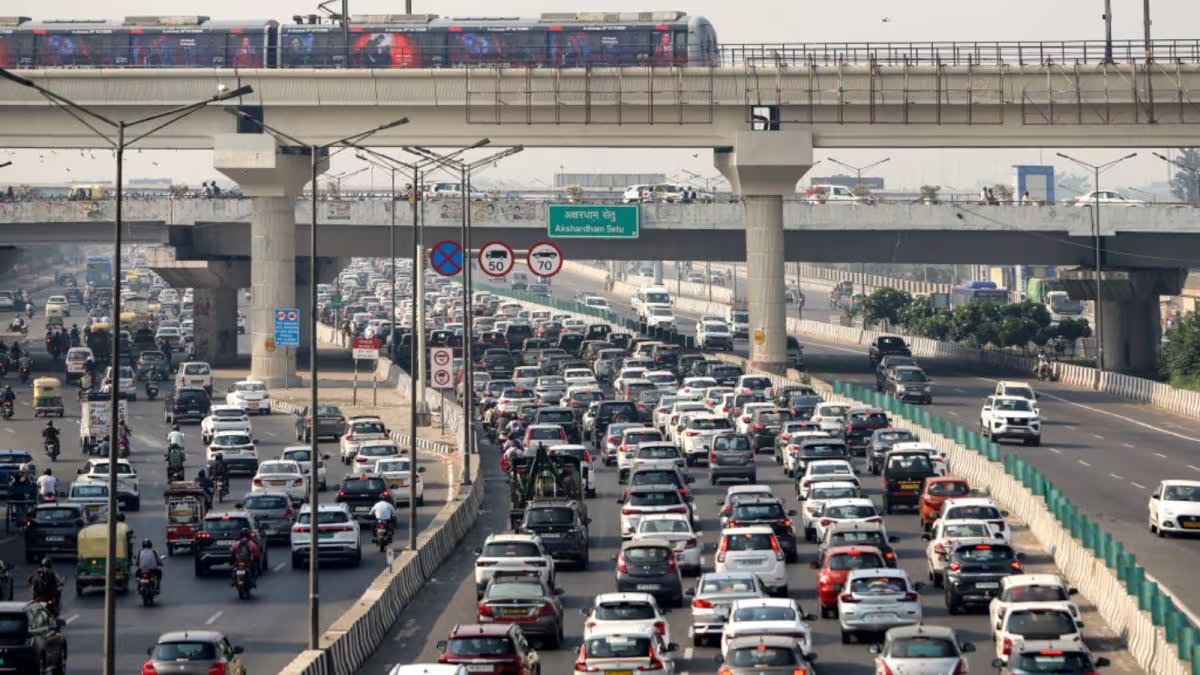
Delhi issues draft EV Policy 2026 2030, plans phased petrol vehicle curbs, mandates new electric three wheelers from Jan 2027 and two wheelers from April 2028.




Delhi Unveils Draft EV Policy 2026–2030. (PTI)
The Delhi Government has released its draft Electric Vehicle Policy for 2026-2030, outlining a detailed plan to speed up the shift to electric mobility. The proposal includes phased restrictions on petrol vehicles, tighter rules for fleets, incentives for buyers and a major expansion of charging infrastructure.
Issued by the Transport Department’s EV Cell, the draft has been opened for 30 days of public feedback from citizens and experts before it is finalised. The policy focuses on cutting vehicular emissions, a major cause of air pollution in the city, especially during winter smog.
The draft sets firm deadlines for moving away from petrol-powered vehicles in key segments. From January 1, 2027, only electric three-wheelers will be allowed for new registrations in Delhi.
This will be followed by a full transition for two-wheelers, with only electric models permitted from April 1, 2028. These measures aim to gradually reduce the presence of internal combustion engine vehicles on city roads.
Policy goals and legal basis
The policy seeks to reduce air pollution, promote clean mobility and speed up EV adoption across Delhi. It draws its legal backing from Article 21 of the Constitution, the Environment Protection Act, 1986, the Motor Vehicles Act, 1988 and Supreme Court directives in the MC Mehta case.
Data from the Commission for Air Quality Management shows that vehicles contribute 23% of winter pollution in Delhi-NCR. Two-wheelers alone make up 67% of total vehicles, making them a priority for electrification.
Incentives for EV buyers
The policy proposes financial support through direct benefit transfers. Electric two-wheelers priced up to Rs 2.25 lakh will get incentives that reduce over three years, starting at Rs 10,000 per kWh with a cap of Rs 30,000 in the first year.
Electric three-wheelers, including auto rickshaws, will receive Rs 50,000 in the first year, followed by lower incentives in subsequent years.
Electric goods vehicles in the N1 category will get Rs 1 lakh in the first year, reducing over time.
Scrapping and tax benefits
To encourage replacement of older vehicles, scrapping incentives have been proposed. Owners of BS-IV or older vehicles can receive Rs 10,000 for two-wheelers, Rs 25,000 for three-wheelers, Rs 1 lakh for cars up to ₹30 lakh and Rs 50,000 for goods vehicles, provided they buy an EV within six months.
The policy also offers 100% exemption on road tax and registration fees for electric vehicles. Cars priced up to Rs 30 lakh will get full exemption, while strong hybrids will receive 50% benefits. No incentives will be given for cars above Rs 30 lakh.
Charging network expansion
A large push is planned for charging infrastructure. Delhi Transco Limited will act as the nodal agency.
The plan includes a single-window clearance system and funding support from central schemes such as PM E-DRIVE. Charging stations will be mandatory at all vehicle dealerships, with fixed minimum points for different vehicle types.
Battery recycling and ecosystem
The policy stresses strict compliance with Battery Waste Management Rules 2022. It proposes collection centres under a public-private partnership model and encourages a battery tracking system.
Fleet and government rules
From January 1, 2026, aggregators will not be allowed to add new petrol or diesel vehicles. Government departments will procure only electric vehicles for new purchases.
Targets have also been set for school buses, with 10% electrification by year two, 20% by year three and 30% by March 31, 2030.
Implementation framework
The Transport Department will act as the nodal authority, supported by a dedicated EV Cell. An EV Fund will be created using state and central resources, while an apex committee led by the Transport Minister will oversee implementation.
The policy will come into effect after notification and remain valid till March 31, 2030, with scope for extension or revision.
Delhi, India, India
April 11, 2026, 12:02 IST
Read More