



















FCRA Bill sparks row in Kerala ahead of elections: The amendment aims to close “legal gaps” regarding asset management when an NGO’s licence is inactive




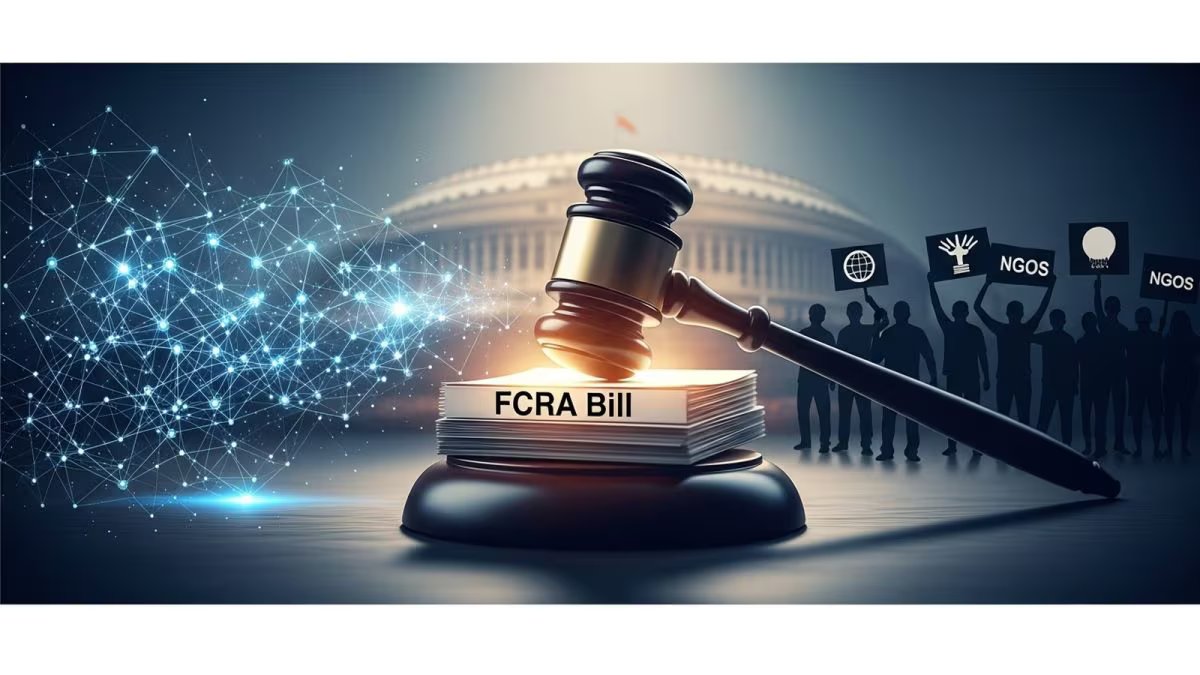
The FCRA (Amendment) Bill, 2026 has sparked a significant row in Kerala. (AI generated for representation)
The Foreign Contribution (Regulation) Amendment (FCRA) Bill, 2026, introduced in the Lok Sabha on March 25, aims for closer government oversight on how non-government organisations (NGOs) manage foreign funds and assets.
Then why has it triggered a row in Kerala? Will it have an impact on the upcoming elections? News18 explains.
WHAT IS THE FOREIGN CONTRIBUTION (REGULATION) AMENDMENT BILL, 2026?
The FCRA amendment aims to close “legal gaps” regarding asset management when an NGO’s licence is inactive. A government-appointed “designated authority” can take control of and dispose of foreign-funded assets if registration is cancelled, surrendered, or not renewed.
Assets created with foreign funds will vest in this authority and may be permanently transferred or sold, with proceeds going to the Consolidated Fund of India. Registration is deemed automatically stopped if renewal is not applied for or if it is rejected.
“Key Functionaries” (directors, trustees) face personal liability for violations. Law enforcement now requires central clearance for investigations, while maximum imprisonment is reduced to one year.
WHY HAS FCRA BILL SPARKED A ROW IN KERALA?
The FCRA (Amendment) Bill, 2026 has sparked a significant row in Kerala due to new provisions that grant the Central Government power to seize assets of organisations whose foreign funding licenses are cancelled or not renewed.
The controversy is particularly intense because Kerala has a high density of minority-run schools, hospitals, and charitable institutions that rely on foreign contributions.
The row is centred on fears of executive overreach and the potential targeting of religious minorities, especially with the state heading into Assembly elections on April 9.
What the organisations say
Church leaders and opposition parties argue the FCRA law could be “weaponised” to seize properties of Christian and Muslim-run welfare organisations over minor administrative or technical lapses.
Institutions such as the Kerala Catholic Bishops’ Council (KCBC) warn that blocking funds could shut down essential schools and hospitals serving the poor, according to reports.
What are political parties saying?
LDF (Ruling): Chief Minister Pinarayi Vijayan wrote to the Prime Minister calling the Bill a “direct assault on the autonomy of civil society” and demanded its withdrawal.
UDF (Opposition): Congress leaders like Rahul Gandhi and KC Venugopal have labelled the Bill “unconstitutional”, claiming it benefits organisations like the RSS while threatening genuine charities.
The BJP maintains the Bill is for national security and to stop “forced religious conversions“. Leaders like Rajeev Chandrasekhar have assured that law-abiding institutions have nothing to fear, dismissing the row as “fear-mongering” by the opposition.
As of April 1, the Government has reportedly put the Bill on hold following massive protests and disruptions in the Lok Sabha.
WHY IS IT A POLITICAL FLASHPOINT AMID ELECTIONS?
The controversy is primarily impacting the electoral narrative. The FCRA row has reportedly put the BJP on the defensive regarding its long-term outreach to the Christian community in Kerala.
Leaders from major denominations, including the Syro-Malabar Church, have expressed “serious alarm” over provisions that allow the government to take control of assets and funds of institutions if their FCRA licenses are not renewed, according to reports.
The Catholic Bishops’ Conference of India (CBCI) has described the legislation as a threat to the “operational survival” of minority and civil society organisations.
As many schools, hospitals, and orphanages in Kerala are run by Christian and minority organisations, church leaders’ public criticism carries significant weight among voters.
Opposition parties have seized the issue to frame the BJP-led Centre as targeting minorities.
The row is particularly intense in Christian-dominated constituencies such as Pala, Kanjirappally, Poonjar, and Thiruvalla, where the BJP-led NDA has fielded a large number of candidates from the community.
Opposition leaders have questioned the timing of the bill, introduced just days before the election, alleging it was done to avoid full parliamentary debate while MPs were busy campaigning.
KEY FAQs
What does FCRA regulate?
Foreign donations to NGOs and how they are used.
Why is Kerala reacting strongly?
Because many NGOs and religious institutions depend on foreign funding.
Is the bill already a law?
No, it’s a proposed amendment, still under debate.
With agency inputs
April 01, 2026, 16:55 IST
Read More