














Tarunjit Singh Butalia, Jahandad Khan and Abdul Sami
In the Kallar Kahar range of Chakwal are hills of mud and limestone. Lakes in the area, such as Kallar Kahar Lake, have become major tourist destinations in Pakistan since the new motorway between Lahore and Islamabad began running alongside it.
About a kilometre from the lake is a secluded gem – a cave where Baba Farid Ganjeshakkar did chilla (40-day meditation).
The cave is way up near the top of a mountain. With the help of the Indus Heritage Club, we began our trek by parking our vehicles by the road. We walked through an underpass beneath the motorway and headed towards the hill ahead. A small limestone path, about 6 feet wide, winds up the hill.
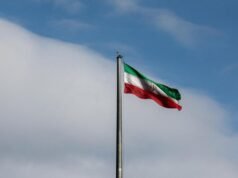
From this path, sweeping views of the Chakwal hill range, the Kallar Kahar Lake, and the curved motorway are breathtaking. The day was clear, and one could see for miles. Along the way, we crossed an old jujube tree, bent over by the wind like an aging lady, arching outwards. A small flag fluttered beside it, standing out amid the new foliage.
The way up to the cave is neither too easy nor too difficult. Soon, we reached the hilltop, where a cluster of trees stood tall, with red and green flags fluttering in the wind.
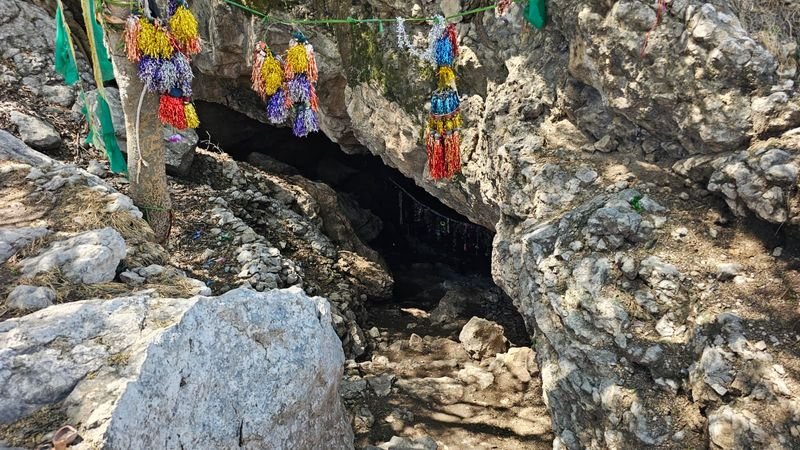
The entrance to the cave has a small platform to its left, with a newer, larger jujube tree providing shade over it. Nearby, a steel vessel simmered over a wood fire. To the right are breathtaking views of the lake.
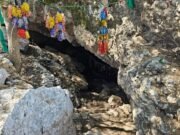
We descended into the cave by steps carved into limestone. Inside, the passage suddenly widened, then narrowed, with light visible at the other end. Beyond this, a second, the main cave and much larger chamber revealed itself. Both caves have shiny decorations hanging from the roof.
The second cave has a prayer area to the right. Next to it is a large pile of clay pots – offered by devotees who trek up the cave. During Muharram, groups travel from Pakpattan to this place for a festive gathering.
At the other end, where the cave floor rises toward a small roof opening, sat a malang (mystic singer) dressed in black. Suddenly, the cave was filled with the malang’s voice. We began recording, but Tarunjit, a Sikh, immediately recognised the verse as a shabad of Baba Fareed enshrined in the Guru Granth Sahib. He shut off his camera, sat on a rock, and reflected as the words echoed through the cave, his eyes swelling up.
Fareedhaa tan sukaa pinjar theeaa taleeaan khoonddeh kaag
(Fareed, my withered body has become a skeleton; the crows are pecking at my palms.)
ajai su rab na baahurio dhekh bandhe ke bhaag
(Even now, God has not come to help me; see this is the fate of all mortal beings.)
kaagaa karang ddamddoliaa sagalaa khaiaa maas
(The crows have searched my skeleton and eaten all my flesh.)
e dhui nainaa mat chhuhau pir dhekhan kee aas
(But please do not touch these eyes; I hope to see my God with them.)
As we walked back out of the cave, we were offered freshly prepared sweet rice, a special dish common across Punjab. This is the langar of the Sufis, which has existed for hundreds of years before the first Sikh Guru began the tradition of the Sikh langar at Farooqabad near Nankana Sahib.
We took off our shoes and sat on the platform to the left of the cave entrance, a light breeze drifted up from the lake, and the canopy of the jujube tree provided much-needed shade. We all sat down on the mat and were served the sweet rice. As we ate, a recording of the same shabad played on a phone. That is when time froze, and it seemed we were on top of the world.
Visitors to the Chakwal, who can trek up a moderate hill, must not miss this gem of a historical site. Not far away lies Katas Raj, an ancient complex revered as a major Hindu pilgrimage destination.
As we descended the hill, we were sure that we would return to this remote cave, probably to spend a night here, listening to verses of Baba Farid with the accompaniment of harmonium and table, echoing in this remote cave.