





















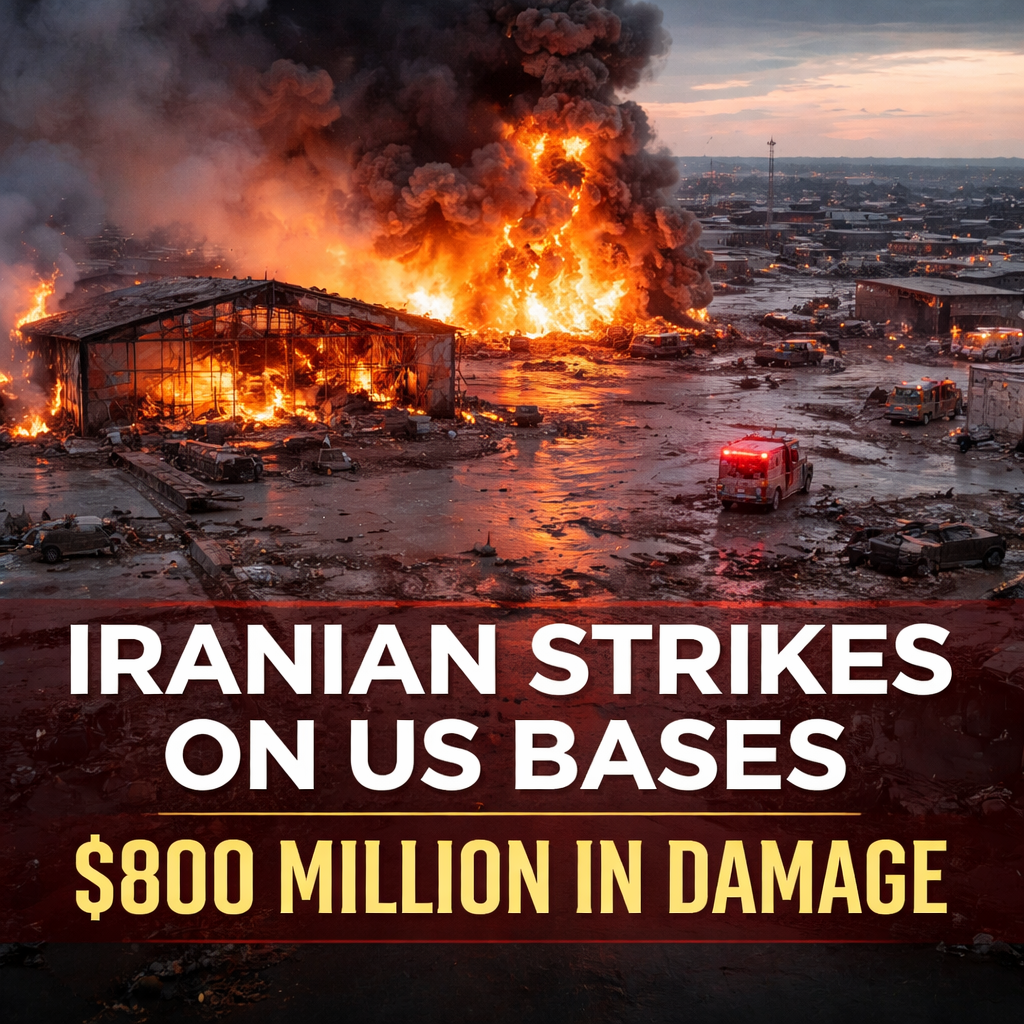
Iranian Strikes on US Bases Cause $800 Million Damage, New Analysis Shows
Iranian strikes on US bases have caused an estimated $800 million in damages, according to a newly released independent analysis that challenges earlier official assessments. The report reveals that the scale of destruction to military infrastructure was significantly higher than initially acknowledged, raising concerns over regional security and escalating geopolitical tensions.
The analysis provides a detailed breakdown of the targeted facilities, financial costs, and operational disruptions, offering a clearer picture of the aftermath of the strikes.
Extent of Damage from Iranian Strikes on US Bases
The Iranian strikes on US bases reportedly targeted multiple high-value military installations, including airbases and logistical hubs. According to defense analysts, the damage included:
Severe structural damage to aircraft hangars
Destruction of surveillance and radar systems
Damage to ammunition storage facilities
Runway impacts that temporarily halted flight operations
Experts estimate that rebuilding and repair costs alone could exceed $800 million, not including indirect operational losses.
Iranian Strikes on US Bases Show Advanced Precision Capabilities
The Iranian strikes on US bases highlight the country’s growing missile precision and strategic targeting abilities.
Advanced Missile Systems
Iran is believed to have used precision-guided ballistic missiles capable of striking specific infrastructure targets with high accuracy.
Targeted Infrastructure Strategy
Instead of focusing on personnel, the strikes appear to have been aimed at disabling critical military capabilities, including communication systems and aircraft deployment facilities.
Coordinated Military Planning
The simultaneous nature of the attacks suggests a well-coordinated effort backed by intelligence and strategic planning.
Operational Impact of Iranian Strikes on US Bases
The Iranian strikes on US bases had immediate consequences for military operations in the affected regions. Key impacts included:
Temporary suspension of air missions
Increased defensive readiness across US bases
Deployment of additional missile defense systems
Strategic repositioning of military assets
Although officials stated that operations resumed quickly, analysts argue that the disruption was more significant than publicly disclosed.
Global Reaction to Iranian Strikes on US Bases
The revelations surrounding the Iranian strikes on US bases have triggered varied responses from the international community.
United States Response
US authorities acknowledged the attacks but emphasized resilience and rapid recovery of military capabilities.
Middle East Concerns
Regional nations expressed concern about rising tensions and the potential for further escalation.
International Community
Global powers have urged diplomatic engagement to prevent further conflict and maintain stability in the region.
Economic and Strategic Impact of Iranian Strikes on US Bases
The Iranian strikes on US bases are expected to have long-term economic and strategic implications.
Rising Defense Costs
Repairing damaged infrastructure and upgrading defense systems will require significant investment.
Geopolitical Tensions
The incident has intensified tensions between global powers, particularly in the Middle East.
Energy Market Concerns
Any escalation in the region could impact global oil supply and pricing.
Future Outlook After Iranian Strikes on US Bases
The Iranian strikes on US bases mark a shift in modern warfare, emphasizing precision attacks and infrastructure targeting.
Experts suggest that:
Future conflicts may rely more on missile technology
Defense systems will need constant upgrades
Diplomatic solutions will be crucial in avoiding escalation
The situation remains dynamic, with global leaders closely monitoring developments.
Conclusion
The latest findings on Iranian strikes on US bases reveal a far greater level of damage than initially reported. With an estimated $800 million in losses, the incident highlights the growing complexity of modern military conflicts and the risks associated with escalating tensions.
As both sides assess the situation, the world watches for signs of either escalation or diplomatic resolution.