



















How Photography Became a Tool for Classification in Colonial India
Photography Helped the British Empire Classify India in ways that profoundly influenced colonial governance, social hierarchies, and the global perception of the subcontinent. During the 19th and early 20th centuries, British administrators increasingly relied on photography as a modern tool to document, categorize, and manage India’s vast and diverse population.
As the British expanded their control after the 1857 uprising, governance required systematic documentation. Photography, then an emerging technology, offered what colonial officials believed to be an objective method of recording people, architecture, customs, and landscapes. Institutions such as the British Raj used visual records alongside surveys and censuses to strengthen administrative oversight.
Photography Helped the British Empire Classify India Through Ethnographic Documentation
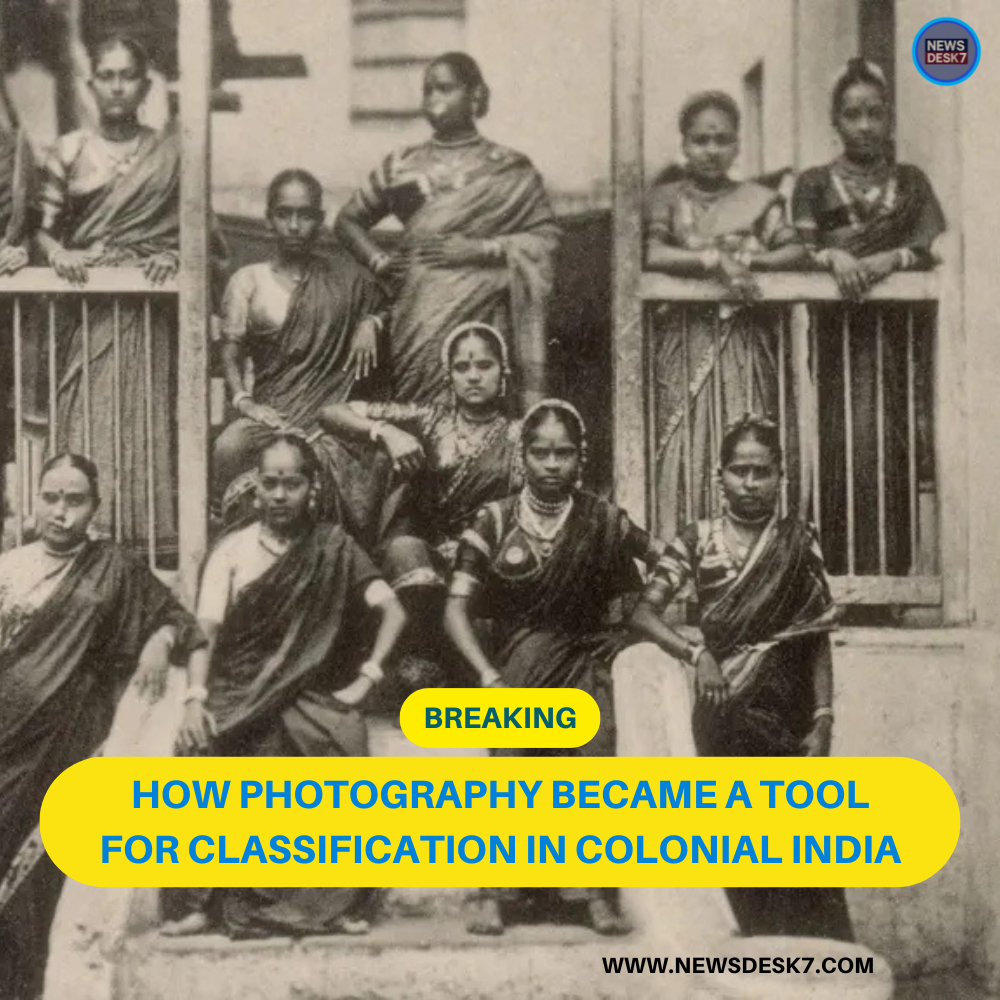
Photography Helped the British Empire Classify India particularly through ethnographic studies that aimed to identify and group communities based on caste, tribe, occupation, and physical features. Colonial officers and anthropologists conducted extensive photographic surveys, compiling albums that portrayed individuals in posed settings designed to highlight perceived “racial” and “caste” distinctions.
One of the most prominent projects was The People of India, an eight-volume series produced in the 1860s under the authority of the Government of India. The project sought to catalog various communities across the subcontinent through photographs and descriptive notes. While presented as scientific documentation, scholars argue that such efforts reinforced stereotypes and rigid social classifications.
The process of categorization intensified during decennial censuses introduced under British administration. Details about colonial census methodologies can be explored through the Office of the Registrar General & Census Commissioner, India at https://censusindia.gov.in, which maintains historical census archives. These censuses often relied on fixed categories influenced by earlier ethnographic photography and surveys.
Photography Helped the British Empire Classify India and Reinforce Caste Identities
Photography Helped the British Empire Classify India by visually codifying caste and community identities. Colonial anthropologists such as Herbert Hope Risley argued that physical features could determine racial origins and social ranking. Risley’s work, conducted under the colonial administration, attempted to link caste hierarchies to racial theories prevalent in Europe at the time.
These photographic records were often accompanied by measurements of skull size, height, and other physical characteristics. Today, historians view such practices as pseudoscientific and reflective of racial biases embedded in imperial ideology.
Museums and archives across the United Kingdom and India preserve many of these photographs. The British Library hosts extensive collections of colonial-era images that document how photography was used as an administrative instrument. These collections are available for research at https://www.bl.uk.
Administrative Control and Surveillance
Photography Helped the British Empire Classify India not only for ethnographic purposes but also for policing and surveillance. Criminal identification systems increasingly incorporated photographic records, particularly after the Criminal Tribes Act of 1871. Entire communities were labeled as “criminal tribes,” and their members were photographed and monitored.
The Act institutionalized suspicion against specific groups, reinforcing social stigmas that persisted long after independence. Information about colonial legislation and its long-term effects can be accessed through India Code at https://www.indiacode.nic.in, which maintains legislative archives.
By visually documenting individuals deemed suspicious or rebellious, colonial authorities aimed to prevent uprisings and maintain order. Photography thus became intertwined with intelligence gathering and law enforcement mechanisms.
Shaping Imperial Narratives
Photography Helped the British Empire Classify India in ways that also shaped how the empire presented itself to audiences in Britain. Exhibitions and illustrated books showcased images of India’s landscapes, monuments, and diverse communities, reinforcing narratives of exoticism and imperial authority.
Iconic photographers like Samuel Bourne captured dramatic landscapes and architectural marvels, contributing to the visual mythology of the empire. These images circulated in Europe, shaping public opinion and bolstering support for colonial rule.
At the same time, such visual portrayals often ignored the complexity and dynamism of Indian society. By presenting static, categorized images, colonial photography contributed to rigid definitions of identity that affected social and political structures.
Modern Reassessment of Colonial Photography
Photography Helped the British Empire Classify India in a manner that modern historians critically reassess today. Contemporary scholars argue that while photography was presented as neutral documentation, it was deeply embedded in power dynamics.
Postcolonial studies emphasize how these images influenced administrative policies, educational systems, and even self-perception within colonized communities. Indian historians and archivists are increasingly reinterpreting colonial photographs to understand both their historical context and their impact.
Institutions such as the National Archives of India provide access to colonial-era documents and images at https://nationalarchives.nic.in, enabling researchers to examine how visual records were used in governance.
Conclusion
Photography Helped the British Empire Classify India by serving as a tool of documentation, surveillance, and ideological reinforcement. What was once considered objective visual evidence is now understood as part of a broader system of control and representation.
The legacy of colonial classification continues to influence discussions about identity, caste, and historical memory in contemporary India. By revisiting these archives critically, historians aim to disentangle documentation from domination and better understand the complex interplay between technology and power.






Comments are closed.