
















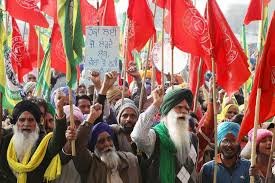
Farmers highway blockade Jalandhar has emerged as a major flashpoint in Punjab’s ongoing agrarian unrest, with tensions escalating sharply on the Amritsar–Delhi National Highway after farmers intensified their protest against the proposed bio-gas and bio-fuel plant in Jamsher Khas. The agitation, led by Farmer Union Sidhu, entered a critical phase as protesting farmers moved towards the highway cut leading to Paragpur, raising concerns over traffic disruption and law-and-order management in the district.
The protest stems from growing opposition among local farmers and residents to the bio-gas project, which they allege poses serious environmental, agricultural, and public health risks. Farmers argue that the proposed plant threatens fertile farmland, groundwater quality, and air purity in the region, potentially impacting crop productivity and livelihoods in surrounding villages. The farmers’ highway blockade Jalandhar has therefore become a symbol of broader anxieties around industrial projects being set up near agricultural belts without what protesters claim is adequate consultation or transparency.
According to farmer leaders, repeated representations to district authorities and pollution control officials failed to yield satisfactory assurances, prompting the call for direct action. Farmer Union Sidhu had earlier announced a plan to block the Amritsar–Delhi Highway if construction activities were not halted. As the deadline passed without a response that met their demands, farmers mobilised in large numbers and marched towards the strategic highway point near Paragpur.
Eyewitnesses said tractors, trolleys, and groups of farmers gathered peacefully, raising slogans and holding placards opposing the bio-gas plant. The farmers’ highway blockade Jalandhar remained largely non-violent, but the scale of participation indicated rising anger and frustration. Protesters maintained that their agitation was not political but rooted in safeguarding land, health, and future generations.
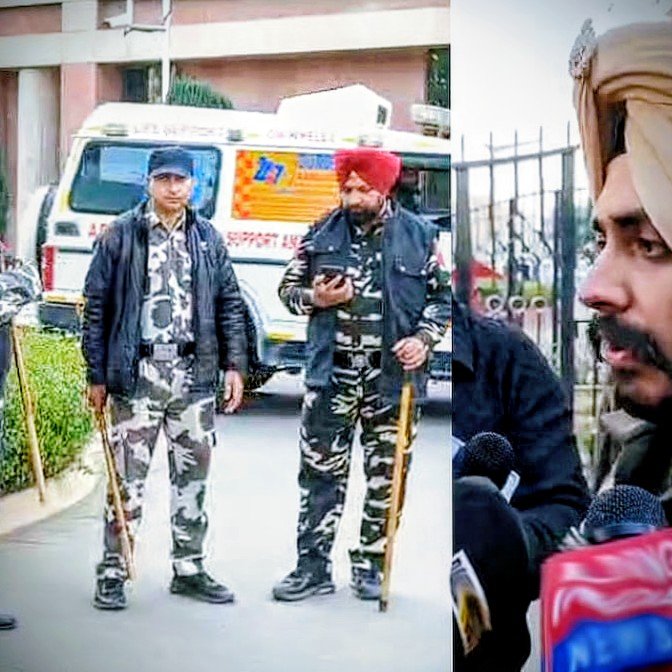
Police and administrative officials were deployed in significant numbers to prevent any untoward incident. Barricades were placed at key junctions, and traffic was diverted to alternate routes to minimise inconvenience to commuters. Senior officials were seen engaging with farmer representatives, urging restraint and assuring them that their concerns would be conveyed to higher authorities. However, protesters insisted that verbal assurances were no longer enough and demanded written commitments and immediate suspension of the project.
Local residents expressed mixed reactions to the farmers’ highway blockade Jalandhar. While many supported the farmers’ stand, citing environmental concerns and past experiences with industrial pollution, others voiced worries about prolonged road closures affecting daily life, emergency services, and businesses. Transporters and commuters faced delays as movement on the busy highway slowed down, especially during peak hours.
Farmer leaders reiterated that bio-gas and bio-fuel projects should not be imposed without proper environmental impact assessments and public hearings. They alleged that the Jamsher Khas project was cleared without adequately addressing villagers’ objections. According to them, waste handling, emissions, and by-products from such plants could contaminate soil and water, turning agricultural zones into dumping grounds.
The farmers’ highway blockade Jalandhar also reflects a broader pattern seen across Punjab, where farmers have increasingly opposed projects they believe threaten agrarian sustainability. From power plants to waste-processing units, rural communities have demanded greater say in development decisions. Protest leaders warned that if their demands are ignored, the agitation could spread to other highways and districts.
Political reactions began pouring in as the blockade gained attention. Opposition leaders criticised the state government for failing to communicate effectively with farmers and allowing the situation to escalate. Some ruling party representatives, however, accused certain groups of exaggerating risks and politicising development projects. The government maintained that bio-gas plants are part of a clean energy push and claimed that all statutory norms were being followed.
Despite these assurances, farmers remained unconvinced. They stressed that clean energy initiatives should not come at the cost of agricultural land and rural health. The farmers’ highway blockade Jalandhar, they said, would continue until the project is reviewed transparently with farmer participation and independent expert assessment.
As evening approached, negotiations between district officials and farmer leaders were still ongoing. Authorities appealed for the blockade to be lifted temporarily to ease traffic congestion, while promising further talks at the state level. Farmer representatives said any decision would be taken collectively after consulting protesters on the ground.
With no immediate resolution in sight, the farmers’ highway blockade Jalandhar is expected to remain a key issue in Punjab’s socio-political landscape over the coming days. The situation underscores the delicate balance between development goals and grassroots consent, and how unresolved rural grievances can quickly spill onto national highways, drawing wider attention and pressure on policymakers.